

-
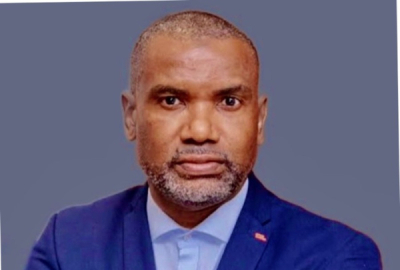
Mourana Soumah takes charge of Guinea’s Ministry of Communication, Digital Economy, and Innovation, merging information, telecom, and digital portfolios.
-
He brings extensive finance experience, having modernized state treasury operations and represented Guinea at the IMF, World Bank, and AfDB.
-
Key priorities include expanding connectivity to over 600 unserved areas, strengthening cybersecurity, and promoting digital innovation in public services and education.
Guinea appointed Mourana Soumah as Minister of Communication, Digital Economy, and Innovation on February 2, President Mamadi Doumbouya’s office announced. The new ministry merges the former Ministry of Information and Communication, previously led by Fana Soumah, with the Ministry of Posts, Telecommunications, and Digital Economy, formerly overseen by Rose Pola Pricemou.
Soumah holds a degree in economics from Université Gamal Abdel Nasser de Conakry, a master’s in economic policy management from CERDI-Université d’Auvergne, France, and a diploma from the ENA Paris-Strasbourg in public finance. He also completed specialized training at the IMF, French Ministry of Finance (Bercy), BCEAO, and institutions in Canada and Morocco.
He served as Minister of Economy and Finance from March 2024, implementing reforms to modernize state financial management, strengthen public treasury operations, and enhance budget credibility. He represented Guinea at the IMF, World Bank, and African Development Bank, and chaired strategic national committees including the Simandou Strategic Committee and the C2D Steering Committee.
Prior to government service, Soumah led the General Directorate of the Treasury and Public Accounting (2021–2024) and the Central Accounting Agency of Treasury Deposits. He contributed to reforms such as the implementation of the Single Treasury Account (CUT), the Integrated State Accounting System (SCIE), and the national payments system.
In his new role, Soumah will focus on modernizing public communication, accelerating digital transformation across government, strengthening national digital sovereignty, and promoting innovation as a driver of economic growth, transparency, and inclusion. Officials plan to expand connectivity to more than 600 unserved areas, develop digital services in education and public administration, and reinforce cybersecurity and local data hosting.
Guinea had 14.2 million mobile connections in 2025, covering roughly 95% of the population, while Internet penetration reached 26.5%, or about four million users, according to DataReportal. Mobile Internet subscriptions have surged nearly 97.4% in recent years, reflecting rapid adoption of digital services and emphasizing the urgency of the government’s digital agenda.
This article was initially published in French by Samira Njoya
Adapted in English by Ange J.A de BERRY QUENUM