



Brief_simple (553)

Côte d’Ivoire’s telecom regulator ARTCI issued a statement on Thursday urging caution to safeguard telecommunications infrastructure during the upcoming Africa Cup of Nations (AFCON) football tournament.
The tournament, running from January 13 to February 11, is expected to attract large crowds and high demand for network services. In that context, ARTCI is calling on the public to avoid damaging crucial equipment, including optical fiber cables, transmission towers, and batteries.

Moroccan telecom operators Itissalat Al-Maghrib, Medi Telecom, and Wana Corporate have joined hands to establish a national Internet Exchange Point (IXP) to revolutionize the country's internet landscape.
The IXP, unveiled through a memorandum of understanding signed at the national telecom regulator ANRT’s headquarters in Rabat, will serve as a central hub for routing and exchanging domestic internet traffic.
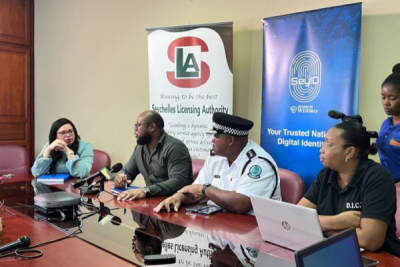
Seychelles is set to unveil its digital driving license next year, as revealed by the Seychelles Licensing Authority (SLA) during a recent press briefing. Officials from the SLA disclosed that the initial phase of the digital driving license initiative is currently in progress through the utilization of the SeyID digital identity platform. Motorists are now able to complete their registration online and conveniently acquire their driving licenses directly on their smartphones.

Egyptian health technology startup Chefaa announced, Tuesday, December 19, the successful completion of a $5.25 million funding round. The raised funds are earmarked for various purposes, including the advancement of its technology, broadening its range of offerings, and supporting its growth in Saudi Arabia—a market the startup recently entered.
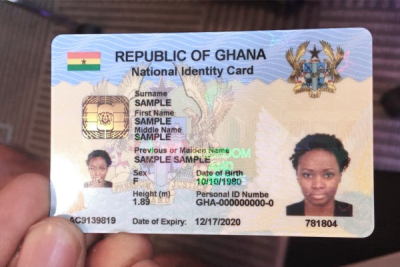
Ghana will launch a mobile-accessible version of its national ID card next year, announced Moses K. Baiden, CEO of Margins ID Group, the company spearheading the project. The app-based digital card will be equipped with a secure barcode and QR code for seamless verification across various services, including financial transactions.
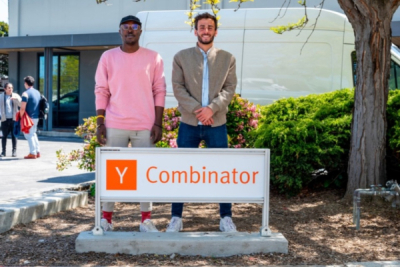
Nigerian fintech startup Bujeti has completed a $2 million financing round in a deal led by Californian accelerator Y Combinator, Techcrunch reported on Thursday, December 7. The funds will be used to, among other things, introduce credit lines for small and medium-sized businesses, initiate corporate cards, and enhance its expense management platform.

Nigerian cryptocurrency exchange platform Bitmama has acquired neobank Payday to expand the services of its platform Changera. According to information reported by TechCabal, Bitmama, valued at $30 million, has reportedly offered Payday's investors $1 million in equity and will take over the neobank's customer deposits and debts.

Egyptian proptech startup Partment has expanded into Greece, Disrupt Africa announced yesterday.
"This expansion aligns with our global vision of enhancing people’s well-being through sustainable second home access, making real estate investments affordable and accessible to all," said Nadim Nagui, Partment co-founder and CEO.

Team collaboration startup Cynoia announced last week the successful completion of a €850,000 financing round. The funds will finance the company's expansion in West Africa, mainly in Côte d'Ivoire and Senegal.
Tanzania is currently finalizing its Digital Economy Strategic Framework 2023-2033, which is due for implementation in early 2024. A panel of digital experts has given the go-ahead to the suggestions and recommendations for the proposed national digital economy program.
According to local media reports, the program will serve as a roadmap for the country's day-to-day economic activities, guiding the processing and management of electronic messages and documents.
More...

South African logistics startup GoMetro announced on Wednesday, November 29, the successful completion of an $11.4 million Series A funding round. According to Justin Coetzee (photo), GoMetro founder and CEO, the funding will be used to accelerate the company's growth and expansion plans, with a focus on developing its engineering teams, distribution, and partner management teams as well as enhancing the management of electric buses and trucks.

Digify Africa, a leading South African provider of digital skills training, has launched its Digify Pro program in Nairobi, Kenya. This initiative is undertaken in collaboration with Meta, the American technology giant that owns the Facebook social network. The program aims to foster digital literacy and equip young Kenyans with the skills they need to thrive in the digital era.

African tech ventures can apply for the Africa Tech Summit (ATS) Investment Showcase to be held in Nairobi on February 14th-15th, 2024. The showcase is a key element of the annual Africa Tech Summit, providing selected ventures with the chance to present innovative ideas to a diverse audience of local and international investors.
Ventures must be African-based, with an innovative, scalable product, and at least one African co-founder. Applications are open until December 19th, 2023.
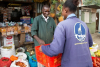
Kenyan platform Twiga Foods, which connects farmers with vendors, recently secured undisclosed funding during a refinancing effort following a KES 40 million debt collection lawsuit.
Investors, including Creadev, Juven, TLcom Capital Partners, and DOB Equity, who participated in Twiga's 2021 $50 million Series C, provided the funding. In a deleted Medium article, CEO Peter Njonjo announced the completion of the restructuring, ensuring suppliers that overdue payments would be settled, reversing Twiga's initial dispute over the debt collection.