

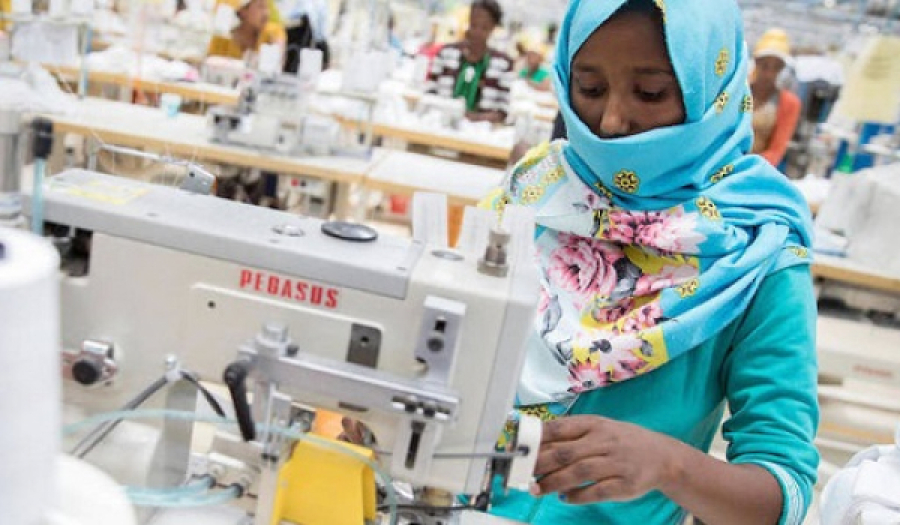
- Ethiopia launches E-Tamirt platform to streamline industrial sourcing and sales
- Tool supports supply-chain efficiency and boosts competitiveness under digital strategy
- GSMA projects sizable economic gains as digitalization expands across sectors
Ethiopia’s Ministry of Industry, in partnership with state-owned Ethio Telecom, on Tuesday launched an e-commerce platform called E-Tamirt. The platform provides a centralized marketplace where manufacturers can source raw materials, connect with suppliers and sell their products to buyers in Ethiopia and regional markets.
According to Ethio Telecom, E-Tamirt will play a strategic role in strengthening the shift from retail-based trade to manufacturing and will help local products compete more effectively with imports.
Industry Minister Melaku Alebel said the platform helps ease supply and distribution bottlenecks by providing a unified digital channel for industrial transactions. He added that it supports national efforts to increase production capacity, foster innovation and improve long-term competitiveness.
The initiative is part of Ethiopia’s broader digital transformation agenda. In late November, the government adopted a new digital strategy running through 2030 to expand digital public services, modernize the economy and promote digital inclusion.
The GSMA estimates that Ethiopia’s digital transformation could add 319 billion birr, or nearly 2 billion dollars, to the economy by 2028, with major gains expected in agriculture, transport, health, public administration, trade and industry.
The industrial sector alone could generate 108 billion birr, create 180,000 jobs and add 9 billion birr in tax revenue. According to the GSMA, Ethiopia’s manufacturing activity is still heavily centered on agro-processing, but there is substantial potential for growth through diversification, higher industrial output, stronger investment in research and development and greater local processing and value creation. Digital technologies can also help the government raise manufacturing exports from 13 percent in 2019 to 48 percent by 2030.
Isaac K. Kassouwi