
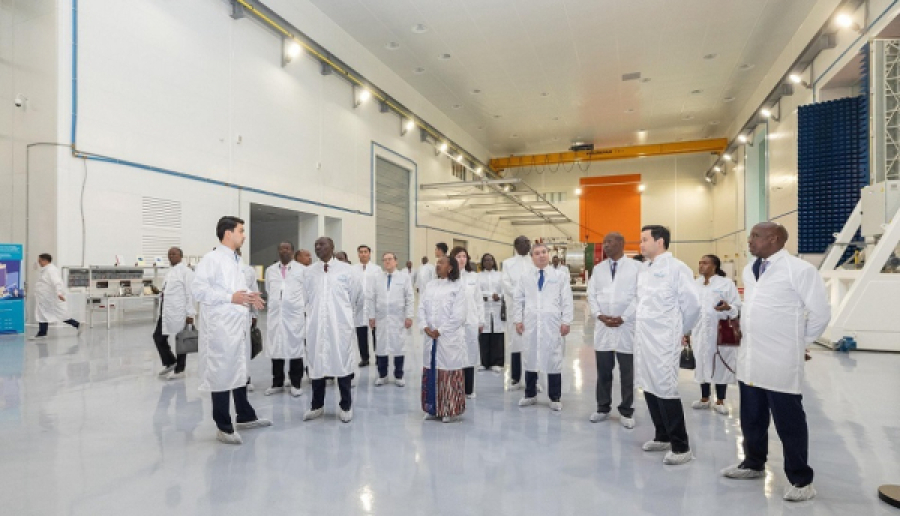
Kenya is exploring a partnership in the space sector with Kazakh company Ghalam LLP as the East African nation seeks to tap the firm's expertise in spacecraft development and component manufacturing.
President William Ruto visited Ghalam LLP's facilities during a state visit to Kazakhstan on May 19 and 20.
Ruto said the proposed partnership is primarily aimed at accelerating the development of Kenya's emerging space program, based in Malindi. The initiative forms part of broader efforts to strengthen the country’s expertise and capabilities in the space sector to improve data collection, support research and enhance evidence-based national planning and development.
Kenya is relying on international partnerships to advance those ambitions. Since the start of the year, Nairobi has intensified engagement with several countries active in the space industry, including China, India, Italy, the United States and Germany. Discussions with Germany focused on areas such as Earth observation, innovation and business incubation, capacity building, and the use of space technologies for socioeconomic development.
Kenya has also joined Egypt and Uganda in launching the ClimCam program, a regional initiative focused on climate observation and environmental monitoring applications.
Space technologies and economic development
Kenyan authorities see space technologies as a tool to support socioeconomic development across multiple sectors. In agriculture, the Kenya Space Agency (KSA) says such technologies can help improve food security and agricultural productivity.
Satellite imagery enables the monitoring of crop conditions and health, the early detection of anomalies and quicker intervention measures. The data is also used for crop mapping, monitoring crop growth and estimating yields to help anticipate food security risks.
Earth observation technologies also support soil moisture monitoring to optimize irrigation, as well as pasture assessment and vegetation analysis to help forecast droughts. Remote sensing can additionally estimate soil nutrient levels, making fertilizer use more efficient and targeted.
The KSA says in the health sector, space technologies could help strengthen healthcare systems. Satellite connectivity can support the expansion of telemedicine services in remote areas by improving access to medical expertise, healthcare services and digital health data.
Satellite data is also used to monitor environmental factors affecting public health, including disease vectors and water quality. It can further help assess the impact of health emergencies and natural disasters, enabling faster and better coordinated responses.
Isaac K. Kassouwi