

-
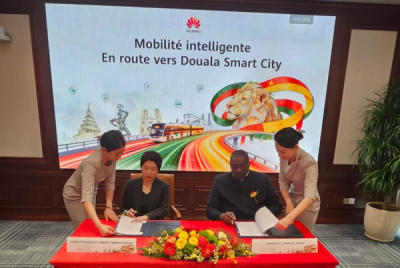
Douala signs a strategic agreement with Huawei to support its digital transformation.
-
The project targets smart traffic systems, surveillance, and fiber-optic infrastructure expansion.
-
Authorities plan to digitize 200,000 land records to secure transactions and reduce disputes.
The Douala Metropolitan Area signed a strategic memorandum of understanding with Huawei on April 28 in China. The agreement targets the digital modernization of Douala, the country’s economic capital, which hosts more than 3.5 million residents and faces rising pressure on mobility, land management, and public services.
The partnership remains a framework agreement at this stage. However, it outlines technical support across key areas of urban management. The project includes the deployment of video surveillance systems, the implementation of intelligent traffic management solutions, and the expansion of connectivity infrastructure, particularly the municipal fiber-optic network.
A central component focuses on land management digitization. The municipality plans to digitize around 200,000 land records and introduce a digital certificate of ownership. Authorities aim to secure land transactions and reduce disputes, as land pressure continues to shape urban planning and investment dynamics.
The project also includes smart public lighting systems. These systems enable remote management of infrastructure, reduce energy costs, and improve maintenance efficiency.
In addition, the agreement integrates a skills transfer program. Huawei will train engineers and municipal officials in digital technologies through its training programs.
Authorities have not disclosed financial terms or an implementation timeline. Nevertheless, the agreement reflects a broader strategy by the Communauté urbaine de Douala to modernize urban governance through data and digital technologies.
Huawei has already implemented similar smart city projects across Africa. The company deployed solutions in Nairobi and Mombasa, where authorities integrated surveillance and urban management systems into public security frameworks.
In South Africa, the city of Ekurhuleni adopted the group’s support for digital networks, cloud solutions, and urban management applications. In Senegal, the company is implementing a project in Dakar to digitize road traffic.
These initiatives align with Huawei’s global “Safe City” strategy, which covers more than 100 cities across around 30 countries. The program combines video surveillance, traffic management, and urban data platforms.
Samira Njoya