
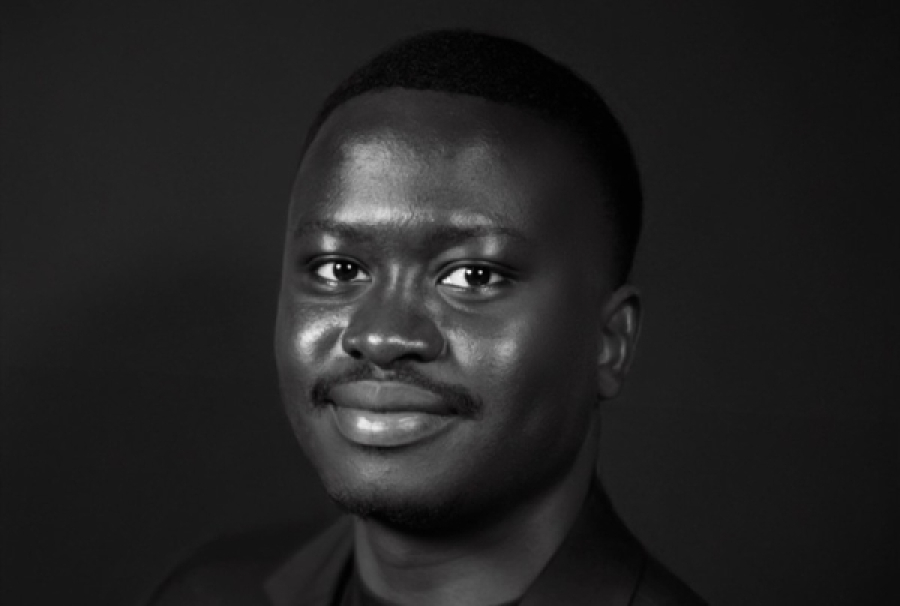
- Senegalese entrepreneur Lamine Dabo founded Agro‑AI in 2025 to optimize irrigation through artificial intelligence.
- The platform analyzes weather data, soil conditions, crop needs and irrigation network data to generate irrigation recommendations.
- The system aims to reduce water consumption by 20% to 35% while improving crop protection and farm management.
Senegalese entrepreneur Lamine Dabo focuses on the intersection between deep technology and agriculture. He develops digital tools designed to improve the management of irrigation systems in agricultural fields.
Lamine Dabo serves as founder and chief executive officer of Agro‑AI, a deeptech company created in 2025. The company supports agricultural producers who seek to reduce water consumption while protecting crop yields.
The platform currently operates in a pilot phase. The system provides digital recommendations that indicate the optimal time and ideal quantity of water for each irrigation block or parcel.
Importantly, the tool does not replace existing irrigation infrastructure. Instead, the system connects with sensors and irrigation systems already installed on farms. The platform then converts raw agricultural data into practical recommendations for farmers.
The company generates irrigation recommendations by combining several types of information. The system analyzes meteorological data and evapotranspiration indicators, which measure water loss caused by climate conditions. The platform also evaluates soil characteristics, including moisture levels and water retention capacity.
At the same time, the system incorporates crop types and their specific water requirements. In addition, the platform processes operational data from irrigation networks, including flow rates, pressure levels and applied water volumes.
This approach allows the platform to provide a precise, block-by-block view of crop water conditions.
Agro-AI’s system aims to deliver more consistent, predictable and transparent irrigation management across farms. The solution allows different stakeholders—including farmers, irrigation managers and landowners—to monitor water usage more accurately. The company estimates that its technology could reduce water consumption by 20% to 35% for users.
Lamine Dabo graduated from Sorbonne University, where he obtained a master’s degree in the history of international relations in 2024. He also earned a master’s degree in international relations and affairs from Paris-Panthéon-Assas University in 2024. He later obtained a master’s degree in international business analysis in 2025 from Hult International Business School. He completed a publishing internship in 2023 at Présence Africaine Éditions in France.
In 2024, he worked as an artificial intelligence research analyst at LASPAD‑UGB in Senegal. He later joined Harvard University in the United States, where he worked until 2025 as a strategy and evaluation consultant.
This article was initially published in French by Melchior Koba
Adapted in English by Ange J.A de Berry Quenum