

-
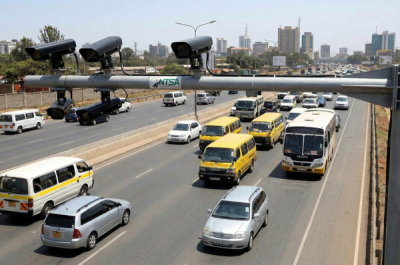
Kenya launched an automated traffic management system that detects violations and sends fines to drivers via SMS.
-
Authorities introduced the system to improve transparency, reduce corruption risks and curb rising road accidents.
-
Motorists groups raised concerns about appeals procedures, oversight and delays in issuing vehicle license plates.
Kenya has taken another step in digitizing road enforcement as authorities deploy automated systems to detect traffic violations and issue instant fines by text message.
The National Transport and Safety Authority (NTSA) announced on Monday, March 9 that it had activated an automated road-traffic management system that relies on intelligent cameras to identify violations. The system sends SMS notifications directly to offenders, removing the need for direct human intervention. Authorities said the reform aims to strengthen transparency, improve enforcement efficiency and enhance road safety. The government launched the strategy in 2020 as part of a broader push to reduce road accidents, which increased between 2024 and 2025.
On Tuesday, March 10, the NTSA published a list of 35 traffic violations and the corresponding instant fines. The penalty scale ranges from warnings for minor speeding to fines of 10,000 Kenyan shillings ($77.37) for more serious offenses. Authorities classified serious violations to include speeding, obstructive parking, failure to install mandatory speed limiters on public transport and commercial vehicles, and driving without a valid roadworthiness certificate.
The system also targets other infractions such as running red lights, driving on sidewalks or pedestrian crossings, and failing to wear a seatbelt. Offenders must pay the fine within seven days. Otherwise authorities apply interest and may block access to NTSA services.
A series of technological investments
The automated enforcement system builds on several technological reforms that the Kenyan government introduced since 2020. Kenyan law now provides for smart driver’s licenses embedded with electronic chips. The chip stores driver identification data, fingerprints, photographs, signatures and biometric information.
Authorities introduced second-generation license plates in 2022. Kenyan officials often describe these plates as “digital” or secure plates because they incorporate advanced security features and allow digital traceability of vehicle ownership.
The government added speed cameras and video surveillance to its road-safety strategy in 2024. Authorities deployed the cameras in pilot phases in 2024 and plan to expand the network in 2026 by installing additional units across six major cities. President William Ruto requested the expansion.
In practice, authorities link biometric licenses, secure license plates and camera systems to identify vehicles that commit violations more quickly. The system also connects offenses to specific drivers or owners and creates a digital driving record for administrative use.
Concerns persist
The automated traffic management system with instant fines has already triggered criticism from motorists.
The Motorists Association of Kenya (MAK) publicly asked the NTSA to provide urgent clarifications about the system. The group argued that the new system leaves several fundamental questions unanswered. It asked what procedure drivers can follow to contest fines and what safeguards can prevent an automated system from acting simultaneously as investigator, judge and enforcer. The association also asked who certifies and regularly verifies the quality of cameras and detection equipment. It further asked which public account will receive the collected fines and what public consultations preceded the system’s rollout.
The MAK also warned that the credibility of fully digital enforcement depends on the availability of vehicle identification documents. The association said production delays had left more than 70,000 license plates pending since February 2026, raising questions about how authorities used funds already collected from motorists for their manufacture.
“For the MAK, digitizing road control and sanctions is not enough,” the association said. “The entire administrative chain — plates, licenses, traceability and appeals — must function without delay or opacity.”
By placing roads under the watch of intelligent cameras and replacing paper tickets with SMS notifications, Kenya has signaled a clear ambition: reduce traffic violations, limit corruption-prone roadside interactions and modernize road safety.
Authorities hope the system will help reduce accidents, which reached 5,009 cases in 2025 compared with 4,748 in 2024, according to data from the National Council on the Administration of Justice (NCAJ).
This article was initially published in French by Muriel EDJO
Adapted in English by Ange J.A de Berry Quenum