

-
Central bank launches work on a national instant payment platform
-
System aims to speed up transactions and expand financial inclusion
-
Project relies on open, interoperable technology
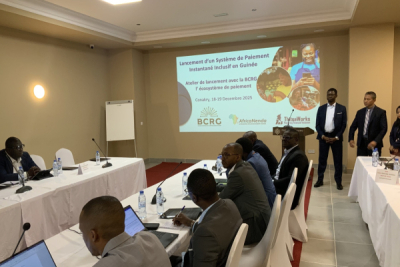
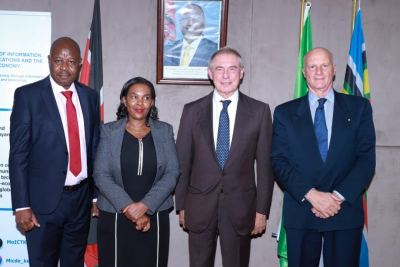
Guinea’s central bank, the Banque centrale de la République de Guinée (BCRG), launched work on the implementation of an instant payment system (SPI) on December 18. The digital infrastructure is designed to modernize payment methods and support broader financial inclusion in the country.
At the opening ceremony, BCRG First Vice Governor Mohamed Lamine Conté said the project stems from a consultative process that involved banks, electronic money institutions, microfinance institutions, and fintech companies. He said the SPI will allow users to send and receive funds in real time, at any time of day and without geographic constraints. The system is expected to address delays linked to traditional payment channels and support both merchant payments and personal transfers.
From a technical standpoint, the BCRG has opted for a public, open, and interoperable infrastructure based on Mojaloop technology. According to the central bank, this choice aims to limit technological dependence, encourage local innovation, and foster competition among financial service providers. Under this setup, real-time transfers will be possible between bank accounts, mobile wallets, and other payment instruments, laying the groundwork for a more integrated financial ecosystem.
The project takes shape as Guinea continues to face challenges in financial inclusion. BCRG data show that 23% of adults hold an account with a financial institution, up from 7% ten years ago. Despite this progress, the rate remains below the average for sub-Saharan Africa, even as digital financial services gain traction.
Mobile money services continue to expand in this context. Transactions through mobile money rose by 8.6%, from 43,077 billion Guinean francs ($4.9 million) in the previous quarter to 46,795 billion in the second quarter of 2024, reflecting growing reliance on digital solutions as alternatives to traditional banking.
At the regional level, the SPI aligns with a broader African trend toward instant payment systems, which now process tens of billions of transactions each year. Cross-border platforms such as the Pan-African Payment and Settlement System (PAPSS) highlight the importance of robust national infrastructures that can connect with regional mechanisms and support deeper economic integration.
While the operational timeline for Guinea’s SPI has yet to be specified, the expected benefits remain significant. By reducing cash usage and enabling secure, instant transactions, the system is expected to improve financial flows for households, businesses, and the public sector. Effective interoperability could also lower transaction costs and strengthen transparency and trust in the formal financial system.
Samira Njoya