




Public Management (627)
Building on the general-purpose e-learning platform -Atingi- that it launched in November 2020, Smart Africa has announced the launch of a new platform dedicated to technology and digital literacy.
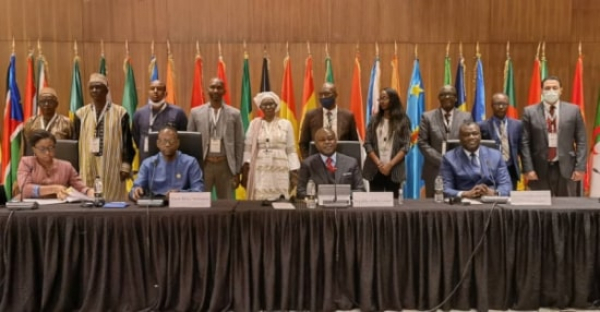
On the sidelines of its 5th ICT Ministers’ Council held last February 25 in Kintélé, in the Republic of Congo, the Smart Africa Alliance announced the launch of its academy designed to improve the digital skills of Africans. The Smart Africa Digital Academy (SADA) offers free online courses accessible on https://sada.atingi.org/.
SADA's courses are focused on seven areas: digital skills and transformation, management and leadership, agriculture, career guidance, entrepreneurship, health, and governance and decentralization. Currently, three courses are already available on the platform. These are "Economic Foundations of Regulation" developed by Laurent Gille, economist, professor emeritus of Télécom Paris; "ICT Infrastructure" developed by UNESCO, Cetic.br/NIC.br and the SDG Academy; and "Dimensions and Causes of the Digital Divide" developed by GIZ and Atingi.
Smart Africa has also scheduled a webinar for September 22 to discuss the "Agile Regulation for Digital Transformation" in Africa. The workshop will feature Patrick Njoroge, the head of the Central Bank of Kenya, Anna Pietikainen, senior policy advisor at the OECD, Edmund Fianko, the deputy head of the National Communications Authority of Ghana, and Roslyn Docktor, director of government and regulatory affairs at IBM Corporation.
"The Smart Africa Digital Academy – SADA for short – provides the courses, webinars, and opportunities for exchange to policymakers and regulators to promote digital transformation in Africa. With its various learning programs and formats, SADA wants to improve participants’ skills for drafting inclusive, gender-sensitive, and climate-smart ICT regulations,” according to the information available on the Atingi platform.
“SADA also reaches a wider audience from entrepreneurs to engaged citizens to improve their digital literacy, so that they can fully benefit from the new potentials offered by digital technologies.”
SADA’s access platform is fully responsive and adapts to a variety of screen sizes, including desktop, tablet, and mobile. Training courses are available in English, French, German, Spanish, Arabic, Vietnamese, Mandarin, and Portuguese. Courses are downloadable.
Muriel Edjo
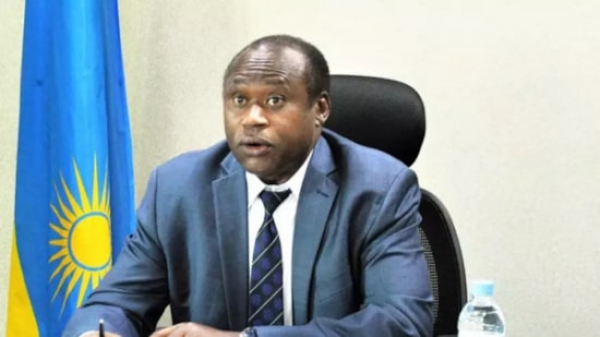
The Rwandan Parliament approved last February 21 the signing by the government of an €86.5 million loan agreement with the Asian Infrastructure Investment Bank (AIIB). Rwanda wants to accelerate the use of ICTs in public administrations. The agreement was presented in detail by the Minister of Finance, Uzziel Ndagijimana (pictured), and discussed with MPs.
“The aim is to promote the use of technology in development, increase service delivery, and use of big data. This will also enable the innovation agenda and increase job creation in technology but also attract investments. The fiber didn’t reach all areas but this time it will be expanded to reach sectors, more government offices, and other organizations including religious organs,” Ndagijimana said, stressing that the 28-year loan will also be used to provide subsidized access to technology equipment for government agencies. This will make public services faster, more transparent, and more efficient.
The project will be piloted by the Rwanda Information Society Authority (RISA).
Muriel Edjo
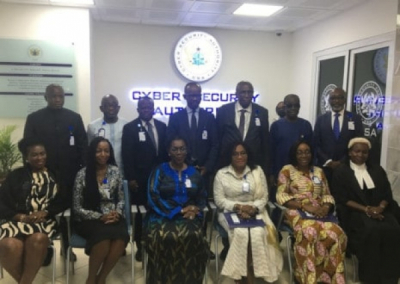
Ghana seeks to become the most cyber-secure country in Africa in the coming years. Speaking during the installation ceremony of the Board of Directors of the National Cybersecurity Authority last week, the country’s Minister of digitalization said “the government, within the last five years, has taken our cyber security development seriously.”
“The establishment of the Cyber Security Authority is one of the critical milestones achieved,” under this strategy, Ursula Owusu-Ekuful said. According to the International Telecommunication Union's (ITU) 2020 Global Cybersecurity Index report, Ghana ranked third in Africa and 43rd in the world based on the preparedness of the legislative and technical environment for cybercriminal attacks. With a score of 86.69/100, the country was better ranked than South Africa, which attracts the main foreign investment in digital technology, including data centers and optical fiber networks. The top 3 consists of Mauritius, Tanzania, and Ghana.
“We cannot simply sustain our digitalization efforts without cyber security. Cyber-attacks could undermine our gains in digitalization. It could undermine our social and economic well-being and consequently, our national security,” Ursula Owusu-Ekuful said.
Adoni Conrad Quenum
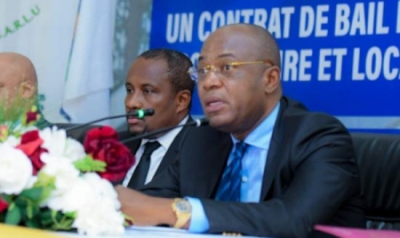
The DR Congo government has unveiled plans to digitize lease contracts. The strategy was launched last February 18 by Gentiny Ngobila Mbaka (pictured), governor of Kinshasa.
The government aims, through this plan, to create a database of rental properties so that it can easily identify both the owners and the tenants. This, in turn, will contribute to an efficient collection of rental property tax revenues.
The project will allow "the tax and financial service of the city of Kinshasa to monitor, in real-time, what the taxpayer has already paid. The city of Kinshasa, for its development, needs the participation of all Kinois (residents of Kinshasa, ed). The lease contracts are an important source of revenue because those subject to the tax on rental income are numerous and if they regularly paid this tax, the city would have the means of its policy," said the governor. The digitization project has been entrusted to the company Okab. The latter will provide the housing departments of the twenty-four communes of Kinshasa with the computer hardware and software necessary for the registration of rental contracts or books and the identification of lessors and tenants.
Ordinance-Law 69-006 of 10 February 1969 on the real tax of DR Congo stipulates in its "Chapter II: Taxpayers", Article 8, that "the property tax is due by the holder of the right of ownership, possession, emphyteusis, surface area, transfer, concession or usufruct of the taxable property, as well as by persons occupying, by a lease, real estate that is part of the private domain of the State, the provinces, the cities, and the communes, or of the assets of the districts."
Chapter III: Determination of the tax rate emphasizes in Article 13 that "an annual lump-sum tax is instituted as a property tax on built and unbuilt properties, the amount of which varies according to the nature of the buildings and the rank of the localities.”
Governor Gentiny Ngobila Mbaka pointed out that field teams in charge of digitizing lease contracts have already been trained and will soon be deployed first in the commune of Gombe which will serve as a pilot commune for the project.
Muriel Edjo
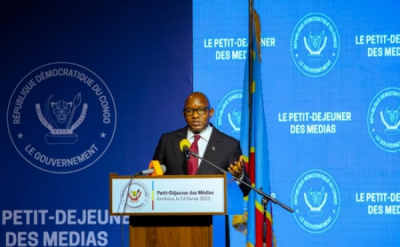
Since coming into power in 2019, Felix Tshisekedi has made the digital sector a tool for growth in the DRC. The Digital sector has been used to support the various economic sectors and is now being used to restore the country's brand image at the national and international levels.
The various ministries, presidency departments, and other public institutions of the Democratic Republic of Congo now have a digital platform where they can officially communicate. The portal www.republique.cd was officially launched last February 14 by Prime Minister Jean-Michel Sama Lukonde Kyenge (pictured).
The new website will help harmonize government communication, authenticate information, and fight against fake news. It is touted as the "digital gateway" of the DRC. According to the Minister of Digital Affairs, Désiré Cashmir Eberande Kolongele, the platform will centralize all official information - meeting minutes, report publications, activity announcements, etc. – so that they are easily accessible to Internet users. Currently, DRC has more than fifty ministries, plus large administrative departments. Many of them do not have an Internet presence, which often makes it difficult to authenticate the information from them.
"I wanted to invite the various public administrations, starting obviously with the ministries, the services of the presidency, and other institutions to use this portal and bring reliable information. We aim to give people first-hand and true information through this portal," said the Minister of Digital Affairs.
The project is part of the sectoral digital policy adopted by the government when it was creating the dedicated ministry on April 26, 2021. One of the components of this policy is to build “the brand image of the Republic and ensure visibility at the international level.”
The government also plans to adopt a state brand through a common visual identity for all websites of ministries and public institutions. Twitter accounts will also be opened and certified for all government entities.
Adoni Conrad Quenum
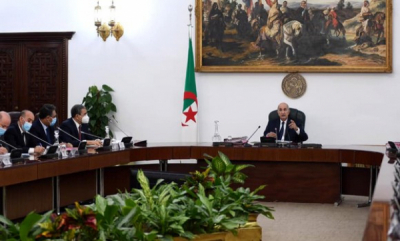
Mobile phones represent a key asset for African countries to accelerate their digital economies. However, a barrier to this goal is the high cost of the devices. To improve mobile penetration rate across its territory, the Algerian government announced last Feb. 13 it has approved "the abolition of all taxes and duties on e-commerce, mobile phones, computer equipment for personal use and startups." The measure is provided for in the 2022 finance law approved in December 2021.
By removing the tax on e-commerce, the government facilitates online transactions, especially for individuals who have become accustomed to buying tech devices abroad. For innovators and startup promoters, this is an opportunity to easily acquire technical equipment. In the Finance Act 2022, a cumulative rate of duties and taxes of 133.05% was applied for the purchase of smartphones and tablets, 60.22% for hard drives. This makes the tax more expensive than the actual imported device.
The tax removal measure came after weeks of protests by Algerians, who kicked off an online campaign using the hashtag #khelini_nechri (let me buy). During the 6th edition of the Forum "Rakmana," held on January 19 in Algiers, the Algerian Group of Digital Actors (GAAN) had also denounced these taxes that "go against the general interest."
According to the Alliance for Affordable Internet and the Global System Operators' Association (GSMA), the high cost of smartphones is one of the main barriers to mobile Internet penetration in Africa, where the rate was only 28% in 2020.
Muriel Edjo

Malawi has embarked since 2010 on the development of its financial ecosystem. Since then, the country has developed three strategies to achieve its goal, with the digital at the heart of the 2022-26 strategy.
The Malawian government reached a $14.2 million deal with the African Development Fund (ADF) -the concessional window of the African Development Bank (AfDB) Group- to make its digital payment system more efficient. The agreement was inked last February 10.
The project includes the extension of the Internet network, the digitization of more payment channels, the development of payment system interoperability, the introduction of digital payment solutions in various sectors such as agriculture. The ultimate goal is to improve financial inclusion in the country, especially for women, youth, and rural people. This will subsequently make business transactions more efficient, allowing small businesses to access new domestic and international markets.
The ADF’s investment aligns with Malawi’s Digitization, Financial Inclusion, and Competitiveness (DFIC) Support Project approved in December 2021 by the AfDB. Sosten Alfred Gwengwe, Malawi's Minister of Finance and Economic Affairs explained that “the DFIC project is aligned with the Malawi Digital Economy Strategy (2021-2026) and the Third National Strategy for Financial Inclusion (2022-2026); both contribute to achieving Malawi’s long-term objective of inclusive wealth creation supported by an inclusive financial system and digital economy.”
AfDB seeks, through the DFIC project, to help increase financial inclusion in Malawi from 58% in 2019 to 65% in 2025 (with 42% women and 37% rural populations); contribute to the improvement of the country's ranking in the Global Competitiveness Index (GCI) from 5.7% in 2019 to 7% in 2025.
The Bank also aims to contribute to increasing the export penetration rate (number of markets) from 79% (2018) to 100% (2025); increasing the volume of exports from 31% of GDP in 2019 to 35% in 2025, and improving the contribution of ICT to GDP from 5.7% in 2019 to 7% in 2025.
Adoni Conrad Quenum
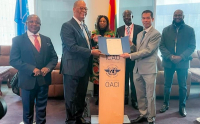
The Ghanaian national ID card is officially accepted as an e-passport in 197 countries worldwide. The country received a certificate attesting to the fact last February 9 from the International Civil Aviation Organization (ICAO). The ceremony took place at ICAO’s headquarters in Montreal, Canada.
Ransford Sowah, Ghana’s ambassador to Canada, who represented the country during the ceremony, explained that “with the Key Ceremony, all holders of the Ghana Card have an ICAO-compliant e-passport that can be read and verified at all ICAO-compliant airports/border posts across the world. It can be used for international travel - a subject of course to visa restrictions and bilateral agreements. Indeed, the Ghana Card is already valid for travel in all ECOWAS countries.” The Ghanaian ID contains all the biometric information which can be used to authenticate the identity of the holder with a cryptographic digital signature stored on the chip, similar to that of the passport. This transition was already announced last November by Vice President Mahamudu Bawumia during a conference at Ashesi University on the role of digitalization in the transformation of the Ghanaian economy.
As a reminder, Ghana officially became the 79th member of the ICAO Public Key Directory (PKD) community on October 13, 2021. The ICAO PKD is a central repository for exchanging information required to authenticate e-passports.
“For Ghanaians living or born in the diaspora, holders of the Ghana Card can be allowed to board any flight to Ghana without any visa requirement as we seek to give an inclusive Akwaaba [meaning welcome in Twi, a local language in Ghana, ed] experience to all children and descendants of our motherland,” Ransford Sowah concluded.
Adoni Conrad Quenum
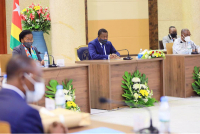
Togo wants to leverage digital technology to achieve inclusive and sustainable economic growth. To this end, it has established the Togo Digital Agency, which will help the government implement digital projects.
Last Monday, Feb 7, Togo's Council of Ministers adopted a draft bill aimed at accelerating the digitization of visa and resident permit applications and issuance. The meeting was held in Kara (412 km north, from Lomé).
"The main purpose of this draft bill is to update the general rules applicable to the entry, stay, movement, and settlement of foreigners on Togolese territory. In particular, it provides for the digitization of the process of applying for and issuing visas and residence permits," said the Council's statement.
The adoption aligns with the third axis of the government's roadmap, which aims at "modernizing the country and strengthening its structures."
Pending the bill's implementation, foreigners can still get their visas (tourist, diplomatic, business) at Togolese consulates and embassies (which can also issue immigrant visas for Togo).
On the territory, visas on arrival are issued by immigration services at the borders and the Gnassingbé Eyadéma International Airport. They are valid for a maximum period of 7 days, according to available information, but can be extended to a month at the Foreigners and Passports Office. For other types of visas, it is the Direction générale de la Documentation Nationale (DGDN) that handles related procedures.
Ayi Renaud Dossavi
With digital transformation accelerating worldwide, the competition among solution providers is getting tougher. To enable their investors to leverage opportunities brought up by this transformation, some governments have started taking strong measures.
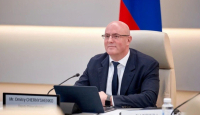
This year, Russia will deploy digital attachés in 16 countries. This was disclosed last Monday, Feb 7, by Russian Deputy Prime Minister Dmitry Chernyshenko (pictured). South Africa - the largest digital market in Africa and a privileged partner of Russia on the continent through the BRICS (economic grouping formed by Brazil, Russia, India, China, and South Africa) - is one of the countries to welcome one of these attachés.
The deployment of digital attachés in some Russian embassies is the result of a collaborative agreement between the Ministry of Digital Development, Communications and Media, the Ministry of Industry and Trade, and the Russian Fund for the Development of Information Technology (RFRIT), and is part of the government's efforts to support the domestic IT industry.
Recruited attachés will “promote domestic software products abroad, provide consulting, information and analytical, legal and organizational support to Russian IT companies. Their main task is to develop the export of Russian digital solutions," said Russian Prime Minister Mikhail Mishustin. By 2024, the number of countries where Russian digital attachés will be stationed should grow to 28.
Russia’s digital attaché will be joining the US digital attaché in South Africa. The American representative came into the country in December 2016, to promote US tech companies and help SA navigate through foreign digital and trade policies. The US, let’s recall, launched its digital attaché program in 2014.
In Russia, it is the Russian Ministry of Digital Development, Communications, and Media that handles the ongoing recruitment of digital attachés.
Muriel Edjo
More...
National health systems must adapt to technological developments. This is something every country around the world realized with the COVID-19 pandemic. Sierra Leone, which has been making efforts in this regard since 2019, now explores international partnerships to quickly bridge the mismatch between its health system and technological developments.
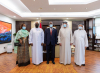
The United Arab Emirates (UAE) is offering Sierra Leone its digital health expertise. The UAE Ministry of Health and Prevention revealed this on Monday 7 February after the two countries' respective health ministers, Mohammad Salim Al Olama (UAE) and Austin Demby (Sierra Leone) discussed the matter while recently meeting in Dubai.
During the meeting, Mohammad Salim Al Olama briefed the Sierra Leonean minister and his delegation on the UAE's achievements in digital health services and health innovation, in line with efforts to fight diseases, improve health education, promote healthy nutrition, etc. The official also spoke about the UAE government's progress in health data management and health information systems development.
Sierra Leone has one of the worst health systems in the world, according to the 2021 Global Health Security (GHS) Index. Produced by the Nuclear Threat Initiative (NTI), the John Hopkins Center for Health Security at the Bloomberg School of Public Health, working with Economist Impact, the GHS Index assesses 195 countries across six categories, 37 indicators, and 171 questions. Using publicly available data, the index compares health security in featured countries, based on their capabilities to prevent diseases, the number of doctors, the number and quality of health facilities, etc. In last year's rankings, Sierra Leone was 116th with a score of 32.7 out of 100.
Leveraging digital technologies to improve its public health system, Sierra Leone will have to invest heavily in its internet infrastructure. The country's internet penetration rate currently stands at 25% only, according to the Hootsuit and We Are Social Digital Report.
In 2019, Sierra Leone became the first African member state of the World Health Organization (WHO) African region to fully digitize its disease monitoring system. The project was started with the WHO's support and was successfully deployed in all 14 districts of the country as well as in all its public health facilities.
Muriel Edjo