
- Kenya introduced a loan guarantee mechanism to improve bank lending to startups.
- The scheme involves United Nations Capital Development Fund and Co-operative Bank of Kenya under the DigiKen program.
- Authorities aim to address persistent financing constraints despite a fast-growing startup ecosystem.
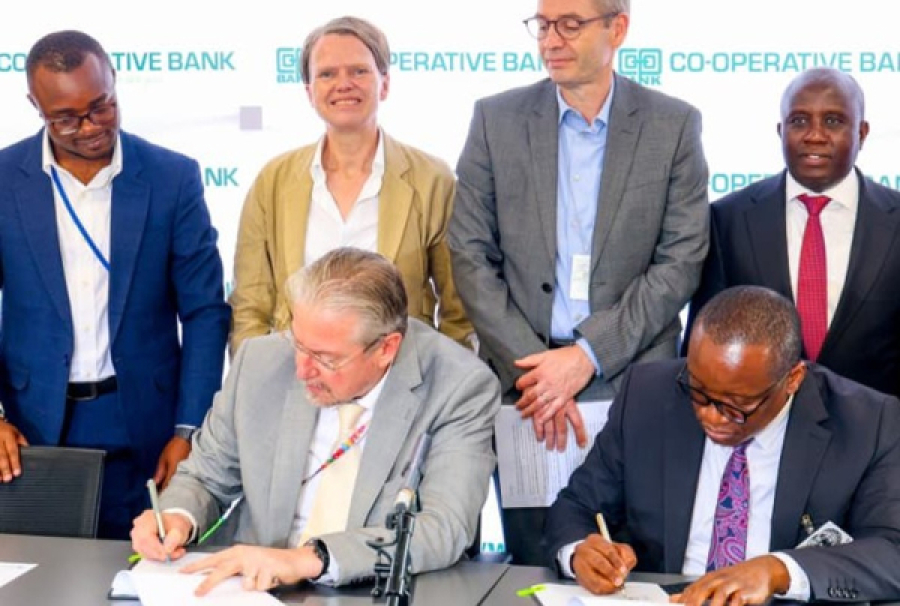
Kenya has introduced a credit guarantee mechanism to strengthen financing for its technology ecosystem by addressing constraints in local bank lending. United Nations Capital Development Fund and Co-operative Bank of Kenya formalized the initiative on Tuesday, March 17 in Nairobi.
They integrated the mechanism into the DigiKen program to reduce the perceived risk associated with early-stage and scaling digital companies. Therefore, the initiative aims to encourage banks to extend credit to startups that typically struggle to secure financing.
𝐋𝐚𝐮𝐧𝐜𝐡 𝐨𝐟 𝐅𝐢𝐧𝐚𝐧𝐜𝐢𝐧𝐠 𝐅𝐚𝐜𝐢𝐥𝐢𝐭𝐲 𝐭𝐨 𝐔𝐧𝐥𝐨𝐜𝐤 𝐆𝐫𝐨𝐰𝐭𝐡 𝐟𝐨𝐫 𝐈𝐧𝐝𝐢𝐠𝐞𝐧𝐨𝐮𝐬 𝐃𝐢𝐠𝐢𝐭𝐚𝐥 𝐏𝐥𝐚𝐭𝐟𝐨𝐫𝐦𝐬 𝐚𝐧𝐝 𝐌𝐒𝐌𝐄𝐬
— Ministry of Info, Comms & The Digital Economy KE (@MoICTKenya) March 17, 2026
Nairobi, Kenya – 17th March, 2026
The Ministry of Information, Communications and the Digital Economy today… pic.twitter.com/rWoBshALxJ
A Structured and Growing Digital Ecosystem
The mechanism comes amid strong growth in Kenya’s digital economy. Kenya has established itself as a leading technology hub in Africa, supported by a dynamic startup ecosystem across fintech, digital services, and e-commerce. International rankings confirm this trend.
According to the StartupBlink index published in March 2026, Kenya hosts 612 startups, reinforcing its position as a regional innovation hub. At the same time, public investment in infrastructure has supported this expansion.
Authorities report that more than 40,000 kilometers of fiber optic networks have been deployed nationwide. They also state that the eCitizen platform has more than 16 million users and records around 500,000 daily logins.
Addressing Startup Financing Constraints
Despite these advances, startups continue to face significant barriers to accessing financing. Banks often consider these companies high-risk due to emerging business models and uncertain revenue streams.
Therefore, the new mechanism relies on risk-sharing to reduce financial institutions’ exposure. As a result, stakeholders aim to correct this market failure by mobilizing public and private partners around an innovative financing model. They expect the scheme to stimulate lending and support the scaling of local startups.
This article was initially published in French by Samira Njoya
Adapted in English by Ange J.A de Berry Quenum