
- Rwanda’s Cabinet approved the creation of a National Artificial Intelligence Agency on June 8 to accelerate AI development, adoption, investment and governance.
- The agency will coordinate public and private AI initiatives and support deployment across sectors including healthcare, education, agriculture and public administration.
- Rwanda continues to expand its AI ecosystem through initiatives such as the Rwanda AI Scaling Hub, which has secured about 25 billion Rwandan francs ($17 million) in funding.
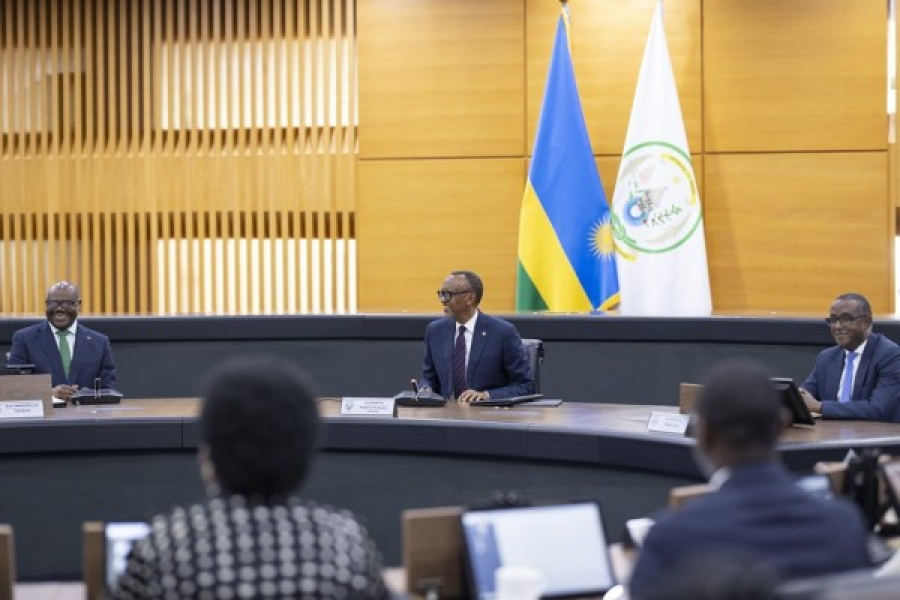
Rwanda has expanded its institutional framework for artificial intelligence. The Cabinet approved the creation of the National Artificial Intelligence Agency on Monday, June 8. The new agency will accelerate AI development, adoption, investment and governance in support of the country's digital transformation and economic growth objectives.
The agency will become Rwanda’s first institution fully dedicated to artificial intelligence. The organization will coordinate public and private sector initiatives, promote the development of AI-based solutions and strengthen the governance framework required to deploy the technology across sectors including public administration, healthcare, education and agriculture.
The decision follows the implementation of Rwanda’s national artificial intelligence policy adopted in 2023. Through that roadmap, Kigali aims to position itself as one of Africa’s leading AI hubs by investing in skills development, research, data infrastructure, private-sector investment and responsible innovation.
At the same time, Rwanda continues to accelerate investment across its technology ecosystem. The Rwanda AI Scaling Hub program, supported by several international partners, has secured approximately 25 billion Rwandan francs ($17 million) in funding to promote the adoption of artificial intelligence solutions across the economy and public services.
Beyond the creation of a new government institution, Kigali aims to consolidate its lead in a continent where many countries remain at the strategic planning stage of AI development.
In 2023, Minister of ICT and Innovation Paula Ingabire said that nearly 70% of Rwanda’s national AI policy focused on skills development. She identified talent development as the primary driver for building a local industry capable of producing solutions tailored to African realities.
This strategy also responds to broader economic objectives. According to the UNESCO, Rwanda continues to face challenges related to the availability of specialized talent, access to training data and research capacity.
However, the country maintains significant advantages. Rwanda benefits from a regulatory environment that supports digital innovation, while government policy continues to prioritize emerging technologies as a driver of long-term economic development.
This article was initially published in French by Samira Njoya
Adapted in English by Ange J.A de Berry Quenum