
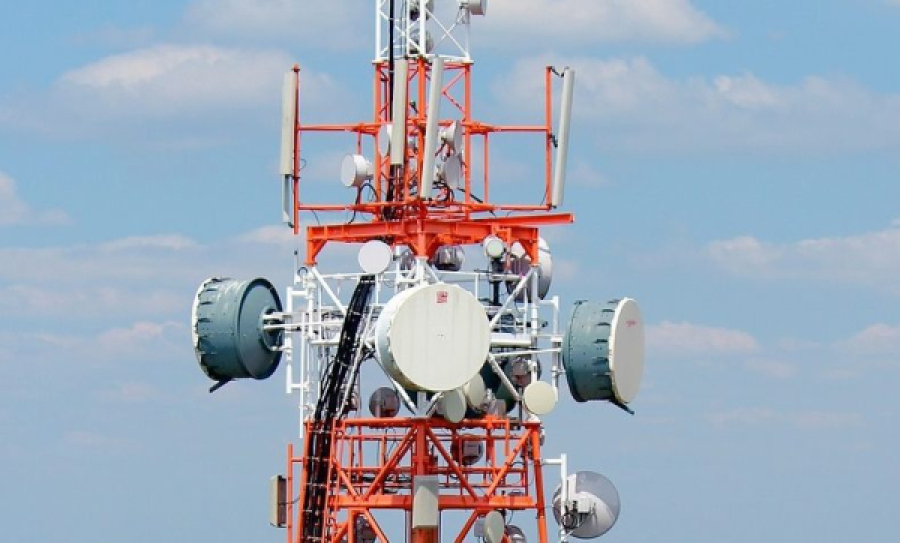
- President Abdel Fattah al-Sisi has called for expanded local production of telecom equipment and development of data centers and cloud services.
- Egypt’s telecommunications sector accounts for about 6% of GDP and posts annual growth of 14%–16% for the seventh consecutive year.
- Egypt has attracted nearly $200 million in telecom manufacturing investments and aims to raise mobile phone output to 15 million units per year.
Since launching its “Vision 2030” development strategy in 2016, Egypt has positioned digital transformation as a central pillar of economic growth. The country has relied on the expansion of ICT infrastructure and the promotion of digital inclusion as key drivers of this strategy.
On Monday, Jan. 5, 2026, Egyptian President Abdel Fattah al-Sisi emphasized the need to open new horizons for the telecommunications and digital industries. He instructed officials to study opportunities to develop data centers and cloud computing services, expand local production of telecommunications equipment, and establish effective mechanisms to support and promote locally manufactured products.
Officials discussed these issues during a meeting that included Prime Minister Moustafa Madbouly, Minister of Communications and Information Technology Amr Talaat, and National Telecommunications Regulatory Authority (NTRA) Executive President Mohamed Shamroukh.
Amr Talaat said the telecommunications sector now contributes about 6% of Egypt’s gross domestic product and records annual growth ranging between 14% and 16% for the seventh consecutive year. He also reported that digital services exports have risen to $7.4 billion, compared with $3.3 billion seven years earlier.
By investing in the development of data centers, Egypt strengthens the security of strategic state data and data from key domestic market sectors. At the same time, the country attracts international companies by building infrastructure credibility, which supports its ambition to position itself as a regional hub for high-performance digital services.
Telecommunications currently represent one of the pillars of Africa’s digital economy, particularly in Egypt. Strengthening local equipment manufacturing reduces network transformation costs for telecom operators and supports further investment. Locally produced mobile phones, offered at more affordable prices, are expected to improve accessibility and expand the use of value-added digital services among a larger share of the population.
According to Amr Talaat, Egypt has increased mobile phone production capacity from 3.3 million units in 2018 to 10 million units in 2025, with local value added estimated at around 40%. The government aims to raise annual production capacity to 15 million units. Through industrial localization efforts launched in 2016, supported by several incentive schemes, Egypt has already attracted 15 international brands, including Samsung, Xiaomi, Oppo, Vivo, and Nokia, as well as nearly $200 million in investment.
Muriel EDJO