



CleanTech: Off-Grid Solar Gains Ground in Africa and Creates New Opportunities
-
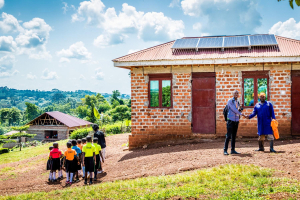
Off-grid solar supplied 561 million people in 2023 and accounted for 55% of new electricity connections in Sub-Saharan Africa between 2020 and 2022.
-
Private operators like Sun King, Bboxx and Orange Energies expanded rapidly and secured major financing agreements in 2023–2024.
-
The sector needs $3.6 billion per year until 2030, including 40% in subsidies, to electrify the poorest and most remote households.
The lack of adequate grid infrastructure has turned Africa into a testbed for agile energy solutions. The rapid adoption of solar technologies is transforming millions of lives, although persistent constraints continue to slow progress.
Africa remains the global epicenter of energy poverty. The International Energy Agency (IEA) reports that most of the 730 million people without electricity live in Sub-Saharan Africa. The African Development Bank (AfDB) estimates that over 600 million Africans, nearly half the continent, still lack access to electricity.
AfDB states: “For these people, daily life is a struggle illuminated by the dim glow of kerosene lamps or the intermittent hum of diesel generators. These stopgap solutions are costly and polluting, perpetuating cycles of poverty and environmental degradation.” AfDB warns that the number of people without electricity will remain largely unchanged without “bold and immediate measures.”
Given the implications for productivity, education and health, the IEA considers decentralized solar a strategic priority for the continent.
The World Bank and AfDB partnered under the Mission 300 initiative to connect 300 million Africans by 2030. The World Bank states that off-grid solar represents the quickest and most cost-effective option to electrify 41% of the global population still without power by 2030.
Off-grid solar systems served 561 million people in 2023. Between 2020 and 2022, they provided 55% of new connections in Sub-Saharan Africa. The World Bank adds that off-grid solar remains cheaper and faster to deploy than grid or mini-grid connections for current levels of demand.
Growing network challenges—low coverage, limited capacity, aging infrastructure and expensive tariffs—continue to push households and firms toward off-grid solutions. The World Bank’s Off-Grid Solar Market Trends Report 2024 estimates that generators supply nearly 9% of the region’s electricity and cost households $28–50 billion per year in fuel, plus an additional 10–20% in maintenance.
Solar kits reduce energy costs, extend business hours, strengthen cold chains and boost small enterprise revenues. Electricity improves daily life by providing lighting, cooling, refrigeration, information access and nighttime security. Solar pumps help households adapt to drought and increase agricultural productivity, while refrigeration reduces post-harvest losses and preserves vaccines in health centers.
The Energy Sector Management Assistance Program (ESMAP) reports rapid growth in “productive uses” of off-grid systems across agro-processing, crafts and services.
ESMAP states: “Off-grid solar systems allow households, businesses and farmers to use electricity productively and generate income. Among 79,000 surveyed off-grid customers in 31 countries, 86% of solar pump users increased productivity and 60% expanded cultivated areas, resulting in higher incomes for 88% of them.” ESMAP adds that 88% of refrigerators served productive uses, and 81% of users reported improved quality of life. In 2023, more than 3 million people operated a business using home solar systems.
The Pay-as-you-go (PAYGo) model accelerated sector growth by allowing customers to pay for equipment in installments using mobile money, scratch cards, airtime credit or cash.
Private Sector Drives Expansion
Startups strengthened their position between 2018 and 2024, even as financing dropped from $194 million to $192 million in 2024 after peaking at $425 million in 2023.
Sun King became a leading operator and supplies solar energy to 30% of Kenyan households. The company signed a $156 million securitization deal in July 2024 with ABSA, Citi, Co-operative Bank of Kenya, KCB Bank and Stanbic Bank Kenya. This deal follows a $130 million 2023 transaction aimed at distributing 3.7 million solar products in Kenya.
Bboxx expanded significantly over the past five years. The acquisition of PEG in 2022 extended its footprint into Côte d’Ivoire, Ghana and Mali. The company now operates in about ten countries and supplies over 2.5 million people with solar products.
Telecom operator Orange also made off-grid energy a strategic priority. Through Orange Energies, the group connected over 600,000 households in 2024, giving nearly 4 million people access to electricity across 13 countries. The company developed the Orange Smart Energies IoT platform to support PAYGo and smart metering and now partners with vendors, utilities and mini-grid developers.
Orange Energies supplies solar panels, smart batteries, LED lamps, USB sockets and rural household appliances—including fans, freezers, TVs and radios—in partnership with Koolboks, Biolite, Sun King and Solar Run.
International institutions increasingly recognize Orange Energies’ expertise. In June 2024, the company won a €150,000 AFD tender to electrify more than 400 rural localities in Côte d’Ivoire under the EU-funded MAX project. In September 2024, the World Bank and GIZ awarded Orange Energies a $360,000 contract to equip 8,000 off-grid households in Liberia with autonomous solar solutions by June 2025.
Orange Energies also signed a public-private partnership in Guinea with the Rural Electrification Agency (AGER) and IPT PowerTech to build a mini-grid that will supply electricity to six localities.
Off-grid solar is no longer experimental. It has become an industrial, financial and social sector that electrifies communities, generates income and reshapes daily life. Yet several risks threaten long-term momentum.
Persistent Risks Threaten Scale
Market forces alone cannot electrify rural Africa. Reaching the poorest and most remote households requires public funding through subsidies, guarantees and concessional finance. The sector estimates that it needs $3.6 billion annually through 2030 to electrify those for whom off-grid solar is the lowest-cost solution. About 40% of this amount must come from targeted subsidies.
Extreme poverty limits the scale of PAYGo. Only a minority of rural households can afford monthly payments. Logistics challenges in remote or conflict-affected areas can raise final prices by 57%, pushing households back to candles, kerosene or shared generators. Only 22% of unelectrified households globally can afford PAYGo installments—a figure that drops to 16% in Sub-Saharan Africa.
Low household incomes directly weaken the financial health of solar companies. PAYGo repayment rates stagnate around 62%, and one in four customers faces payment difficulties. Most startups borrow in foreign currencies but collect revenue in local currencies, exposing them to FX risks.
Inflation and currency depreciation add further pressure. In Nigeria, the price of basic solar lanterns rose 91% to 300% in 2023 in local currency, erasing gains from lower global component prices.
Africa’s dependence on imports and the lack of local assembly also constrain scale. Without domestic assembly, reliable maintenance networks or affordable spare parts, systems break down frequently and leave households without electricity. Low-quality solar products—estimated at 70% of sales—undermine consumer trust. Shortages of skilled technicians in remote areas further hinder deployment.
Muriel Edjo
This Young Beninese Boosts Access to Solar Energy in His Country, and Others

After he completed his master's degree in energy economics in France, he returned to his home country where many people still struggle to have electricity. There, he founded ARESS, an innovative solution that solves this issue through solar energy.
Léonide Michael Sinsin (pictured) is a doctor in energy economics, who graduated from the Paris Dauphine University. He completed his whole schooling in France, and in 2012 during a trip to Benin, his country, he founded with Paul Berthomieu, a classmate who went with him, African Renewable Energy System Solutions (ARESS). Sinsin had just completed his Master’s. He is ARESS’ CEO.
ARESS is a small and medium enterprise (SME) specializing in the field of renewable energies. Active in Benin, Togo, Burkina Faso, and Senegal, ARESS sells solar equipment, sets up solar installations, and provides energy audit and maintenance services.
At first, the business was selling energy equipment but quickly realized that rural customers had issues making the payments, despite having the capacity to pay in installments spread over months.
Sinsin and Berthomieu, however, found a way around this challenge. They set up a system that automatically deactivates the equipment in case of non-payment. Buyers could still pay in installments over 36 months.
In 2016, the new startup, MyJouleBox, which develops equipment, software, and economic and social solutions to innovate in solar development, was born from this Pay As You Go model. In 2022, the company was part of the top 45 most innovative startups in Africa at the AfricaTech Awards.
Since 2022, Léonide Michael Sinsin has also been the president of the Interprofessional Association of Renewable Energy Specialists of Benin (AISER-Benin), which promotes and defends the interests of actors in the renewable energy sectors. Between 2012 and 2015, he worked as a senior technical writer for the pan-African think tank "L'Afrique des Idées".
Melchior Koba
Gabon: Orema makes prepaid meter management easy
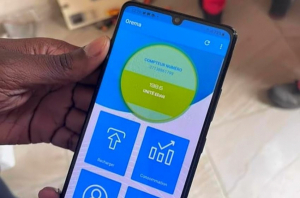
In most African countries, the digital transformation prompted by Covid-19 has continued unabated after the pandemic. This is also the case in Gabon, where entrepreneurs have partnered with the electric and water utility SEEG to develop a tech solution that makes life easier for prepaid meter users.
Orema is a mobile app developed by the eponymous Gabonese startup founded by Jean Claude Birane Ndiaye and Scarlett Pindji. It allows users to manage their prepaid electric meters right from their smartphones or a web platform.
The solution was developed when co-founder Birane Ndiaye noticed how difficult it usually was to load prepaid meters during the rainy season since such meters are generally installed outside. With Orema, users no longer have to move an inch to check their prepaid meter balance and monitor their consumption in real-time. They can also load the meter via mobile money. All they have to do is to install a smart control box next to the prepaid meter, install the mobile app, or connect to the smart box via the web platform.
Since its launch, Orema’s developer has received several awards. In 2019, it joined Gabon Digital Incubation Company (SING SA)’s fourth accelerator program, Innovation Cohort 4.0. The following year, it won the first prize in the national digital business competition.
Adoni Conrad Quenum
Kenya to support green cryptocurrency mining with geothermal power offer

With that offer, Kenya hopes to support bitcoin miners’ green transition. According to Ecofin Agency, several crypto mining firms have already contacted KenGen with power requests.
Parastatal power producer Kenya Electricity Generating Company (KenGen) invites bitcoin mines to settle operations in Kenya. According to Ecofin Agency, which revealed the information recently, the power producer thus intends to monetize its geothermal power surplus and promote green crypto mining.
“We’ll have them here because We have the space and the power is near, which helps with stability,” said Peketsa Mwangi, KenGen’s geothermal development director.
Mr. Mwangi also revealed that some bitcoin mining companies have already approached the Kenyan company. "Their power requests vary, some of them had asked to start with 20MW to be later graduated... crypto mining is very energy-intensive," he added.
According to Kenyan news outlet The Standard, KenGen hopes to install bitcoin mining farms around its main geothermal power plant near Naivasha (123 km west of Nairobi). The country is Africa’s largest geothermal energy producer. Its production potential is about 14,000 MW but its installed capacity is 863 MW. Meanwhile, crypto mining firms are under pressure due to their high carbon emissions as they require an outstanding volume of energy to run their mining computers and equipment. Last year, several mining companies were expelled from China. Some of them are still looking for countries with excess supplies of renewable energy.
Issam Smaali seeks to put an end to energy waste in Tunisia with WattNow
WattNow has gained popularity among individuals and companies over the past four years. This has earned the company participation in many international events and the interest of new investors.
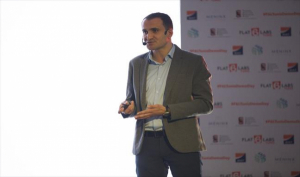
To tackle the waste of energy in Tunisia and help households keep their electricity bills low, Issam Smaali (pictured) developed and launched, in 2017, his startup WattNow. Using IoT (Internet of Things) and digital tools, WattNow enables consumers to monitor, analyze and adjust the consumption of their electrical appliances in real-time.
The solution works with a smart meter. It integrates a machine learning system to analyze consumption. Collected data is sent to the startup's cloud where they are analyzed with algorithms and the results are sent to consumers either via a mobile app or a dedicated web interface. Based on the result, the user can directly give orders to the box and reduce their consumption.
Users can download the app from App Store and Play Store and set it up with the smart meter. The WattNow app displays real-time energy consumption both throughout the house, but also for each device that turns on or off. It also delivers a daily, weekly, or monthly history of the electricity consumption of the home or business. Alerts are sent to users when a device stays on or consumes too much energy.
With WattNow, Issam Smaali seeks to lower electricity bills for Tunisians by up to 30%. Highly appreciated for its social impact, the service has already been adopted by several households and large companies such as Orange Tunisia. The latter installed it in 2018 on several of its telecom sites and administrative buildings.
The solution was incubated at Flat6Labs and began its consolidation and development thanks to a $20,000 prize won in 2017 at the “BloomMasters” entrepreneurship competition. Another award worth $100,000 was obtained from the Oman Technology Funds. In 2019, WattNow benefited from the supervision of the Orange Fab Tunisie accelerator and participated at VivaTech 2019. In 2021, the startup participated in several tech events, including the annual GITEX GLOBAL technology fair in Dubai, and raised several thousands of dollars from several investors such as the venture capital fund Katapult or even Bridging Angels.
Ruben Tchounyabe
Libya: Inmarsat, RLTT to provide digital surveillance services to the oil industry

UK-based mobile satellite communication provider Inmarsat announced a partnership with RLTT Digital Oilfields to provide digital solutions to oil operators in Libya. The announcement was made on February 2.
The partnership will leverage Inmarsat's IsatData Pro (IDP) and BGAN technologies to provide secure satellite-based data services to oil and gas producers. This will enable comprehensive monitoring of vital infrastructure, including wellheads at oil and gas drilling sites and production sites in oil basins. Producers will therefore be able to anticipate problems related to the deterioration of key assets on platforms, replace faulty equipment timely, and better plan maintenance work. The solution will help optimize production at the sites.
The partners plan to expand the offering to include monitoring, telemetry, tracking, and fleet management. The services will be provided by Inmarsat's ELERA L-band connectivity network, which boasts ultra-reliable 99.9% availability and small, robust terminals.
“Inmarsat’s experience in providing IoT-over-satellite connectivity for the industry means that it understands the types of products and services we want to offer to the oil and gas sector in Libya […] Operators across the country are digitalizing their operations to increase efficiency and output and improve on-site safety and security for staff. Our new partnership with Inmarsat puts RLTT in an excellent position to take full advantage of this growth opportunity,” said Taha Ellafi, Chairman at RLTT.
Commenting on the partnership, Mike Carter, President of Inmarsat Enterprise, said: “As the industry automates its infrastructure and its processes to enable remote monitoring and asset management, it reduces the need to travel to remote, potentially hazardous places. This results in benefits in terms of efficiencies, sustainability, and safety.”