


Lisungui Pharma geolocalizes pharmacies
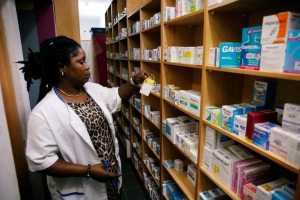
Its prototype was a low-cost solution developed to test the viability of the founder’s idea. Once corrected and refined, the solution is now accessible in five countries, helping thousands of users.
Lisungui Pharma is a digital platform developed by a Congolese startup founded in 2015. The health tech platform geolocalizes pharmacies located within a 10-kilometer radius from the user. It also helps determine drug availability and prices and acts as a medication reminder.
To develop the prototype of the digital platform, the Congolese startup contracted Indian developers, to check whether the idea could be embodied in an app, indicated its founder, Rufin Ovoula Lepembe.
“Due to its low-cost design, the prototype had several bugs but, it proved that the concept was valid and needed just refinements,” he added.
The platform is operational in Burkina Faso, Côte d’Ivoire, Senegal, Cameroon, and Congo. It is accessible only via an Android app. To use its features, users must register an account and enable geolocation.
Apart from showing the pharmacies accessible in the neighborhood, the platform also gives directions from the users’ location to the selected drugstore. In 2016, it earned its founder the first prize in the business competition organized by the Congolese foundation Perspectives d'Avenir. Two years later, the founder became one of the winners of the Tony Elumelu Foundation program. Rufin Ovoula Lepembe hopes his solution will be available in at least 20 countries in the coming years.
Adoni Conrad Quenum
Cameroon: Bertrand Nkengne allows the diaspora to subscribe to health insurance for their relatives
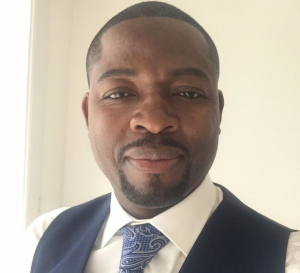
Following the death of his mother back at home, he decided to create a virtual health insurance platform. He aims to help the African diaspora guarantee healthcare for their relatives and avoid his painful experience.
Bertrand Nkengne (photo) is a Cameroonian software engineer and the founder of health-tech Izikare. The startup, founded in 2018, allows the African diaspora to easily buy health insurance policies for their relatives living on the continent. With his health-tech startup, insurance policies cost as low as €0.50 daily thanks to his network of over 300 professionals, 500 health centers, 300 laboratories, and pharmacies in Africa.
“Izikare provides a virtual and physical insurance card to your relatives living in Africa. [Thanks to that card], they can get healthcare, without paying a dime, from our partner network of health professionals, in hospitals, laboratories, clinics, pharmacies, and opticians,” he told Forbes in 2021.
Bertrand founded Izikare after a painful experience. Indeed, while he was in France, his mother got sick. To facilitate her treatment, he used to regularly send funds but, instead of being used for the sick mother’s treatment, most of the funds were used for other purposes. In the end, the software engineer lost his mother.
During the coronavirus pandemic, Izikare developed a free platform, AlloDocta, to facilitate virtual consultations, and the issuance of digital health records. The platform also integrates a secure drug prescription system.
Before Izikare, Bertrand Nkengne had founded, in 2006, Cyslog, a software development firm in France.
Melchior Koba
Cameroon: Arthur Zang makes cardiac examination easy with Cardiopad
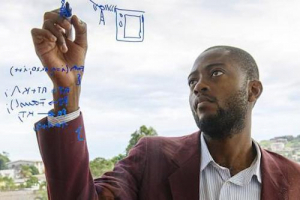
After trying times in the development of his first project, the young entrepreneur came to the limelight in 2016. Since then, he has rolled out several innovative solutions and won many awards.
The name Arthur Zang came to the limelight in the Cameroonian health sector in 2016 when he launched the production of Cardiopad, a connected electrocardiogram. The electrocardiogram is constituted of tablets and electrodes.
The tablets have many apps, including the electrocardiograph, which allows a complete cardiac examination. They also have the electrocardioscope that help record patients' cardiac activity and analyze them in real-time. The tablets also have a telecardiology app through which the various cardiac data recorded can be transferred to specialists for analysis.
Arthur Zang started working on a prototype in 2009. For the tech entrepreneur who grew up in Mbankomo, a small town located 20 kilometers from Yaoundé, the aim with Cardiopad was to find a solution to the low number of heart specialists in Africa.
To successfully carry out his project, in 2015, he was awarded US$45,000 (by Cameroonian President Paul Biya). He complemented the financial resources with the equipment received after winning the Microsoft Imagination Competition.
In 2021, Cardiopad was already used by 267 public health institutions in Cameroon. Some private hospitals have also adopted the solution. The tool is also used outside the national borders, in Gabon notably. Thanks to Cardiopad, the former chief computer engineer of the Catholic University of Central Africa (2013 to 2014) has won several awards such as the Rolex Foundation Prize in 2014, and the gold medal of the Africa Prize for Engineering Innovation in 2016.
During the Covid-19 crisis, the tech entrepreneur distinguished himself again with a new tool, the Oxynnet, a medical oxygen generator capable of producing 95% pure oxygen from ambient air. The generator, which can be controlled remotely, is connected to the electricity network or the solar panel used by hospitals. It allows them to produce 60 liters of medical oxygen every minute and supply at least 10 patients simultaneously.
Melchior Koba
Imodoye Abioro digitalizes blood donation and health record-keeping with Healthbiotics
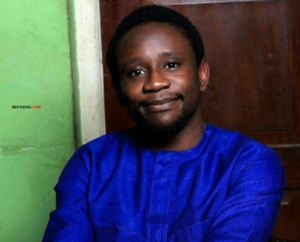
He started a tech entrepreneurship venture to improve the quality of healthcare in Africa. Barely seven years later, he is one of the influential figures on the global healthTech scene.
Imodoye Abioro (photo) is a Nigerian doctor, entrepreneur, and self-taught IBM Cloud software developer. He is the founder of Healthbotics Ltd, a health tech whose stated mission is to “solve Africa’s perennial healthcare challenges.”
The young doctor and entrepreneur started Healthbiotics following the death of his best friend who bled to death in the emergency room where he was working as a Doctor-on-call. “...that loss almost broke me and so I was motivated to do something about some of these perennial problems facing our hospitals and care delivery system,” he told Pan-African Visions in an interview in 2021.
To fulfill its mission, with Abioro at the helm, Healthbiotics developed two flagship products notably Mediverse and Lend an Arm. The first is a digital AI-powered health record backed by blockchain technology. It allows doctors and nurses to record patients’ health information “with just their voice, eliminating the endless need for writing and typing.” The second product was created in 2017 to connect blood donors and hospitals with blood banks. With that mobile and web AI-powered solution, blood donors and recipients can chat, organize, or join a blood donation campaign. They can also find the nearest blood bank.
The two products earned Abioro several awards in 2020, including the AI for development Challenge, the Young Innovator Award at the World Summit Awards, and the African App Launchpad Cup. In 2021, he was one of the winners of the African Young Innovator Award for Health.
Apart from Healthbiotics, he also co-founded Bimi Online for Africa (in 2018), a health information aggregation platform that he served until December 2019 as the Chief Technology Officer. He was also, from 2019 to 2020, the Chief Technology Officer of Future Food Project, a startup committed to “ending malnutrition in Africa.”
Melchior Koba
Africa: Sedric Degbo makes medical collaboration more efficient
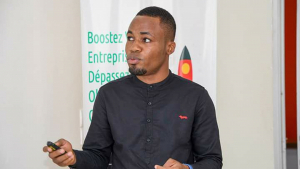
During his medical studies, he stumbled upon a scientific paper that prompted him to streamline health exchange and collaboration. The innovation now helps save lives and earns its founder accolades and awards.
Sedric Degbo (photo) is a Beninese doctor, entrepreneur, and founder of the African Doctors' Exchange Network (REMA). For the entrepreneur, “health exchange and collaboration always save lives.” Therefore, his mission with REMA is to make the exchange and collaboration process more efficient with digitalization.
His network allows remote medical collaboration and facilitates collective intelligence and solidarity between doctors practicing on the African continent. Its mobile platform gives doctors the opportunity to discuss practical cases in real-time with their colleagues for improved medical decisions. Currently, it claims an active community of over 6,000 doctors, most from West Africa.
Sedric got the idea to create REMA in 2016 during a research work when he stumbled upon a scientific paper on medical mistakes in the world.
“The conclusions were really alarming, so I decided out of curiosity to find the data concerning Africa… The figures specified by numerous authors proved that medical mistakes are real public health issues on our continent. An analysis of those figures demonstrates that beyond the organizational challenges of the African health system, the high number of medical mistakes on the continent is due to doctors’ low level of information, their isolation, and the lack of a suitable mechanism to communicate with peers,” he explained in 2020.
Thanks to REMA, the young entrepreneur who worked for Caritas International between 2016 and 2019 has received numerous awards. In 2019, he was awarded the first Inwidays prize in Casablanca and the first BreizhAfrica prize in Paris. He also received the second Afric'Up prize in Tunis. The following year, he received the Covid-19 Solidarity Award from the International Organization of the Francophonie. This year, he is on the Medika Life 50, a list of the 50 most influential voices in the healthcare industry. Since September 2021, he is a member of the executive board of Bluemind Foundation, an NGO making mental healthcare accessible for every African.
Melchior Koba
London helps African health system go digital
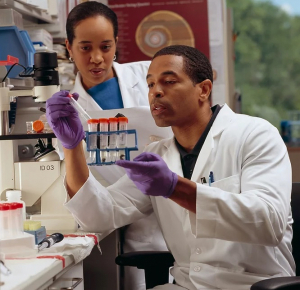
The lack of technical services in health facilities in many low- and middle-income countries makes it even longer to provide effective care to the population. Digital technology is presented as a solution to address this challenge.
The National Institute for Health and Care Research (NIHR), a UK government agency that funds health research, has approved the disbursement of £3 million ($3.6 million) to support the development of digital diagnostics in health systems in seven African countries. Imperial College London, which released the information on Tuesday, June 14, explained that the money was made available to its researchers and 13 collaborating institutions in Burkina Faso, Gambia, Ghana, Kenya, the Netherlands, Sudan, Uganda, the United Kingdom, and Zambia.
Dr. Aubrey Cunnington, Division Head of Pediatric Infectious Diseases at Imperial College London, who will lead the research program, explained that “We will evaluate the potential of digital diagnostic technology to tackle common problems including malaria and other childhood infections. The researchers in the project have a wide range of expertise, from electronic and design engineering to clinical medicine, health systems research, and mathematical modeling.”
“At present, less than half of the population of Africa have access to essential, accurate diagnostics. This makes it difficult to identify and administer the correct treatments, and to target disease prevention where it is most needed,” he said.
The NIHR funding is part of its Global Health Research Group (GHRG) program, which funds research, and supports research partnerships between researchers and institutions in the UK and in low- and middle-income countries (LMICs). The GHRG aims to generate scientific evidence that can improve health outcomes for low-income people by improving practice and informing policy. It also strengthens research to support its future sustainability in partner countries.
The funding will allow GHRG to develop and evaluate next-generation digital diagnostics for infectious diseases over the next four years. These digital diagnostics will use a handheld electronic device developed by a team of researchers at Imperial College London. Called Lacewing, it detects nucleic acids such as DNA on the surface of a microchip.
According to experts, the tests have similar accuracy to large laboratory machines but are fast, inexpensive, and portable. Results are sent to a smartphone that allows data transmission to monitor the real-time detection of different diseases at different locations.
Ruben Tchounyabe
Gabon: Ntchina matches blood donors with recipients
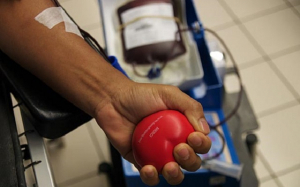
In Gabon, the coronavirus caused a decline in blood donations, which were already not enough to meet demand. Ntchina wants to reverse the trend and help save more lives.
Ntchina is a digital platform that matches blood donors with recipients. The platform was first presented to the public by its developer (the eponymous Gabonese startup Ntchina) in 2021. On Tuesday, June 14, 2022, on the sidelines of World Blood Donor Day, it was officially launched.
Alvine Yeno, Ntchina’s founder, explained that the platform is the result of a sad experience. Indeed, one of her relatives suffering from lupus needed a blood transfusion but none of the calls for donors issued by her family yielded a result. “It was difficult finding donors. Calls for donors made on social media and to other relatives were not successful… I then asked myself what I could do to make that search more effective and help those in need. So, I started developing the project,” she explains.
The platform has a mobile app (available on AppStore and Playstore) that allows access to all of its services. Users can either register as donors or recipients by filling in a set of information including hometown and blood type. When donors with specific blood types are available, the platform can send alerts to users who activated that option. “Our mission is to facilitate blood donation for better care to those in need, notably sick people, pregnant women, accident victims, etc,” Alvine says.
Her startup also developed an online game to raise awareness of the importance of blood donation. Her initiative is highly important given that in Gabon, since the onset of the coronavirus pandemic, blood donations have declined. Before the pandemic, authorities used to collect about 23,000 blood bags yearly. The volume was not enough to meet demand but, with the coronavirus-spurred decline, the gap between supply and demand has widened considerably. With Ntchina (which means "blood" in Myene), the gap could be reduced and more lives saved.
Adoni Conrad Quenum
Nigeria: Clafiya gives access to affordable healthcare in rural zones
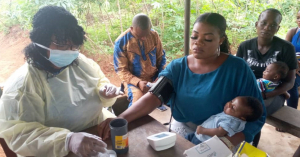
In some parts of the African continent, it is still hard to access healthcare either because of the lack of healthcare personnel or their distance to health centers. Some tech entrepreneurs are trying to fix that.
Clafiya is an e-health platform that allows access to affordable healthcare in Nigeria. It connects patients in rural and peri-urban areas to community health workers.
The platform was developed by eponymous healthtech startup Clafiya founded in 2020 by Itoro Inoyo and Jennie Nwokoye. Its goal is to allow everyone to access healthcare. As its co-founder Itoro Inoyo explains, health is a fundamental human right so, no one should be left out no matter their race, gender, or socioeconomic status.
As internet connection is not always available in the areas targetted by Clafiya founders, the platform is accessible via a USSD code (*347*58 #). Users can then dial the code, register by providing a set of information, and book primary care anytime they want.
The healthcare packages offered by Clafiya cost between US$4.9 and 12. Each of the packages allows access to different primary care and services including blood pressure and blood sugar level screening, primary care consultation, rapid malaria, and typhoid diagnostics. If the case is serious, the patient is referred to a medical specialist, either online or offline.
Adoni Conrad Quenum
Côte d’Ivoire : Orange, DabaDoc launch E-health services

In 2020, the Orange Group accelerated initiatives to become a multiservice operator in Africa. In that regard, it made strategic investments, which are gradually contributing to the expansion of its service offerings.
Telecom operator Orange Côte d’Ivoire launched, Monday (June 13), its e-health platform. Baptized Orange santé, the platform was launched in partnership with DabaDoc, a Moroccan heathtech backed by Orange Group in June 2021.
Currently, with Orange Santé, users can only book medical consultations. However, additional services will be added by 2023, allowing the diaspora to pay for e-consultations or users to carry out medical consultations online.
Orange Santé is specially dedicated to Ivorian health centers and professionals. It allows them to list their services, digitize their management, and create digital health records. It also offers health professionals more visibility and helps optimize their schedules.
The launch of Orange Santé is part of Orange Group’s strategy to become a reference operator and a key actor in the e-health segment in the Middle East and Africa. With the service, DabaDoc -which has been operating in the Maghreb for about eight years now- helps Orange address the doctor shortage ongoing in Africa and sustainably impact rural areas.
By 2023, Orange Group plans to launch Orange Santé in other Sub-Saharan African countries in addition to Morocco, Tunisia, Algeria, and Côte d’Ivoire, where the service is already operational.
Muriel Edjo
Senegal: Njureel eases healthcare access
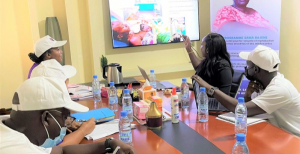
The Covid-19 pandemic highlighted the importance of having alternative solutions in key sectors of the economy. In Senegal, Njureel is helping improve access to healthcare.
Njureel is a Senegalese healthtech startup that allows remote access to healthcare via its eponymous digital platform. It was founded in 2019 after its founder, Awa Ndiaye lost one of her relatives to a lack of proper healthcare.
Currently, the platform has no mobile app but users can easily register on its website using mainstream browsers and book teleconsultation with doctors. The consultations are held via Whastapp videocalls. The startup also offers psychological Tele counseling to violated women and legal guidance if necessary.
To educate women on sexual and reproductive health, Njureel developed a program called Sama Bajene. In the framework of the program, the startup claims to have trained more than 60 community health workers, carried out over 500 medical consultations, and impacted more than 800 women.
Since its launch in 2019, the healthtech has received numerous recognitions and awards. They include the Hack the Goals Senegal Award, the 2020 President of the Republic’s Grand Prize for digital innovation, the Innovation for mothers at risk in Senegal 2020 award, and the third prize for the Jigeen Ci-Tic competition.
Adoni Conrad Quenum