


Nigeria : la start-up automobile Autochek acquiert une participation majoritaire dans l'entreprise égyptienne AutoTager

Après l'acquisition au troisième trimestre 2022 d’une plateforme de vente en ligne de voitures, Autochek poursuit ses opérations de rachat, mais cette fois-ci en Afrique du Nord.
Autochek, une société nigériane qui octroie des financements pour l’achat de véhicules automobiles, a annoncé le mardi 18 avril l’acquisition d’une participation majoritaire dans l’entreprise l’égyptienne AutoTager fondée en 2021 par Amr Rezk dans le but d'éliminer les obstacles dans le processus d'achat des voitures, afin de garantir la transparence du commerce.
Selon le communiqué de l'entreprise, cette acquisition a pour but de renforcer la présence d'Autochek en Afrique du Nord et soutenir la croissance continue de l'entreprise.
S’exprimant à la suite de cette transaction, Olajide Adamolekun, directeur financier du groupe et cofondateur d'Autochek, a déclaré que « l'expérience et le parcours d'Amr sont des plus impressionnants et je suis ravi de l'avoir à mes côtés. Son expérience nous sera précieuse pour pénétrer le marché égyptien et poursuivre notre mission d'améliorer la proposition de valeur du financement automobile sur le continent et de catalyser davantage de croissance dans l'écosystème automobile ».
Bien avant AutoTager, Autochek avait déjà acquis des plateformes de vente de voitures en ligne. En juillet 2022, la start-up de technologie automobile avait racheté CoinAfrique. En septembre 2021, les plateformes Cheki Kenya et Cheki Uganda ont également été acquises par l’entreprise.
Avec cette acquisition majoritaire, l’entreprise est désormais présente dans neuf pays d'Afrique de l'Est, d'Afrique de l'Ouest et d'Afrique du Nord, et compte plus de 2 000 concessionnaires et ateliers dirigés par des partenaires, selon le communiqué de l'entreprise.
En ciblant AutoTanger, Autochek vise les marchés d’Afrique du Nord principalement l’Egypte qui est la troisième économie d'Afrique, selon la Banque Africaine de développement (BAD), et le troisième marché automobile du continent en 2021, selon les données de l’Organisation internationale des constructeurs automobiles (OICA).
Samira Njoya
Lire aussi :
Le nigérian Autochek rachète CoinAfrique pour soutenir sa croissance en Afrique francophone
Nigeria : l’État d’Ogun accueille la première usine de fibre optique d’Afrique de l’Ouest
Dans le cadre de ses ambitions de transformation numérique, le gouvernement fédéral nigérian veut accélérer la pénétration de la connectivité dans le pays. Toutefois, cette ambition est ralentie par l’insuffisance d’infrastructures dans le secteur des TIC.
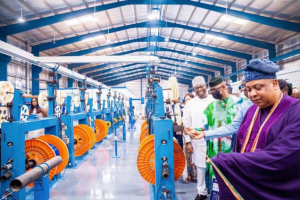
Dapo Abiodun, gouverneur de l’État d’Ogun au Nigeria, a inauguré le jeudi 14 juillet la première usine de fabrication de câbles de fibre optique d’Afrique de l’Ouest. Dénommée Coleman Wire and Cable Fibre Optic Company, l’usine a été construite par le fabricant de fils et de câbles Coleman Technical Industries Limited (CTIL), en partenariat avec la société américaine Corning Inc.
George Onafowokan, directeur général de CTIL, a expliqué que cette initiative est une réponse à l’appel du gouvernement fédéral pour un développement rapide de la pénétration de la numérisation dans l’économie nigériane. La société ambitionne de devenir la plus grande usine de câbles à fibres optiques d’Afrique d’ici septembre 2023. À cet effet, elle envisage de renforcer les capacités du pays, de l’Afrique de l’Ouest, de l’Afrique centrale et d’environ 50 % du continent.
La construction de cette usine s’inscrit dans le cadre du « Nigerian National Broadband Plan (NNBP) 2020-2025 » dévoilé par le gouvernement fédéral en mars 2020. Ce programme vise notamment une pénétration de la large bande de 70 % et une couverture de 90 % de la population d’ici 2025. L’augmentation de la pénétration de la large bande est nécessaire au regard des ambitions nigérianes d’e-gouvernement, de transformation numérique et d’économie numérique.
Selon la Nigerian Communications Commission (NCC), plus de 35 millions de personnes n’ont actuellement pas accès aux services de télécommunications au Nigeria, malgré les investissements croissants dans le secteur des TIC. Une situation qui est notamment due « à l’insuffisance de l’infrastructure de connectivité sans fil et par fibre optique » dans le secteur.
Selon M. Abiodun, la fabrication locale de câbles à fibres optiques facilitera la transformation numérique des différents secteurs de l’économie nigériane. « Elle stimulera l’innovation technologique, l’avancement des processus d’enseignement et d’apprentissage dans nos institutions académiques, améliorera les soins médicaux, facilitera l’accès aux données et améliorera la connexion Internet. Cela va sans aucun doute donner un coup de pouce à l’innovation de notre administration en matière d’infrastructure de l’économie numérique », a déclaré le gouverneur.
Isaac K. Kassouwi
UNCTAD lists roadblocks to e-commerce development in Africa
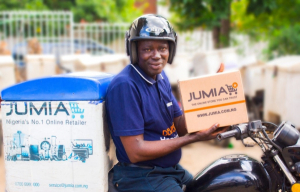
E-commerce proved indispensable for the continuation of business activities amid the pandemic in 2020 when the world was hit by social restrictions. As a result, the global revenue of this segment which stood at US$3.351 trillion in 2019, jumped to US$4.248 trillion in 2020, according to Statista.
In Africa, the same trend was observed with e-commerce revenues growing by more than US$6 billion to $27.97 billion in 2020. Despite the growth, Africa’s 2020 e-commerce revenues represented less than 3% of the global revenues. This reflects the continent’s low readiness for new retail opportunities.
In its report "E-Commerce and the Digital Economy in LDCs: At Breaking Point in COVID-19 Times" published on March 15, 2022, the United Nations Conference on Trade and Development (UNCTAD) listed several negative factors that contributed to Africa's modest global e-commerce performance.
Lack of political interest, difficult access to the Internet, the digital divide, low investments in e-commerce activities, supply chain disruptions, lack of consumer protection and fair competition rules, and the persistent practices of cash on delivery are the main factors listed by the UNCTAD.
A glance at the UNCTAD's Business to Consumer (B2C) e-commerce index -which measures an economy's readiness to engage in and benefit from e-commerce- shows that Africa has been the lowest-ranked in the past six years. For the UNCTAD, the situation must appeal to governments and prompt them to take strong actions to make sure the continent can reap the rewards of the digital economy.
Since 2017, UNCTAD has been helping countries improve their e-business readiness. Through the eTrade Readiness Assessments (eT Readies), it helps them assess and correct their e-commerce development strategies, the quality of ICT infrastructure and services, trade facilitation and logistics available, the payment solutions as well as the legal and regulatory frameworks. It also points to the skills to be developed and assesses if there is compelling access to finance.
In December 2021, 46 eT Readies requests, including 15 from African countries, were submitted to the UNCTAD. Of the 15 submitted by African countries, six have been completed, two are still in progress, and seven are not yet processed.
Muriel Edjo
Senegal: French embassy and DER/FJ mobilize €2M, each, to support local tech startups

Over the past five years, Senegal's startup industry has gained the attention of many investment and venture capital funds. Thus, the moment seems to be ripe for boosting the local tech ecosystem, to hatch even more golden nuggets.
The French Embassy in Senegal and the General Delegation for Rapid Entrepreneurship of Women and Youth (DER/FJ) officially launched this Monday the "Support for the acceleration of Senegalese Tech companies" program.
A partnership agreement was signed to this effect by Mame Aby Seye, the General Delegate to the DER/FJ, and the French Ambassador, Philippe Lalliot. With the expertise of the Public Investment Bank of France (Bpifrance) and the French Development Agency (AFD), the two partners have each mobilized €2 million to support the development of Senegal’s entrepreneurial tech ecosystem.
According to Mame Aby Seye, besides financing companies, the project “aims to support networks of Senegalese investors but also make Senegalese startups more visible to investors from the African and European continents.”
BPIfrance and AFD's support is the fruit of strategic steps taken to benefit innovators, notably on the regulatory and financial fronts. These efforts stimulated the growth of the startup industry and contributed to the emergence of Senegal’s first unicorn, Wave, in September 2021. Now, the ecosystem needs to be better structured to spur its maturity and birth new super startups.
Isabelle Bebear, BPIfrance's Director of International & European Affairs, said that "the digital community hosted on Bpifrance EuroQuity, led by the DER and animated with the actors of the Senegalese Tech ecosystem, will allow startups to connect to international investors and other ecosystems in Africa and Europe."
Muriel Edjo