



Egypt Bets on Data Centers and AI to Drive Digital Economy Growth

- Egypt’s telecom regulator has awarded a new data center license to Hassan Allam Digital Infrastructure and Data Center Solutions for a project backed by an initial investment of $400 million.
- The license marks the tenth data center authorization issued in Egypt over the past two years, underscoring rapid growth in the sector.
- Egypt aims to strengthen its position as a regional data and cloud services hub while supporting artificial intelligence adoption and digital transformation.
Egypt continues to strengthen its digital infrastructure. The National Telecom Regulatory Authority (NTRA) granted a license on Monday, May 15, to Hassan Allam Digital Infrastructure and Data Center Solutions to build and operate a data center in the country. The company is developing the project in partnership with technology firm A15 and plans to invest an initial $400 million during the first phase.
According to the project developers, the investment represents the first stage of a broader expansion program that will continue in the coming years. The facility will comply with international standards and provide data hosting services, cloud computing capabilities and infrastructure designed for artificial intelligence applications. The center will serve government agencies, financial institutions and both local and international businesses.
The announcement comes as Egypt accelerates investment in digital infrastructure. According to the NTRA, the authorization represents the tenth data center license issued during the past two years, highlighting the sector’s rapid expansion.
Egyptian authorities increasingly view data centers as a critical component of digital transformation and national technological sovereignty. As a result, policymakers have intensified efforts to encourage investment in the sector.
At the same time, the government is preparing a national strategy focused on data centers and cloud computing. Egypt plans to leverage its strategic geographic location at the crossroads of Africa, Europe and Asia, alongside its telecommunications infrastructure, to attract additional investment in digital services.
The government aims to strengthen Egypt’s role as a regional platform for data exchange and digital services by expanding infrastructure capacity and enhancing connectivity.
The project also aligns with Egypt’s broader artificial intelligence ambitions. Egypt’s second national AI strategy targets a 7.7% contribution from digital technologies and artificial intelligence to gross domestic product by 2030.
Authorities also estimate that AI could generate up to $42.7 billion in economic value over the coming years through adoption across sectors including public services, finance, healthcare and manufacturing.
Beyond the Egyptian market, the new infrastructure aims to address growing regional demand for data hosting and cloud services. R
apid advances in artificial intelligence, e-commerce and corporate digital transformation continue to increase demand for data storage and computing capacity across Africa and neighboring regions.
This article was initially published in French by Samira Njoya
Adapted in English by Ange J.A de Berry Quenum
Smart Africa, MeetKai Launch Sovereign AI Infrastructure Pilot in Five African Countries
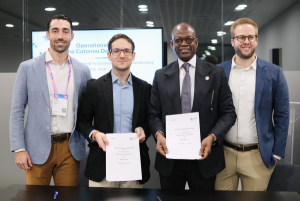
- Smart Africa Alliance and MeetKai signed a strategic partnership to deploy sovereign AI infrastructure in five African countries.
- The initiative was announced during the Mobile World Congress and will operate under the supervision of the African AI Council.
- The project will deploy sovereign AI stacks powered by MeetKai’s MKA1 system to support digital public services and local-language AI applications.
The Smart Africa Alliance announced on March 5, that it signed a strategic partnership with the U.S.-based company MeetKai, which specializes in sovereign artificial intelligence solutions.
The partners presented the agreement during the Mobile World Congress in Barcelona. The agreement plans to launch a pilot program that will develop national AI infrastructure and technical capabilities in five African countries under the oversight of the African AI Council.
At #MWC2026 in Barcelona, Smart Africa and MeetKai launched a landmark 5-country pilot to accelerate Sovereign AI across Africa through the Africa AI Council.#SmartAfrica #SovereignAI #AI #MWC2026 pic.twitter.com/uJxBWGWCBB
— Lacina Koné (@CEOSmartAfrica) March 5, 2026
The initiative aims to support participating governments in building national artificial intelligence infrastructure. The program relies on the deployment of “sovereign AI stacks,” which represent technological architectures designed to give governments full control over data hosting, model development and application deployment.
This framework allows participating countries to develop artificial intelligence solutions that comply with national regulations and local development priorities. The organizers plan to announce the five pilot countries in the coming weeks.
MeetKai will provide the technical support required to deploy AI platforms capable of integrating African languages. The partners aim to automate digital public services in critical sectors such as healthcare, agriculture, education and public administration.
To achieve this goal, the Los Angeles-based company will deploy its flagship AI system, MKA1. The system enables the creation of locally hosted AI ecosystems, which reduces reliance on foreign cloud infrastructure while encouraging domestic innovation.
This sovereign approach represents a critical factor for the continent’s economic future. According to McKinsey & Company, artificial intelligence could generate up to $1.2 trillion in value in Africa by 2030.
However, the continent risks losing a large share of that value if countries fail to control infrastructure and develop local talent. The success of the pilot program will therefore influence the ability of African governments to transform technological potential into sustainable and sovereign economic growth.
Samira Njoya
IUCEA and MindHYVE.ai Launch Two-Year Programme to Build Regional AI Skills

- MindHYVE.ai and the Inter-University Council for East Africa signed a partnership to equip 170+ universities with AI learning tools and certifications.
- The agreement enables universities to access ArthurAI, 50 certified courses, and AI literacy credentials co-issued with the California Institute of Artificial Intelligence.
- The two-year programme aims to build regional AI skills, improve academic mobility, and align higher-education systems with labour-market demand.
The rise of artificial intelligence continues to redefine educational priorities across East Africa. The region, shaped by a young population and a fast-changing economy, seeks to structure its capability building to remain competitive in the global digital transformation.
MindHYVE.ai, Inc., a US-based company specialising in agentic artificial intelligence, and the Inter-University Council for East Africa (IUCEA), the regional body responsible for higher-education harmonisation, signed a partnership on Tuesday, December 9, in Kampala. The agreement aims to turn the region into a future AI skills hub by equipping IUCEA-member universities with advanced learning tools and internationally recognised certification programmes.
“This partnership marks a defining moment for East Africa. Equipping our universities, educators and students with AI knowledge and ethical mastery is essential for the advancement of our region,” said Professor Idris A. Rai, IUCEA’s acting executive secretary. He underscored the region’s ambition to strengthen its competitiveness in the global digital economy.
In its first phase, the agreement will give more than 170 universities access to ArthurAI, MindHYVE.ai’s agentic learning platform, which will be deployed through a regional pilot. The project also includes 50 certified courses under the “The Dawn Directive” programme, AI literacy and proficiency certifications co-issued with the California Institute of Artificial Intelligence, and training sessions for lecturers and academic leaders. A joint committee will supervise the two-year implementation, evaluation and potential scale-up.
This collaboration emerges as demand for digital skills accelerates. East Africa, home to one of the continent’s youngest populations, still struggles to meet the needs for advanced training in emerging technologies. The World Bank estimates that sub-Saharan Africa could create nearly 230 million jobs requiring digital skills by 2030, even as qualification gaps continue to hinder this transition. Governments in the region are adopting national AI, innovation and higher-education reform strategies, creating favourable conditions for regional initiatives.
The implementation of this partnership should enable East Africa to train more students and professionals in skills essential to a digital economy. It also provides universities with a shared foundation to enhance programme quality, increase academic mobility and structure training pathways aligned with the region’s rising technological needs. The initiative could further support member states’ efforts to modernise higher education and integrate emerging technologies into academic curricula.
This article was initially published in French by Samira Njoya
Adapted in English by Ange Jason Quenum
Ethiopia Launches Digital Registration Ahead of 2026 General Elections
- Ethiopia will introduce digital registration for voters and candidates for the first time for the June 1, 2026 general elections.
- The National Election Board of Ethiopia (NEBE) has launched operational digital platforms and begun training political party representatives.
- Voters will access online self-registration or tablet-assisted registration, supported by a call center and technical teams.
Digital tools continue to reshape electoral processes across Africa by easing access to registration and strengthening transparency. Ethiopia aligns with this trend as it moves to modernize the management of candidate and voter registration.
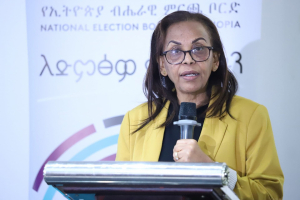
Ethiopia will introduce digital registration for voters and candidates for the first time during its seventh general elections scheduled for June 1, 2026. Melatwork Hailu, president of the National Election Board of Ethiopia (NEBE), announced the decision on Tuesday, December 9, during a press briefing that outlined the preparations for the vote.
NEBE has activated the digital registration platforms and has launched training for representatives of political parties. The system will allow candidates to register through a web interface or a mobile application. Voters will choose between self-registration online or assisted registration at centers equipped with tablets. NEBE has also set up a call center and deployed technical assistance teams to support users who face difficulties.
This digital shift fits into a broader plan to modernize Ethiopia’s electoral management. NEBE says it aims to improve transparency, efficiency, and accessibility in a context shaped by persistent security challenges, logistical constraints, and high expectations for governance. The introduction of digital tools should secure data, enhance administrative tracking of candidacies, and reduce the recurrent delays observed during registration phases.
Ethiopia counts more than 135 million inhabitants, and mobility remains restricted in several regions. Limited access to administrative centers also complicates participation. Digital registration could therefore ease voter engagement, particularly in rural or remote areas. However, the reform still faces significant constraints, including weak connectivity in many rural zones, unequal access to digital tools, cybersecurity risks, and the need to train users on these new systems.
If the system works as intended, Ethiopia could strengthen the reliability and efficiency of its electoral administration and lay the groundwork for a broader transformation of its democratic procedures.
This article was initially published in French by Samira Njoya
Adapted in English by Ange Jason Quenum
Gabon Partners With UNCDF to Strengthen Digital-Finance Ecosystem

-
Gabon signed a partnership with UNCDF to modernize digital financial services and accelerate financial inclusion.
-
Mobile-money transactions reached CFA4,000 billion ($7 billion) in 2024, yet only 30% of adults hold a bank account.
-
The agreement prioritizes interinstitutional coordination and technical training on e-money governance, interoperability and consumer protection.
Gabonese authorities aim to better structure the ecosystem of digital financial services. After announcing a partnership with Visa in May, the government continues its efforts with a new agreement designed to strengthen financial inclusion and sector regulation.
The Ministry of Digital Economy, Digitalization and Innovation (MENDI) announced on Monday, December 8, the signing of a partnership with the UN Capital Development Fund (UNCDF). The collaboration seeks to reinforce the digital-finance ecosystem and support the national ambition to make digital technology a driver of state modernization and economic growth.
The initiative centers on two main priorities. The first focuses on interinstitutional dialogue to harmonize public policies, strengthen coordination between stakeholders and establish a permanent consultation framework for digital financial services. The second targets technical-capacity building through training programs for policymakers on key areas such as e-money governance, service interoperability, data protection, financial literacy and user protection.
Authorities also highlight a specific emphasis on reforms that promote competition among service providers, develop essential digital infrastructure and improve mechanisms for consumer protection.
The partnership builds on the national assessment carried out in 2024 by UNCDF. It comes as Gabon seeks to accelerate financial inclusion, which remains uneven. The country recorded more than CFA4,000 billion ($7 billion) in mobile-money transactions in 2024, along with nearly 368 million operations. Nevertheless, only 30% of adults hold a bank account, and rural populations, women and young people remain the most excluded groups.
Sector players regularly point to several obstacles, including service costs, incomplete interoperability between operators, limited financial literacy and weak user trust in digital tools.
The UNCDF intervention is expected to support reforms that modernize the ecosystem and create a more attractive environment for digital-financial-service providers. By reinforcing institutional cooperation, clarifying operational frameworks and improving infrastructure quality, authorities aim to stimulate innovation, attract new services and expand access to more reliable and affordable payment, savings and transfer solutions.
This article was initially published in French by Samira Njoya
Adapted in English by Ange Jason Quenum
Algeria, UK Sign Electronic Fingerprint Analysis Agreement
-
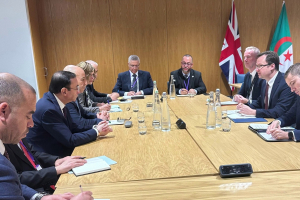
Algeria and the United Kingdom have signed a memorandum of understanding to enhance operational partnership and develop the Algerian police's capabilities in advanced electronic fingerprint analysis.
-
The agreement provides for training Algerian personnel in cutting-edge biometric technologies and expertise exchange, addressing rising organized crime and transnational digital threats.
-
The partnership aims to close gaps in Algeria's biometric capacities, leveraging the UK's advanced forensic information databases and digital fingerprint capabilities.
Facing rising organized crime and transnational digital threats, strengthening electronic fingerprint analysis skills has become urgent. This discipline leverages digital traces to identify and link perpetrators of offenses.
Ali Badaoui, Director General of National Security, and Alex Norris, British Minister of State for Border Security and Asylum, signed a memorandum of understanding on Wednesday, November 12. The agreement aims to strengthen operational partnership between the two countries and develop the Algerian police's expertise in advanced electronic fingerprint analysis.
According to the Algerian official, this partnership will enhance national capabilities in identity recognition and verification, a strategic issue given the rise of organized crime and transnational threats.
Specifically, the agreement provides for training Algerian executives and technicians in advanced biometric technologies used in the United Kingdom. It also includes an exchange of expertise in advanced electronic fingerprint analysis. This process involves exploiting individuals' digital footprints (connection history, traces on electronic devices, metadata, technical identifiers) to establish identity, reconstruct online activities, or link multiple offenses.
This cooperation occurs as Algeria accelerates the modernization of its forensic police tools. This modernization responds to an increase in cases related to cross-border trafficking, structured criminal networks, and cybercrime. The phenomenon is not isolated. According to INTERPOL's "Africa Cyberthreat Assessment 2025" report, 90% of African countries believe they must significantly strengthen their investigation and prosecution capabilities in digital crime.
Implementation of this partnership should enable Algeria to address certain shortcomings in its biometric capabilities. The United Kingdom possesses highly advanced expertise. According to the official "Forensic Information Databases 2023-2024" report, its IDENT1 fingerprint database contains over 28.3 million fingerprint forms from police investigations.
Furthermore, the British Police Digital Service has developed a "Digital Fingerprint Capability," a cloud platform enabling the transmission of fingerprint images from crime scenes to laboratories, real-time fingerprint analysis, and accelerated matching through the IDENT1 database.
Through this agreement, Algeria could access advanced digital methods and protocols (capture, comparison, identification) already used in the United Kingdom. This would allow for faster identification of suspects while improving the quality of evidence available for criminal investigations.
This article was initially published in French by Samira Njoya
Adapted in English by Ange Jason Quenum
Burundi Adopts National Data Governance Strategy
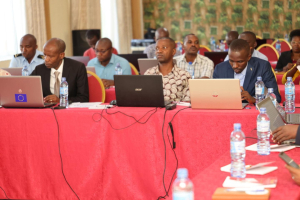
- Burundi validated its first National Data Governance Strategy (SNGD) to regulate data collection, management, sharing and valorisation.
- The strategy includes seven structural pillars, from legal frameworks and infrastructure to personal data protection and innovation.
- The plan aligns with Burundi’s Vision 2040–2060 and follows its 2023 adoption of the IMF’s Enhanced General Data Dissemination System.
Burundi moved to strengthen control over its data ecosystem at a time when data increasingly drives public policy and economic decision-making. The government aims to guarantee the security and valorisation of national data assets.
The country officially validated its first National Data Governance Strategy (SNGD) last week. The UN Economic Commission for Africa (ECA) co-led the document through its Data Governance in Africa initiative. The strategy seeks to regulate the collection, management, sharing and valorisation of data generated by the state, businesses and citizens.
The strategy rests on seven structural pillars: governance and leadership; legal and regulatory frameworks; data management, access and interoperability; infrastructure and sharing; security and personal data protection; capacity-building and data culture; and the data economy and innovation.
The government committed to developing a legal framework aligned with international standards, modernising digital infrastructures, promoting local skills and treating data as a public good.
Authorities involved more than 60 national institutions from public, private, academic and civil society sectors in the strategy’s design.
The validation of the SNGD aligns with Burundi’s Vision 2040–2060 and with the African Union’s continental data policy.
After adopting the IMF’s Enhanced General Data Dissemination System (EGDDS) in 2023, Burundi reaffirmed its ambition to modernise its information systems and increase the reliability of public statistics.
Officials expect the implementation of the SNGD to make public administration more efficient, improve transparency, and enhance the quality of public policies.
The strategy aims to stimulate digital innovation and job creation in the data sector and to build a sovereign and inclusive data governance model capable of attracting investment and reinforcing Burundi’s digital resilience.
This article was initially published in French by Samira Njoya
Adapted in English by Ange Jason Quenum
Transformation digitale : la Somalie peaufine sa feuille de route 2025–2030
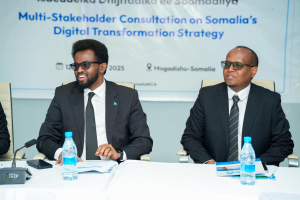
La Somalie compte sur le numérique pour diversifier son économie d’ici cinq ans. Une nouvelle feuille de route est jugée indispensable pour consolider les acquis, développer les compétences locales et aligner toutes les initiatives numériques du pays.
Le gouvernement fédéral de Somalie peaufine actuellement sa Stratégie de transformation numérique 2025–2030. Une consultation nationale de deux jours a été lancée à cet effet le dimanche 12 octobre afin de recueillir les contributions des parties prenantes et de finaliser le cadre stratégique.
Selon Mohamed Adam Moalim Ali (photo, à gauche), ministre des Communications et de la Technologie, cette stratégie servira de cadre global pour aligner toutes les initiatives numériques et garantir que la Somalie tire pleinement parti de la révolution digitale. « L’objectif est de renforcer la cohérence des projets numériques, d’améliorer les services publics et de stimuler la croissance économique, tout en préparant le pays à jouer un rôle régional dans l’économie numérique », a-t-il déclaré.
Cette nouvelle stratégie s’inscrit dans la continuité de la Politique et stratégie nationale des TIC 2019–2024, qui avait jeté les bases du développement numérique du pays. La politique précédente mettait l’accent sur l’accès et le coût de la connectivité, le développement des ressources humaines (alphabétisation numérique, compétences en TIC, e-éducation, R&D), ainsi que sur le contenu numérique, avec le soutien aux médias locaux en ligne et aux applications et services financiers.
Arrivée à échéance, cette dernière a permis au pays de réaliser certaines avancées notables, notamment la mise en place récente d’un e-visa pour faciliter l’administration, l’adoption d’un système universel de paiement par QR Code et l’amélioration de l’accès à Internet. Selon DataReportal, au début de l’année 2025, la Somalie comptait environ 10,7 millions d’internautes, soit une pénétration d’Internet de 55,2 % de la population. Le lancement officiel du service Starlink en août 2025 devrait également renforcer la connectivité à l’échelle nationale.
Néanmoins, beaucoup reste à faire. La numérisation des services publics affiche encore un taux faible. Selon l’Indice de développement du gouvernement électronique de l’ONU, la Somalie se classe au 191e rang mondial avec un score de 0,1468 sur 1, bien en dessous de la moyenne africaine de 0,4247. De même, pour le développement des TIC, le pays figure parmi les moins avancés d’Afrique avec un score de 33,7 sur 100, selon le rapport de l’Union internationale des télécommunications publié en juillet 2025.
La nouvelle Stratégie de transformation numérique 2025–2030 entend consolider les acquis des précédentes initiatives tout en renforçant les infrastructures numériques, en améliorant l’accès et la qualité des services publics en ligne, et en stimulant l’innovation locale. Elle vise également à favoriser l’inclusion numérique dans des secteurs clés tels que l’éducation, la santé, l’agriculture et les services financiers, à formaliser les cadres réglementaires, à attirer des investissements et à créer de nouveaux emplois dans le secteur du numérique.
Samira Njoya
Edité par Sèna D. B. de Sodji
Lire aussi:
La Somalie se dote d’un nouveau système de visas électroniques
Somalie : le gouvernement mise sur Starlink pour étendre l’Internet
Morocco Partners with France’s Onepoint to Build AI and Data Center of Excellence
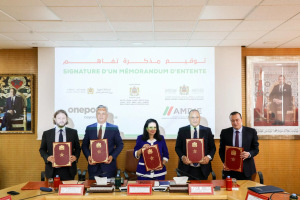
The hub is set to create 500 jobs and support Morocco’s ambition to become a digital powerhouse under the “Maroc Digital 2030” strategy.
Highlights
- Morocco targets training 45,000 tech professionals by 2030
- 500 new skilled jobs to be created over four years
- Part of broader digital strategy that includes Oracle, Nokia, Cisco, and Naver partnerships
Morocco has taken a significant step toward building its digital future by signing a strategic partnership with French firm Onepoint. On July 22, the Moroccan government formalized a memorandum of understanding (MoU) with Onepoint to establish a Center of Excellence in Artificial Intelligence and Data in the Casablanca-Settat region.
Inked by key ministries and the Moroccan Investment and Export Development Agency (AMDIE), the MoU aligns with the Kingdom’s ambition to train 20,000 tech professionals by 2026 and 45,000 by 2030. The new center is expected to generate 500 skilled jobs in AI, big data, and middleware over the next four years.
Beyond job creation, the partnership aims to modernize public services, support the digital transformation of industrial SMEs, and strengthen national technological sovereignty. It also bolsters Morocco’s broader “Maroc Digital 2030” plan to become a regional digital leader.
This agreement follows recent announcements by major players like Oracle, which plans to open a Casablanca-based research center dedicated to AI and cybersecurity, creating 1,000 jobs. Similar partnerships have been signed with Naver, Nokia, and Cisco.
For Industry and Commerce Minister Ryad Mezzour, these moves reflect Morocco’s rising credibility among global tech firms. The Casablanca-Settat region is increasingly positioned as a key hub in Africa’s digital economy. The Onepoint collaboration offers Moroccan engineers the opportunity to contribute to global tech projects while developing impactful local solutions.
This article was initially published in French by Samira Njoya
Edited in English by Ola Schad Akinocho
Orange collabore avec Meta et OpenAI pour entraîner l’IA aux langues africaines

L’Intelligence Artificielle se répand dans presque tous les secteurs d'activité. Elle offre de nombreux avantages pour l’Afrique, mais l’intégration limitée des langues du continent freine son adoption complète.
Orange s’engage à améliorer la représentation des langues africaines dans les systèmes d’Intelligence Artificielle (IA). Le groupe télécoms français a annoncé, mercredi 27 novembre, la signature d’un partenariat à cet effet avec OpenAI et Meta. Le lancement du projet, prévu pour le premier semestre 2025, vise à développer des intelligences artificielles capables de reconnaître et d’interagir avec les langues africaines.
Les langues d’Afrique de l’Ouest, telles que le wolof et le pulaar, seront les premières à être intégrées dans le projet. Elles seront incorporées dans les technologies Whisper d’OpenAI et Llama de Meta, deux modèles d’IA spécialisés dans la reconnaissance et la traduction linguistique.
Les modèles d’IA actuels sont majoritairement formés avec des données en anglais, ce qui limite la prise en charge des langues africaines. En raison de la rareté des données disponibles, ces langues sont sous-représentées dans les bases de données utilisées pour entraîner les IA. Pour y remédier, Orange fournira les données de ses applications locales, notamment dans les services clients, afin d’améliorer le traitement des langues africaines par les IA.
L’un des objectifs est de permettre aux utilisateurs d’Orange d’interagir avec le service client dans leur langue maternelle, rendant ainsi l’expérience utilisateur plus fluide et accessible. Les progrès réalisés durant la collaboration ne bénéficieront pas seulement aux services d’Orange, puisque les modèles développés seront également mis à disposition pour des projets non commerciaux, notamment dans les secteurs de la santé publique et de l’éducation.
En parallèle, Orange a signé un accord avec OpenAI pour accéder directement aux derniers modèles d’intelligence artificielle du groupe, disposant d'un traitement et d'un hébergement des données en Europe.
Servan Ahougnon
Edité par Sèna D. B. de Sodji
Lire aussi:
La chine veut coopérer avec l’Ethiopie dans le domaine de l’économie numérique