

-
Malawi seeks a bilateral agreement with Ghana to replicate its digital transformation model.
-
Ghana plans to lead a delegation of 15–20 tech firms to Malawi to deploy ID, fintech and e-government solutions.
-
Malawi ranks 163rd on the UN E-Government Development Index, while Ghana ranks 108th and leads Africa in cybersecurity tier classification.
Malawi is seeking to leverage Ghana’s expertise to fast-track its digital transformation. Officials expressed this interest on the sidelines of the Mobile World Congress 2026, which took place in Barcelona from March 2 to March 5 and gathered government delegations and global digital industry players.
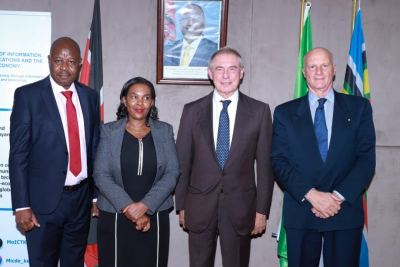
Malawi’s Minister of Information and Digitalisation, Shadric Namalomba, invited Ghana’s Minister for Communication, Digital Technology and Innovations, Samuel Nartey George, to conclude a bilateral agreement aimed at replicating Ghana’s digital innovation successes in Malawi.
In an exclusive interview with Techfocus24 following the meeting, which his ministry relayed, Sam George said Malawi had requested support across several areas. He said Malawi sought assistance in fintech, digital identification systems, last-mile connectivity, energy solutions for rural connectivity, e-government, smart workplaces, agritech, edutech, healthtech and artificial intelligence-integrated systems.
He added that he would soon lead a delegation of 15 to 20 Ghanaian technology companies to Malawi to help deploy national identification solutions, fintech services and e-government portals, among other systems. “To begin with, I will share a copy of our revised legislations with them so that they can draw inspiration from them and adapt them to their needs. I will also share our AI strategy with them so that they can build on it,” he said.
This rapprochement comes as Malawi aims, like many African countries, to position digital technology as a driver of inclusive socio-economic development. For example, the Digital Malawi project, which the World Bank supports, seeks to lay the foundations for a digitally enabled economy, society and public administration to expand access to services and improve citizens’ quality of life.
“Beyond investments in broadband infrastructure and other digital enablers, it is equally essential to invest in complementary non-digital factors such as digital leadership, an enabling regulatory framework, accountable institutions, as well as the development of appropriate digital skills,” the government website states.
However, Malawi continues to face structural gaps. The country ranks 163rd on the United Nations E-Government Development Index (EGDI) with a score of 0.3753 in 2024, below the averages for Southern Africa, Africa and the world. Malawi also scored 35 out of 100 on the 2025 ICT Development Index of the International Telecommunication Union, including an estimated internet penetration rate of 18%.
In cybersecurity, the ITU places Malawi in Tier 3 out of five on its 2024 Global Cybersecurity Index. The country performs relatively well in regulatory frameworks and organizational measures but needs to strengthen technical measures, capacity building and cooperation.
By contrast, Ghana ranks in Tier 1, which includes countries considered cybersecurity role models. On the EGDI, Ghana ranks 108th globally with a score of 0.6317 out of 1, above the averages for West Africa and the continent but slightly below the global average. Before Malawi, Zambia also expressed interest in Ghana’s digital transformation expertise.
This article was initially published in French by Isaac K. Kassouwi
Adapted in English by Ange J.A de Berry Quenum