

-
Senegal’s National Police held talks with Meta Platforms to strengthen operational cooperation on online security.
-
Authorities plan technical training for specialized cybercrime units, including the division dedicated to cybercrime.
-
The International Telecommunication Union ranked Senegal Tier 3 in its Global Cybersecurity Index 2024 with a score of 67.17/100.
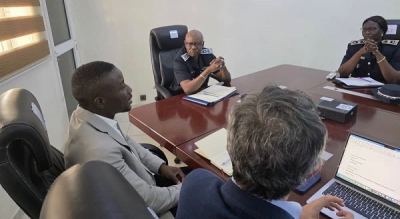
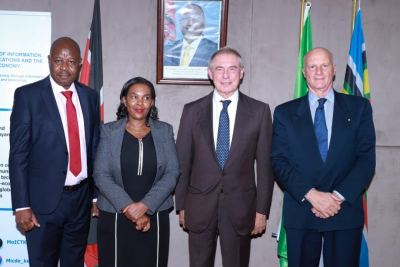
Abdoul Wahabou Sall, deputy director general of Senegal’s National Police, met last week with a delegation from Meta Platforms, the parent company of Facebook, WhatsApp and Instagram. The meeting aimed to explore new avenues of cooperation on online security.
Discussions focused on protecting young people and minors on social media platforms and strengthening operational collaboration mechanisms between law enforcement and the U.S. company. “In this regard, Meta representatives reaffirmed their willingness to support the National Police through capacity-building initiatives,” the Senegalese Police said.
Authorities expect the partnership to translate into capacity-building initiatives for specialized units, particularly the cybercrime division. Meta will organize technical training sessions on its tools and dedicated law enforcement portal to improve the handling of judicial requests and the processing of flagged content.
This initiative forms part of a broader trend across Africa, where governments have expanded partnerships with digital players to address the rapid growth of online activity. Senegalese authorities have sought to adapt investigative methods to a digital environment that now lies at the core of criminal activity, as cyber fraud, online harassment and illicit content dissemination increase.
Public institutions have also faced attacks in recent months. Hackers breached the national tax platform in October. A cyberattack then targeted the Department of File Automation (DAF) in early February. The agency manages the issuance of national identity cards, passports and biometric data. The attack forced authorities to temporarily suspend the production of national identity cards.
Cooperation with digital platforms provides a critical lever to identify perpetrators and accelerate the processing of reports. This cooperation reflects a broader shift in the role of security forces, which must now operate in cyberspace as actively as they operate on the ground.
Does Senegal Have the Means to Respond?
In its “Global Cybersecurity Index 2024” report, the International Telecommunication Union assigned Senegal a score of 67.17 out of 100. The score placed the country in Tier 3, which groups countries “having scored at least 55/100 and demonstrating an initial commitment to cybersecurity. This category corresponds to countries that have taken action—assessment, adoption, or implementation of recognized measures—in a moderate number of areas or indicators.”
Since that assessment, Senegalese authorities have announced the New Deal Technologique, a $1.7 billion program designed to turn the country into a technology hub by 2034. During the program’s launch in February 2025, President Bassirou Diomaye Faye said: "We are committed to building a sovereign digital space by strengthening our cyber resilience, securing infrastructure, protecting our critical data, and gradually reducing our dependence on foreign solutions."
Adoni Conrad Quenum