

-
Guinea completed the rehabilitation and equipping of its cybercrime directorate, financed by the National Development Budget.
-
Authorities upgraded facilities and equipment to support digital investigations and evidence collection.
-
The country ranked in the third performance tier in the ITU’s 2024 Global Cybersecurity Index, with strong legal and organizational scores.
Guinea continued to strengthen its digital security framework. On January 21, the Prime Minister’s Office announced the full rehabilitation and equipping of the Directorate of Cybercrime and the Fight Against Technological Traces. The National Development Budget financed the initiative.
Prime Minister Amadou Oury Bah visited the new premises alongside the Minister of Security and Civil Protection, General Bachir Dial.
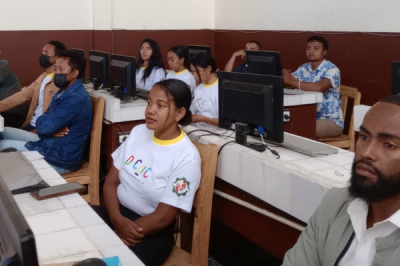
The infrastructure is located in the Minière district in Dixinn municipality. The facility includes a modern two-storey building designed to meet technical requirements for digital investigations. Authorities officially inaugurated the site on December 17, 2025, and they equipped it with specialized tools to analyze technological traces, collect digital evidence, and process information technology-related offenses.
This modernization comes as cybersecurity holds a strategic role in Guinea’s public policies. The progressive digitalization of administrative services, the expansion of electronic payments, and the growth of digital usage increase risks related to cyberattacks, identity theft, and online fraud. Authorities aim to adapt National Police operational capacities to a rapidly evolving digital environment.
In its Global Cybersecurity Index 2024, the International Telecommunication Union stated that countries must prioritize cybersecurity to fully harness information and communication technology potential. Guinea ranked in the third of five performance categories established by the UN agency.
The country recorded strong results in legal and organizational frameworks, with scores of 16.27 and 14.38 out of 20, but it still faces gaps in technical and operational capacity.
Through this investment, Guinea aims to improve the effectiveness of cybercrime enforcement, enhance training for specialized agents, and strengthen citizen confidence in security services. Over the long term, the framework should secure digital usage, support the country’s digital transformation, and provide a safer environment for economic actors engaged in digital development.
This article was initially published in French by Samira Njoya
Adapted in English by Ange J. A. de BERRY QUENUM