

-
Madagascar will train 1,000 young people for free in digital professions by the first half of 2026.
-
The program relies on a partnership between the OIF and Madagascar’s vocational training ministry.
-
Authorities aim to train 40,000 people in digital skills nationwide by 2028.
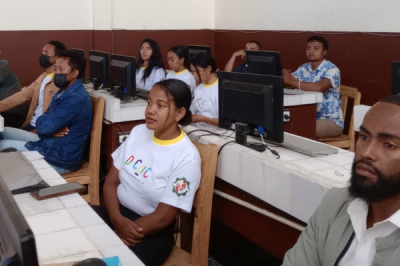
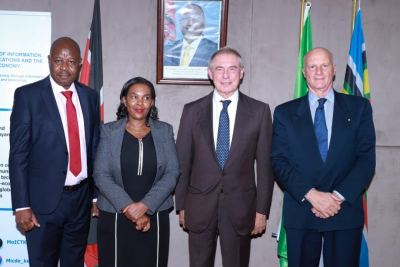
In Madagascar, the government and its partners will train 1,000 young people free of charge in digital professions by the end of the first half of 2026 under the “D-CLIC, train in digital skills with the OIF” program. Authorities officially launched this new phase of the project on Monday, January 19, in Antananarivo through a partnership between the International Organisation of La Francophonie and the Ministry of Technical Education and Vocational Training.
Le projet #DCLIC franchit une étape décisive à #Madagascar. Grâce à un partenariat entre l’OIF et le ministère de l’Enseignement technique et de la Formation professionnelle (METFP), 1 000 jeunes seront formés gratuitement aux métiers du #numérique d’ici la fin de l’année 2026.… pic.twitter.com/Cn7iVvBHqr
— La Francophonie (@OIFrancophonie) January 21, 2026
This phase marks the program’s transition to larger-scale operational deployment. The initiative begins with the training of national instructors, who will form a network designed to provide long-term support to beneficiaries across the country. The OIF developed the training pathways through an online learning platform, with a focus on digital skills in demand on the labor market as well as digital entrepreneurship.
The D-CLIC program forms part of a broader strategy to strengthen digital skills across the Francophone space. The program operates in several African countries and aims to improve youth employability, facilitate professional integration, and address rising demand for digital talent amid the gradual digitalization of African economies.
In Madagascar, the initiative comes as demand for digital training continues to intensify. The country faces strong demographic pressure, with a predominantly young population, while the formal labor market remains limited. Authorities now position digital skills as a core pillar of vocational training policy. The Minister of Technical Education and Vocational Training, Marie Marcelline Rasoloarisoa, recently said Madagascar aims to train 40,000 people in digital skills by 2028 in order to adapt the workforce to new economic and technological uses.
Against this backdrop, the D-CLIC program functions as an operational component of the national strategy. By expanding access to certified training and promoting the acquisition of immediately applicable skills, the new cohort could improve youth employability, support self-employment, and contribute to the emergence of a more structured digital ecosystem in Madagascar.
This article was initially published in French by Samira Njoya
Adapted in English by Ange J. A. de BERRY QUENUM