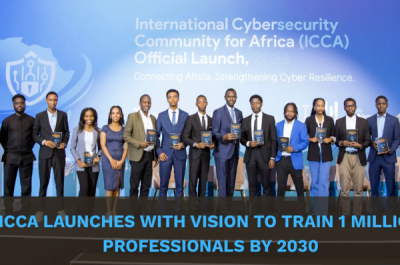


- The International Cybersecurity Community for Africa (ICCA) launched in Kigali to strengthen regional cybersecurity capabilities.
- ICCA aims to train 1 million cybersecurity specialists by 2030, up from 300,000 currently.
- The initiative introduces Umurinzi Cyber Threat Intelligence and practical Capture-the-Flag simulations to enhance expertise.
Sub-Saharan Africa recorded 138 million cyberattacks in the first half of 2025, according to Kaspersky. Organizations faced an average of 1,848 attacks per week, highlighting an urgent need to expand cybersecurity capacity.
In response, the International Cybersecurity Community for Africa (ICCA), a pan-African platform, launched on Friday, March 20, in Kigali. ICCA aims to unify continental experts and strengthen regional operational capabilities.
The International Cybersecurity Community for Africa (ICCA) officially launched in Kigali on 20 March 2026.
— International Cybersecurity Community for Africa (@icca_afrika) March 21, 2026
More than just an organization, ICCA is a movement focused on building a stronger, more resilient cybersecurity ecosystem across Africa through collaboration, capacity… pic.twitter.com/hq7fUm09dz
ICCA serves as a cooperative framework for information sharing on digital risks, skill development, and talent enhancement. Its founders set an ambitious goal: to train 1 million cybersecurity specialists by 2030. The current workforce totals only 300,000, while demand continues to grow.
The platform also intends to expand to around 15 African countries by 2027. It plans to launch certification programs and an African Cyber Resilience Index to benchmark national preparedness against cyber threats.
The initiative introduced two key tools. Umurinzi Cyber Threat Intelligence detects compromised credentials on the dark web and alerts targeted organizations. A practical Capture-the-Flag (CTF) system provides simulated attacks to build technical expertise at controlled costs in environments tailored to local realities.
These tools aim to accelerate skills acquisition while improving the operational readiness of African organizations.
Rwandan authorities and international partners back ICCA. The initiative forms part of a broader strategy to develop human capital and protect critical infrastructure. Its organizers hope to create an integrated digital ecosystem capable of managing risks arising from rapid digital transformation.
This article was initially published in French by Samira Njoya
Adapted in English by Ange J.A de Berry Quenum