

- Somalia’s parliament approved a cybersecurity law that creates a national governance framework and new response institutions.
- The law establishes a national incident response team, a nine-member cybersecurity committee and an emergency response center.
- The move follows recent cyberattacks, including a 2025 breach of the e-visa platform, and comes as Somalia ranks Tier 4 in the ITU’s Global Cybersecurity Index.
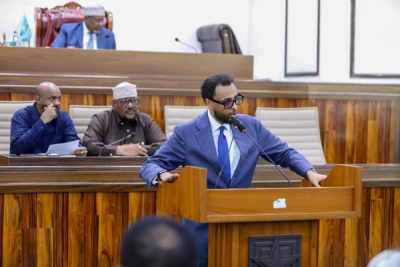
Somalia’s parliament approved the cybersecurity law on Monday, Jan. 26, strengthening the country’s regulatory framework as authorities intensify efforts to secure national cyberspace.
𝐒𝐨𝐦𝐚𝐥𝐢𝐚’𝐬 𝐏𝐚𝐫𝐥𝐢𝐚𝐦𝐞𝐧𝐭 𝐀𝐩𝐩𝐫𝐨𝐯𝐞𝐬 𝐭𝐡𝐞 𝐂𝐲𝐛𝐞𝐫𝐬𝐞𝐜𝐮𝐫𝐢𝐭𝐲 𝐋𝐚𝐰
— NCA Somalia (@SomaliaNCA) January 26, 2026
Mogadishu, Somalia – January 26, 2026 — The House of the People of the Federal Parliament of Somalia has today officially approved Somalia’s Cybersecurity Law, which aims to protect… pic.twitter.com/7XOgRDLp5A
The National Communications Authority (NCA) said the law establishes a national cybersecurity management framework. The text defines the responsibilities of the Ministry of Communications, assigns a technical role to the telecom regulator, sets obligations for operators of critical infrastructure and details mechanisms for prevention, reporting and response to cyber incidents.
The law also provides for the creation of the Somalia Computer Incident Response Team (SOM-CIRT), alongside a nine-member cybersecurity committee and an emergency intervention center tasked with coordinating rapid responses to cyber incidents.
“The cybersecurity law should play a key role in strengthening digital trust, supporting the growth of the digital economy and intensifying cooperation between public institutions, the private sector and international partners,” the telecom regulator said in a statement.
The approval follows earlier legislative steps. In August 2025, the Somali government approved a draft cybercrime bill. In March 2023, the Data Protection Act entered into force and led to the creation of the Data Protection Authority (ADP), which oversees enforcement of data protection rules.
Beyond domestic regulation, Somalia has pursued international cooperation to protect its cyberspace. The country signed a memorandum of understanding with Malaysia in August 2025, which authorities view as a global benchmark in cybersecurity. Earlier, in November 2024, Somalia strengthened cooperation with the United Nations Office on Drugs and Crime (UNODC) to bolster its capacity to combat online crime.
These initiatives come as cyber threats intensify. In his report State of Cybersecurity in Somalia 2024, Abdullahi Guled, a consultant to the Ministry of Communications, said Somalia recorded several cyber incidents in 2024, although authorities did not disclose many of them publicly. The incidents included ransomware attacks against public institutions and phishing attempts targeting the financial sector.
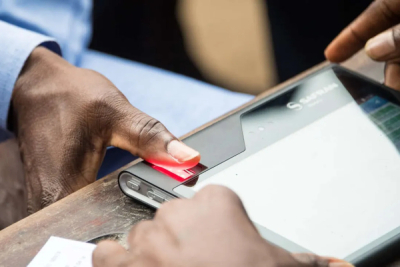
In November 2025, hackers breached the e-visa platform and compromised the personal data of several thousand people, highlighting vulnerabilities in government digital systems.
Somalia ranked in Tier 4 out of 5 in the International Telecommunication Union’s Global Cybersecurity Index 2024, which the ITU said “demonstrates a basic commitment to cybersecurity.” The country scored 37.38 out of 100 and still needs to strengthen technical, legal and capacity-building measures to improve resilience.
This article was initially published in French by Isaac K. Kassouwi
Adapted in English by Ange J.A de BERRY QUENUM