
-
Burkina Faso has approved a national artificial intelligence roadmap for 2026-2030 to guide the development of AI solutions across key sectors.
-
The strategy targets healthcare, agriculture, education, public administration, water and energy services as priority areas for AI deployment.
-
The roadmap forms part of the government's broader digital transformation agenda under the RELANCE 2026-2030 Plan and the "AI for All" initiative.
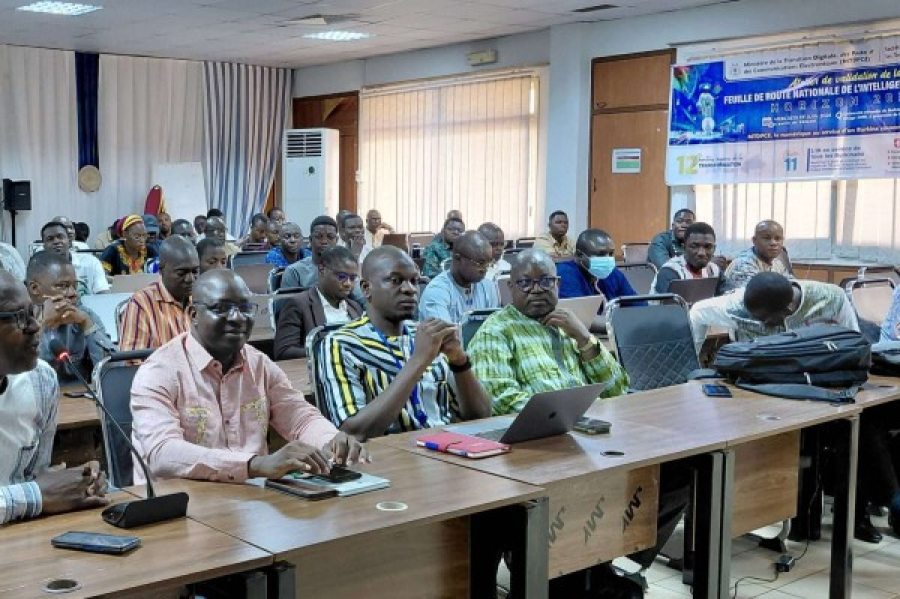
Burkina Faso has taken a new step toward developing its artificial intelligence ecosystem as authorities seek to position the technology as a driver of economic and social development. Government officials approved the National Artificial Intelligence Roadmap for 2026-2030 on Wednesday, June 17. The document will serve as a strategic framework for developing AI solutions tailored to the country's priorities in sectors including healthcare, agriculture, education and public administration.
The roadmap identifies several priority areas where authorities plan to deploy AI-based applications over the coming years. In healthcare, the strategy promotes the development of decision-support and medical diagnostic tools. In agriculture, authorities plan to support farmers through solutions that leverage weather forecasting and data-driven insights.
The roadmap also prioritizes educational technologies designed to address local realities and improve learning outcomes for pupils and students. In addition, the strategy includes applications for the water and energy sectors. Authorities aim to use AI-powered tools to facilitate citizen reporting, improve information flows and strengthen public service management.
The roadmap forms part of the RELANCE 2026-2030 Plan and the government's "AI for All" initiative, which authorities have identified as a central pillar of Burkina Faso's digital transformation agenda.
Stakeholders from government institutions, the private sector, universities, research centers, civil society organizations and development partners participated in the drafting process. As a result, the roadmap reflects a multi-stakeholder approach designed to align technological development with national development priorities.
Burkina Faso joins a growing group of African countries that have adopted dedicated artificial intelligence strategies. In recent years, countries such as Rwanda, Senegal, Benin, Egypt and Kenya have launched similar initiatives to regulate AI development, encourage innovation and strengthen digital competitiveness. Consequently, Burkina Faso's strategy aligns with a broader continental effort to establish governance frameworks for emerging technologies while capturing their economic benefits.
For Burkina Faso, the stakes extend beyond the technology sector alone. The country continues to face significant challenges related to public service delivery, agricultural productivity and skills development. Against this backdrop, authorities view artificial intelligence as a tool that can improve the effectiveness of public policies, support local innovation and facilitate the emergence of digital services adapted to national realities.
This article was initially published in French by Samira Njoya
Adapted in English by Ange J. A de Berry Quenum