

-
Between 4,000 and 5,000 parcels transit Mauritius each day, a volume driven by online purchases and international e-commerce platforms.
-
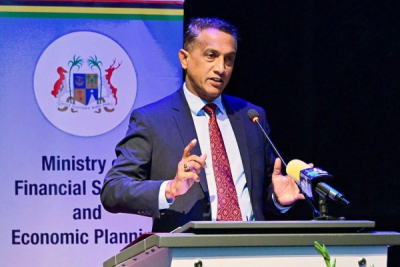
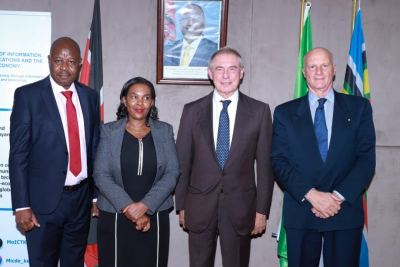
Junior Finance Minister Dhaneshwar Damry and MRA Director General Rohit Ramnawaz met with a Korean Customs Service delegation on Friday, May 15, to discuss risk management systems and advanced parcel-processing technologies.
-
The Mauritius Revenue Authority is rolling out advanced scanning systems to detect drugs, weapons and prohibited goods, alongside automated risk management tools.
Mauritius is moving to tighten control over its postal flows through digital tools, as the country grapples with a sharp rise in e-commerce parcels and a growing wave of illicit trafficking.
The issue dominated a meeting held Friday, May 15, between junior Finance Minister Dhaneshwar Damry, Mauritius Revenue Authority (MRA) Director General Rohit Ramnawaz, and a delegation from the Korean Customs Service.
The discussions focused on strengthening risk management systems and integrating advanced technologies into the processing of incoming parcels. Mauritian authorities want to sharpen detection capabilities for drugs, weapons and fraudulent goods through scanning equipment and automated analysis. "The government's vision is to digitalize government services in order to improve their efficiency and effectiveness, while managing the growing risks linked to drug trafficking and illicit products," Damry said after the meeting.
This cooperation comes against the backdrop of fast-rising e-commerce activity on the island. According to customs authorities, between 4,000 and 5,000 parcels transit Mauritius each day, a volume pushed higher by online purchases and international e-commerce platforms. That growth complicates the work of control services, which now face increasingly sophisticated fraud methods — particularly the under-valuation of goods and the concealment of prohibited products inside postal shipments.
The initiative builds on years of government investment in modernizing customs and tax services. The Mauritius Revenue Authority has launched several projects covering the automation of clearance procedures, digital risk management and tighter control of incoming parcels. The agency is also working on advanced scanning systems designed to detect drugs, weapons and other prohibited goods more effectively. Beyond domestic efforts, the authorities are relying on international cooperation to modernize control infrastructure, speed up the processing of goods and secure trade flows.
Samira Njoya