



Telecom (187)
-
Program recovered 43.5 tons of devices for repair, reuse, or recycling
-
28.5% of Orange's annual phone sales in the region were collected
-
Initiative supports affordable access to tech and reduces e-waste footprint
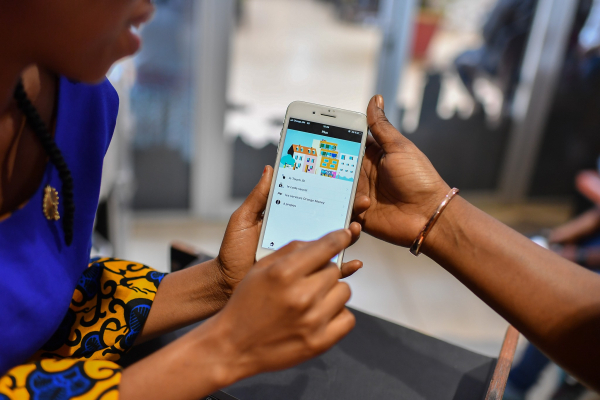
In 2024, Orange Middle East and Africa ramped up its circular economy efforts by collecting 284,000 used mobile phones, equal to 28.5% of its annual phone sales in the region. The data comes from the company’s 2024 Corporate Social Responsibility (CSR) Report, which outlines its push to reduce environmental impact while improving digital access.
Titled "Cultivating Impact", the report highlights the achievements of Orange’s “Re” program, which collected 43.5 tons of electronic waste for refurbishment or recycling.
The initiative was active in five countries, Côte d’Ivoire, Cameroon, Burkina Faso, Egypt, and Jordan, and is built on four pillars: collection, repair, refurbishment, and recycling. In West Africa, Orange partners with Ateliers du Bocage, a French social enterprise that specializes in managing used electronics. In Egypt and Jordan, the process is fully managed through the "Re" program.
Phones in working condition are restored and sold at lower prices. In Egypt, more than 10% of devices sold by Orange in 2024 were refurbished units. The program also operates in Senegal and Morocco, where demand for affordable refurbished devices is rising fast. Irreparable phones are dismantled, and components are processed through certified recycling channels following environmental standards.
The circular model also applies to internet boxes. In 2024, Orange collected 172,000 boxes, of which 115,000 were refurbished. This helped avoid 2,800 tons of CO₂ emissions, which Orange says equals the emissions from 150 car trips around the African continent.
Orange has also launched public awareness campaigns and expanded its network of collection points — especially in Côte d’Ivoire, Egypt, and Jordan — to encourage more returns. The goal is twofold: to cut down on electronic waste and make digital devices more affordable in a region where access remains below the global average.
According to the GSMA, a basic smartphone costs about 18% of monthly income in low- and middle-income countries, rising to 39% for the poorest 40%, and up to 51% for the bottom 20%.
Through these efforts, Orange aims to establish itself as a leader in circular economy practices within the telecom industry, combining innovation, environmental responsibility, and digital inclusion. The “Re” program, part of its core CSR strategy, is expected to expand to more of Orange’s subsidiaries in Africa and the Middle East in the coming years.
In 2023, Orange launched Lead the Future, a new business model driven by responsibility and efficiency. This approach is redefining the boundaries between economic performance and social impact, with visible results multiplying year after year across its markets, especially in Africa.
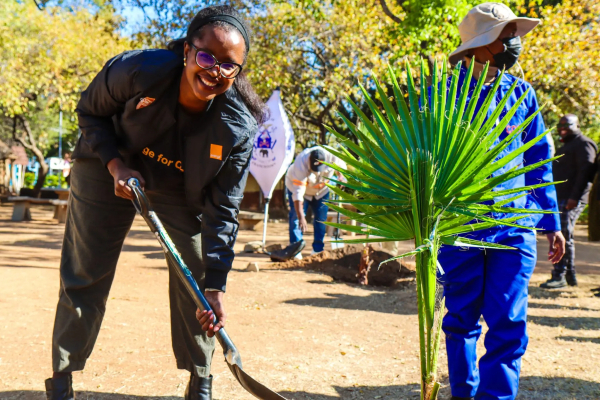
On June 5, 2025, Orange Middle East and Africa (OMEA) marked the first anniversary of Orange Engage for Change. This program of social and environmental initiatives showcases OMEA's positive impact actions while allowing employees to get directly involved and make a tangible difference in communities and regions. This innovative program, which highlights OMEA’s initiatives through the Orange Foundation, Orange Digital Centers, Orange Villages, and other projects, was simultaneously rolled out across its 17 markets, a first for the continent. The pioneering initiative engages every employee on key societal and environmental issues in the countries where the group operates. Since its 2024 launch, 5,676 employees, nearly a third of the total workforce, have taken part in on-the-ground actions. They have shared their experience, skills, and support in education, digital access, the environment, and social solidarity. Each OMEA employee received three workdays per year from their local entity for community missions. These missions were grouped into over 280 engagement opportunities listed on the program's dedicated platform.
At the 2024 launch, Asma Ennaifer, Executive Director of CSR, ODC and Communications for Orange Middle East and Africa, explained that Orange Engage for Change was born from a desire to empower employees. She emphasized that every initiative and action taken by employees demonstrates their collective ability to bring about significant change. Ennaifer expressed pride in seeing this commitment materialize and witness the positive impact it generates.
The education sector proved the most dynamic, offering 123 engagement opportunities to staff, with 54 specifically dedicated to digital skills development. Regarding OMEA’s investment in skills development, the telecom company highlighted digital inclusion as a powerful lever for reducing inequality and empowering individuals. Orange stated its belief that digital technology should foster equal opportunity, not division, making it a core priority within Orange Engage for Change, its solidarity engagement program. The company affirmed that acting for digital inclusion means acting concretely for shared, sustainable progress, fully aligning with its mission as a responsible operator. Meanwhile, the environmental field provided 53 engagement opportunities for Orange employees in Africa and the Middle East.
Local Initiatives, Global Impact
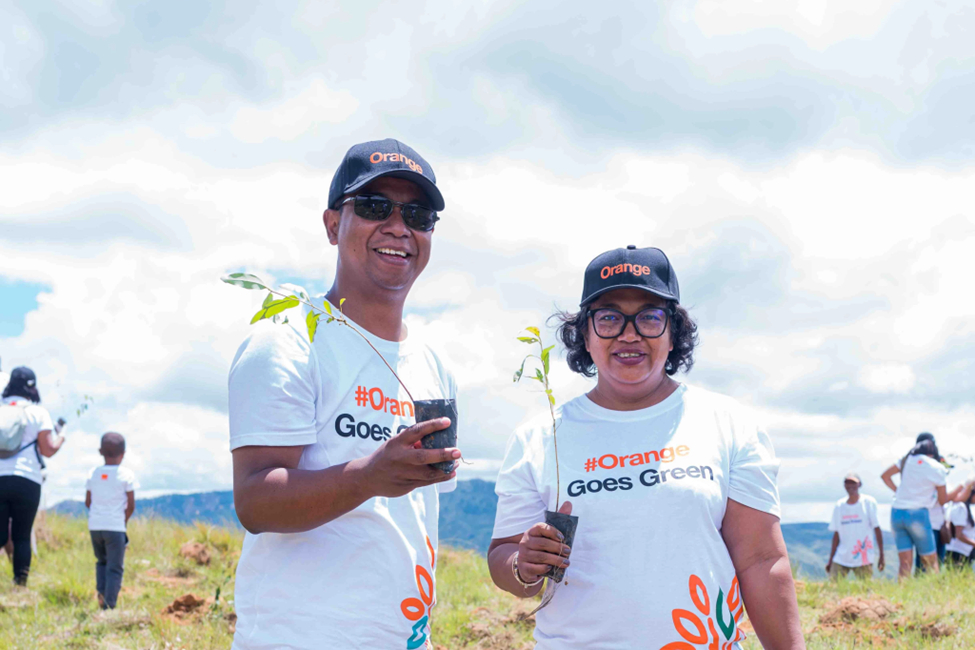
The success of Orange Engage for Change heavily relies on its local roots. Orange missions are tailored to needs identified by subsidiaries and partner non-governmental organizations, ensuring maximum relevance. In Côte d’Ivoire, 150 volunteers collaborated with a local partner to reforest 30 hectares in the Azaguié forest. In Mali, 350 volunteers planted 1,000 trees and supported efforts to create an urban park for children. In Madagascar, 240 volunteers raised climate change awareness among 1,200 students across each of the country's 24 regions. Overall, the actions span a wide range of fields, including education, culture, digital inclusion, environment, and health, illustrating the program’s rich and broad impact. This diversity is part of a broader vision: to use digital technology as a tool for inclusion and to promote societal responsibility at every level.
Millions of Lives Touched
Orange’s social initiatives across Africa and the Middle East impacted the lives of over 18 million people, either directly or indirectly, in just one year. Through hundreds of missions, thousands of children and youth attended coding workshops at Orange Digital Centers. Project leaders gained skills through mentorship sessions, and hundreds of rural women participated in skills training workshops in digital homes. Urban sanitation drives included trash collection, gutter cleaning, electronic waste recycling, construction of modern school toilets, installation of community drinking water points, and distribution of medications in detention centers.
In the Democratic Republic of Congo, for example, the Kisenso General Referral Hospital in Kinshasa received water and electricity storage equipment to improve working conditions for medical staff and patient care. In Guinea, Senegal, Burkina Faso, and Cameroon, digital kits were donated to schools in rural or underprivileged areas to improve students' access to richer learning resources. In Botswana, Madagascar, and Guinea-Bissau, several initiatives were launched at Digital Homes to help women develop entrepreneurial skills and build greater autonomy.
Hélène Ndogmo, a housekeeper and member of the Widows’ Association of Douala 5th, was among the women who discovered digital crafts through workshops organized by Orange Cameroon. She learned to design creations using a drawing program and produce them with a laser cutting machine. Ndogmo expressed great pride in her training, recalling that she previously thought computers were only for college students, not for older mothers like herself.
In the Central African Republic, Noelle Jessica Gandou, a senior-year student in the G2 track at the Technical High School of Bangui, benefited from a sanitation operation led by Orange Centrafrique. After the campaign, which involved removing paper and plastic waste, clearing brush, maintaining green spaces, and cleaning up areas to combat malaria and harmful insects, the teenager expressed her delight. She looked forward to seeing their playground clean and gathering area beautified with flowers, anticipating a lovely view in a few months.
Transformed Employees
One of the key anticipated effects of this program is the transformation observed among the employees themselves. Taking part in field missions provided them with a new perspective on their role in the company and strengthened their sense of social purpose.
Jacqueline Diomandé, an Orange Côte d’Ivoire customer, views Orange Engage for Change as essential. She called it a fantastic initiative, noting the difficulty for office workers to find time to get out and give back to humanity, which everyday habits often inadvertently harm.
In Madagascar, where 563 employees participated, Domoina Randriamananoro, PMO for Technical Logistics, joined colleagues in preparing and delivering care packages to children in hospitals. She explained her involvement as a way to find personal joy through helping and showing solidarity. Randriamananoro spoke of the pleasure of giving and receiving satisfaction in return, expressing pride in making her small contribution and working alongside people who share the same values in the company's varied and far-reaching humanitarian work.
Prisca Mihanta Randrianarisoa, an advertising manager at Orange Madagascar, participated in a digital education workshop for students at a public school in Ambohidratrimo. She happily recounted teaching them how to use tablets, which she believes will benefit their studies and prepare them for the future.
Omar Al-Majali of Orange Jordan added that participating in the reforestation was a unique experience. He noted that it strengthened the bond among colleagues and deepened their commitment to the environment.
Toward a Scaling Up of the Program
Buoyed by the success of this second edition, Orange plans to expand and intensify the program. The goal is to involve one out of every two employees in Orange Engage for Change, increasing team participation in high-impact societal actions. With this new social engagement initiative, OMEA is no longer simply supporting causes; it is actively engaging its people in a process of social transformation. This model is built on the belief that large corporations have a vital role to play in building more just and resilient societies. However, one of the main challenges facing OMEA as it scales up the initiative will be ensuring that the supported projects continue to thrive after employee involvement ends.

• Mobile services in DR Congo face heavy taxes, driving up costs for users
• Total tax burden includes VAT, excise duties, and sector-specific levies
• GSMA urges tax reforms to improve digital inclusion and mobile access
The Democratic Republic of Congo (DRC) applies one of the heaviest tax burdens on mobile services in Africa, pushing up the cost of voice, data, and mobile money for users. According to the Mobile Sector Taxation: Comparative Fiscal Burden in DRC report published in June 2025 by the GSMA, this tax pressure is limiting digital access, slowing financial inclusion, and hindering the country’s digital transformation.
The report lists several sector-specific taxes. Revenues from mobile services are subject to a 16% value-added tax (VAT) and a 10% excise duty. Additional levies include a 2% contribution to the universal service fund, charged on turnover, and a 3.6% RAM fee intended to support internet access in universities.
While the dedicated mobile money tax was removed, these transactions remain subject to VAT and excise duties, keeping costs high for users.
The cumulative tax burden increases the final price for consumers, especially for low-income groups. Rural communities, youth, and women are among the most affected, even though mobile services play a vital role in providing access to information, education, and financial services. The GSMA warns that the current tax structure limits the spread of digital tools among vulnerable groups.
Data from the International Telecommunication Union (ITU) supports this concern. In 2024, the average cost of mobile services in the DRC was 16.4% of gross national income per capita, far above the ITU’s affordability benchmark of 2%. The GSMA attributes much of this gap to the high tax burden on operators and consumers.
To improve the situation, the GSMA is calling for a review of the tax system applied to mobile services. The association recommends lowering the excise duty to 3%, reducing the number of sector-specific taxes, and simplifying tax collection to promote investment and compliance among operators.
The GSMA also proposes exempting small mobile money transactions to boost usage among low-income households.
In 2018, the organization stated that tax reform in the sector could significantly expand mobile service penetration, particularly among low-income populations. According to the GSMA’s Advancing Digital Transformation in African Economies report, reducing or eliminating certain taxes could lower mobile internet prices by 13% year-on-year by 2028.

The United Nations regards the Internet as a fundamental service, on par with electricity and clean drinking water. Aware of its role in Africa’s economic and social development, a call for widespread mobilization has been issued to boost investment.
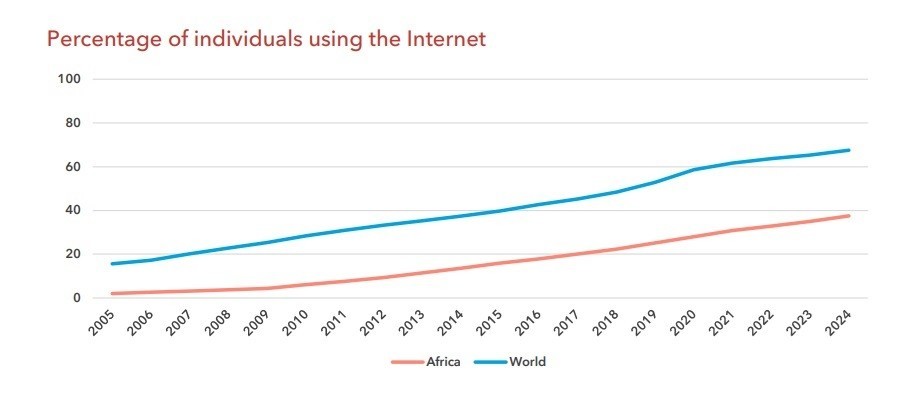
Africa's internet penetration is growing at twice the global average, according to the International Telecommunication Union (ITU). Since 2005, the continent has seen an average annual growth rate of 16.7%, compared to the global average of 8%. Although this pace has slowed over the past decade to 10.7% annually versus 6.1% worldwide, Africa continues its sustained digital expansion. This rapid growth underscores a strong desire for digital integration, despite persistent deep divides compared to the rest of the world.
Source: ITU
In 2024, only 38% of the African population was connected to the internet, significantly less than the global average of 68%. This makes Africa the least connected region globally, emphasizing the structural and economic hurdles many African countries must overcome to ensure widespread and equitable access to digital technologies.
Gender Disparity
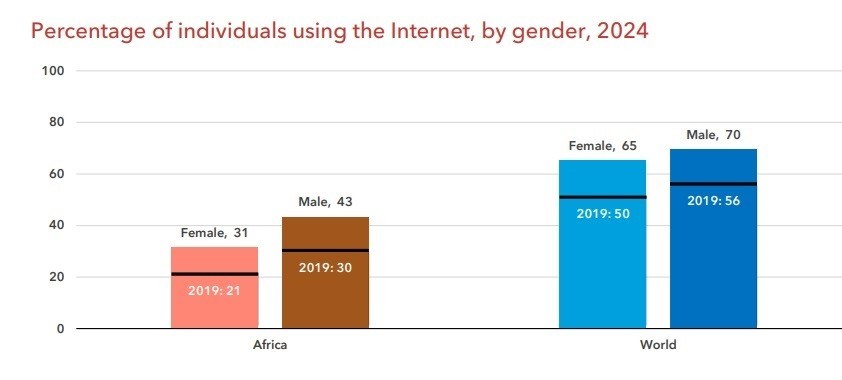
A notable inequality in Africa is the digital gender divide. In 2024, 43% of men used the internet compared to only 31% of women. This imbalance results in a Gender Parity Score (GPS) of 0.72, well below the global average of 0.94.
Source: ITU
While this trend shows improvement—the GPS has risen from 0.69 to 0.72 over the past five years—it remains insufficient to quickly reverse the structural underrepresentation of women in the digital sphere.
Age Divide
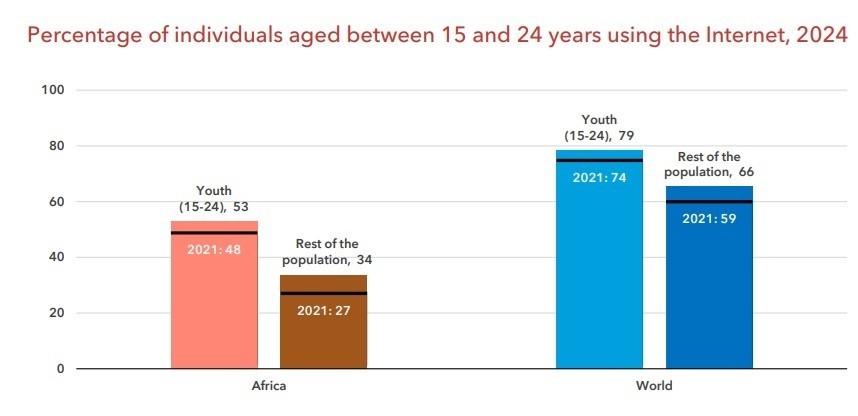
The digital divide in Africa also extends to generations. In 2024, 53% of young Africans aged 15 to 24 were connected to the internet, compared to 34% of the older population.
Source: ITU
This generational gap is more pronounced than the global average, though it is slowly narrowing. The ITU views young people's embrace of digital tools as a major asset for the continent's digital transformation. However, it also highlights the urgent need to expand access to older and marginalized populations to achieve truly universal digital inclusion.
Geographic Disparities
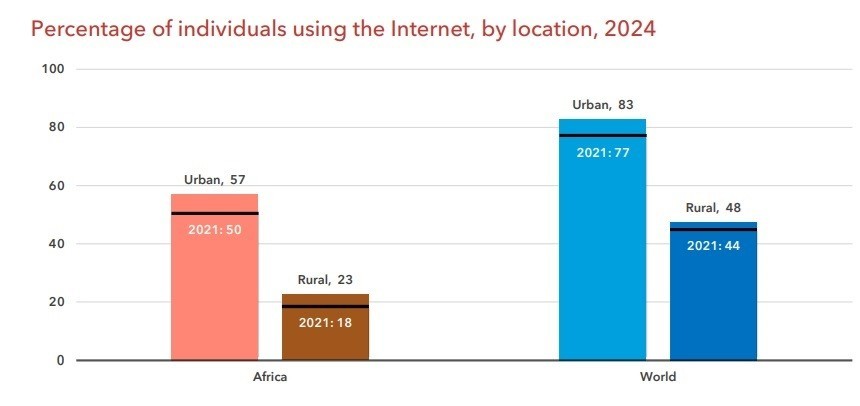
Internet connection distribution also reveals significant geographical fragmentation. In 2024, 57% of urban residents in Africa used the internet, whereas only 23% in rural areas had access. This 34-percentage point gap is comparable to the global average gap of about 35 points between urban (83%) and rural (48%) environments.
Source: ITU
Data from several African countries indicates a clear trend: higher overall internet penetration rates tend to correlate with smaller gaps between rural and urban areas. This suggests that targeted and sustained progress in infrastructure and public policy can reduce geographical inequalities.
A Call to Action
Given these pervasive disparities, it is clear that Africa cannot bridge its digital divide without collective and coordinated action. Investing in infrastructure, especially in rural and remote areas, is crucial for more equitable access to digital tools. Similarly, inclusive public policies that consider gender, age, and location must be systematically implemented to foster a fairer digital society.
Governments, telecom operators, NGOs, and development partners play a fundamental role in addressing the continent's many digital divides. While Africa continues to demonstrate above-average growth in internet access, this momentum requires structural measures to ensure it benefits all segments of the population without exception. In an increasingly digital world, digital exclusion equates to a form of social marginalization. Therefore, accelerating efforts for digital inclusion at all levels is imperative for Africa to fully capitalize on the opportunities presented by digital transformation.
Muriel EDJO
While a few African countries have already launched 5G, Egypt is now preparing to deploy this technology. The support of international donors reflects the strategic stakes of this transition toward faster and more reliable connectivity.
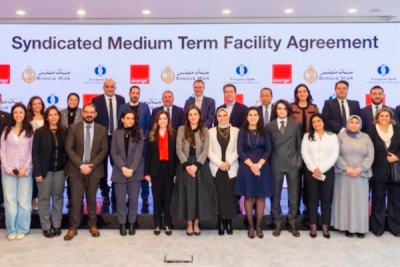
The European Bank for Reconstruction and Development (EBRD) announced on Wednesday, May 28, a syndicated loan of $85 million to telecom operator Orange Egypt, in partnership with Banque Misr.
The financing aims to support Orange Egypt's acquisition of a 5G mobile license from the National Telecommunications Regulatory Authority and to fund the nationwide deployment of next-generation telecom infrastructure.
The loan is structured with a $44.5 million contribution from the EBRD and $40 million mobilized by Banque Misr’s Dubai branch.
"We are proud to partner with Banque Misr and the EBRD in a move that underscores international confidence in Egypt’s economy and supports our vision for advancing the telecommunications sector" said Mohamed Sayed, Chief Financial Officer of Orange Egypt. "Through technologies such as 5G, we aim to enhance services in education, healthcare and smart cities, bridging the digital divide and driving Egypt’s digital economy forward."
This project aligns with the "Digital Egypt 2030" strategy, spearheaded by the Egyptian government. In January 2024, the National Telecommunications Regulatory Authority awarded 5G licenses to several operators, including Orange Egypt, Vodafone Egypt, and e& Egypt, for a total of $675 million. These licenses also cover the renewal of previous generation authorizations for a 15-year period, without the addition of new frequency bands.
With the backing of the EBRD and Banque Misr, Orange Egypt plans to accelerate its 5G rollout and modernize its network. The technology is expected to significantly enhance users' digital experience through higher speeds, lower latency, and more reliable connections. It also paves the way for innovative services in key sectors, fostering an inclusive digital transition and contributing to a reduction of over 1.74 million tons of carbon dioxide emissions annually, in line with Egypt’s climate commitments.
The initiative comes amid robust demand for high-speed connectivity in Egypt. According to the Ministry of Information and Communication Technology, the country had 83.07 million internet users in July 2024, an 8.46% annual increase from 76.59 million a year earlier. Fixed internet subscribers reached 11.23 million, within an estimated total population of 112.71 million.
By Samira Njoya,
Editing by Sèna D. B. de Sodji
-
Orange Liberia announces $200M investment to expand rural network coverage
-
The investment aims to boost customer experience, expand subscriber base, and drive uptake of high-value digital services as traditional telecom revenues stagnate
Orange Liberia has unveiled a $200 million investment blueprint for the next six years, targeting accelerated growth and extensive network expansion throughout the nation, with a particular focus on underserved rural communities.
The ambitious plan was announced by CEO Jean Marius Yao last week during the inauguration of the company’s new headquarters, baptised "Icon 16." The event marked a strategic milestone for the operator. "This is more than just a corporate facility. […] It's a bold commitment to Liberia's digital vision and a symbol of faith in our future," stated Abdullah Kamara, chairman of the Liberia Telecommunications Authority.
This significant investment arrives as telecommunications operators across Africa contend with plateauing or declining voice revenues. Orange is strategically pivoting towards data services and mobile money as primary engines for growth and profitability. Upgrading the network is expected to not only improve the customer experience but also draw new subscribers and stimulate the adoption of high-value digital services.
The initiative expands upon an existing collaboration with Chinese technology giant ZTE to deliver connectivity to Liberia's remote regions. Since acquiring Cellcom in 2016, Orange Liberia has solidified its position as one of the country's preeminent telecom providers, alongside Lonestar Cell MTN. As of early 2025, Liberia recorded 1.84 million internet users, translating to an internet penetration rate of 32.4%, according to DataReportal.
Ultimately, this strategic investment is poised to help Orange reinforce its market standing amidst the accelerating digital transformation and heightened competition within Liberia's telecommunications sector.
By Adoni Conrad Quenum,
Editing by Feriol Bewa
-
Orange Central Africa launched 4G mobile technology on May 15, following years of investment to modernize infrastructure and meet regulatory requirements.
-
The rollout aims to strengthen Orange's market position in a digitally underdeveloped but high-potential market, offering faster speeds for video calls, remote work, and online services.
-
The 4G network is expected to support digital transformation, benefiting SMEs, professionals, and startups, while fostering innovation in education, healthcare, and mobile finance.
Orange's Central African Republic subsidiary officially rolled out its fourth-generation (4G) mobile technology on Thursday, May 15, marking a significant step for the telecom operator as it aims to solidify its position in a market with substantial untapped digital potential.
"This launch is the culmination of several years of investments, encompassing technical, human, and regulatory efforts. It represents a major milestone for advancing digital technology in our cherished nation," stated Max Francisco, General Manager of Orange Central Africa.
Faced with increasing strain on its 3G network, the Central African arm of the French telecommunications group initiated a series of investments in 2021 to upgrade its infrastructure and meet regulatory requirements. The new 4G service is currently operational in Bangui, Bouar, Berbérati, and Bossangoa, with plans to extend coverage to Bambari in the coming months.
Offering speeds up to ten times faster than 3G, 4G provides an enhanced experience for activities such as video conferencing, remote work, online gaming, and cloud-based services. To facilitate this transition, Orange has also launched a complimentary migration campaign to 4G-compatible SIM cards and enhanced its data packages.
The introduction of 4G is part of a public-private partnership agreement signed in November 2024 between Orange and the Central African government, through the Ministry of Digital Economy. This agreement is designed to accelerate the deployment of high-speed internet coverage nationwide, supporting the country's broader digital transformation agenda.
Market Poised for Expansion
The Central African Republic's telecommunications market is currently shared among Orange, Moov Africa, and Telecel. According to DataReportal's 2024 figures, the country has 2.1 million mobile phone subscribers and 839,000 internet users within an estimated population of 5.4 million. With an internet penetration rate of 15.5%, the nation presents a significant opportunity for growth in digital services.
In this environment, Orange views the deployment of 4G as a strategic tool to broaden its service offerings, attract new customer segments such as small and medium-sized enterprises (SMEs), students, and professionals, and foster the growth of digital adoption in a country actively pursuing modernization.
Furthermore, 4G has the potential to stimulate the development of new services in sectors like education, healthcare, mobile finance, and e-governance. It also presents a valuable opportunity for young entrepreneurs and local start-ups to create digital solutions tailored to the specific needs of the country.
By Samira Njoya,
Editing by Sèna D. B. de Sodji
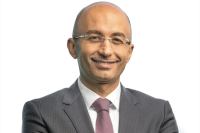
- Yasser Shaker has been appointed CEO of Orange MEA, effective July 1, 2025, succeeding Jérôme Hénique, who becomes CEO of Orange France.
- Shaker brings 25+ years of tech industry experience.
French telecom group Orange announced on Monday, May 5, a leadership change for its Middle East and Africa (Orange MEA) division, tapping Yasser Shaker (photo), the current chief executive officer of Orange Egypt, as its new head. His appointment takes effect on July 1, 2025. Shaker succeeds Jérôme Hénique, who has been named Executive Director and CEO of Orange France. Shaker will also join the Orange MEA Board of Directors upon assuming his new role on June 1.
A telecommunications engineer and alumnus of Cairo University's Faculty of Engineering, Shaker also holds a Master of Business Administration (MBA) from the Rennes School of Business. He will become a member of Orange Group's executive committee. Christel Heydemann, Orange's Chairwoman and CEO, expressed strong confidence in his ability to succeed, stating that "his extensive experience and deep knowledge of the region will be essential to continuing our growth momentum."
Shaker will continue the mission set by his predecessor: to establish Orange MEA as a premium multi-service operator. Currently active in several high-growth sectors—including mobile data, mobile finance, cybersecurity, support for technological innovation, and energy—OMEA was the group's primary growth engine in 2024. Comprising 16 African subsidiaries and Jordan, OMEA reported revenues of 7.683 billion euros ($8.2 billion), an 11.1% increase compared to 2023.
Shaker, who has served as CEO of Orange Egypt since May 1, 2018, began his career in the satellite industry. Over more than 25 years, he has played a pivotal role in the technology sector. Orange credits its Egyptian subsidiary's "record levels of growth and profitability, despite a challenging macroeconomic environment" to his leadership. Before taking the helm at Orange Egypt, Shaker held the position of Chief Technology Innovation Officer at OMEA.
Muriel EDJO
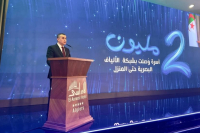
- Algeria plans to fully replace its outdated copper telecom network with high-speed fiber optics by the end of 2027.
- The shift supports national goals to boost internet quality and enable sectors like AI, e-services, telemedicine, and fintech.
- Only 27% of households are currently connected to fiber; high subscription costs may hinder broader adoption.
The Algerian government plans to gradually retire its copper wire network by the close of 2027, prioritizing the implementation of more efficient fiber optic technology. This ambition was announced on Tuesday, April 29th, by Minister of Post and Telecommunications Sid Ali Zerrouki (pictured), during ceremonies marking the connection of two million Algerian households to fiber-to-the-home (FTTH) infrastructure.
This decision arises because the copper network, initially designed for telephone services, no longer meets contemporary demands. It exhibits slow internet access speeds and is susceptible to outages. In contrast, fiber optics transmit data at the speed of light, maintaining signal quality.
"Among its advantages, fiber optics offers significantly superior upstream and downstream speeds compared to the copper network, ranging from 100 megabits per second (Mbps) to several gigabits per second (Gbps), and provides better service quality than copper. Remote work, video conferencing, e-education, telemedicine, and numerous other applications have recently increased the demand for bandwidth," explained France's Electronic Communications and Postal Regulatory Authority (ARCEP), where a similar copper network phase-out is underway.
Mr. Zerrouki also expressed his belief that expanding fiber infrastructure aligns with a strategy aimed at empowering startups to develop advanced digital solutions, accelerating the digitization of governmental and public services, fostering innovation in artificial intelligence, the Internet of Things, and big data, while also bolstering financial inclusion through the expansion of electronic payments and the growth of the digital economy.
It is important to note, however, that achieving a successful transition to fiber will require the Algerian government to increase investment in network coverage. The two million households currently connected to fiber optics represent only 27% of the 7.4 million households recorded nationwide. Furthermore, as of September 30, 2024, Algeria had 2.6 million ADSL (copper) subscribers, accounting for approximately 44% of the 5.9 million fixed internet subscribers.
Moreover, despite its numerous benefits, the adoption of fiber optics could be constrained by its cost. For instance, Algérie Telecom offers three ADSL plans: 10 Mbps at 1,600 Algerian dinars ($12.06) per month, 15 Mbps at 2,000 dinars, and 20 Mbps at 2,150 dinars. In comparison, the entry-level fiber optic plan starts at 30 Mbps for 2,200 dinars per month. The operator also provides higher-speed packages at 60 Mbps for 2,400 dinars, 120 Mbps for 2,600 dinars, 240 Mbps for 2,800 dinars, and up to 1.2 Gbps for 4,200 dinars.
By Isaac K. Kassouwi,
Editing by Sèna D. B. de Sodji
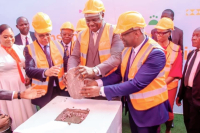
The digital economy is now a major engine of growth for many African nations. This ongoing transformation is creating opportunities for various players to emerge. The Democratic Republic of Congo, in particular, still holds considerable potential for expansion in this sector.
Orange Group officially commenced construction of its future headquarters in the Democratic Republic of Congo (DRC) on Wednesday, April 16, 2025, in a ceremony attended by Augustin Kibassa Maliba, the nation's Minister of Posts, Telecommunications, and the Digital Economy. The move underscores the telecom operator's commitment to a market brimming with potential. This significant investment reflects the company's confidence in the DRC's economic and digital prospects, despite a business climate often perceived as intricate.
The planned eight-story Orange DRC headquarters, a 10,000-square-meter edifice, will rise in Kinshasa on Avenue des Huileries, directly across from the Martyrs of Pentecost Stadium in the Lingwala district. “The construction of this headquarters goes beyond just a building; it represents a major step forward for the technological development of the DRC. I hope this site will offer a modern, collaborative work environment that fosters innovation and the creation of new services to benefit the entire Congolese population,” said Minister Kibassa Maliba.
According to the latest figures from Congo’s Postal and Telecommunications Regulatory Authority (ARPTC), Orange is the country's second-largest operator with 18.5 million subscribers, trailing Vodacom's 22.5 million but ahead of Airtel and Africell. With a total of 62.2 million mobile phone subscribers, representing a mobile penetration rate of 65.8%, and 32.1 million mobile internet users, equating to an internet penetration rate of 33.8%, DRC presents a market with substantial untapped potential.
The Congolese government's active pursuit of digital transformation as a key driver of economic and social advancement further highlights the opportunities that Orange envisions within the nation. The company has considerable scope to establish itself as a leading player across various burgeoning sectors, including the expanding innovative startup ecosystem, the digitization of both public and private services, cloud computing, data storage solutions, and cybersecurity.
Mobile Money also stands out as a robust growth engine with significant promise for the telecom operator. With a current penetration rate of 26.7%, Orange possesses the potential to become a catalyst for greater financial inclusion. However, the company's ability to capitalize on these favorable projections hinges on the Congolese government's sustained commitment to nurturing the digital economy, particularly in areas such as regulatory frameworks, frequency spectrum allocation, infrastructure development, the issuance of new licenses, and improving access to mobile devices. Moreover, political and security stability within the country remains a critical factor.
The future Orange headquarters in the Democratic Republic of Congo is slated for completion and handover in October 2027.
By Muriel EDJO,
Editing by Sèna D. B. de Sodji
More...

To further its goal of becoming a leading telecom operator throughout its African markets, Orange is increasing its efforts. The company is significantly investing in new technologies and prioritizing stronger customer relationships.
Orange Middle East and Africa (OMEA) deployed more than 10,000 employees across its 17 markets on Tuesday, April 15, in a widespread local customer service initiative. The operation, dubbed “My Customer, My Boss,” saw staff from all departments engaging directly with 15,000 customers in 120 towns and villages.
OMEA presented the effort as a significant step in the company’s management culture, inspired by a successful program in Sierra Leone. The initiative aims to empower every employee, regardless of their role, to contribute to customer satisfaction.
Brelotte Ba, Deputy CEO of Orange Middle East and Africa, underscored the importance of the initiative, stating, “Customer experience is everyone’s business. Every employee, without exception, is committed to meeting our customers’ expectations with excellence. With My Customer, My Boss, we are demonstrating that our commitment to service is collective, concrete, and forward-looking by organizing, for the first time on a continental scale, a collective mobilization of this magnitude.”
To streamline data collection during the outreach, Gofiled, a startup from the Orange Digital Center in Tunisia, developed a mobile application. OMEA highlighted this collaboration as an example of its commitment to integrating local innovation, social impact, and economic performance. The data gathered from individual customers, businesses, Orange Money users, and partners will be analyzed and used to drive concrete actions identified during internal hackathons in each country. These efforts are geared towards developing solutions that enhance the customer experience.
The focus on service quality and customer experience comes as competition in Africa’s telecom market has intensified over the past three decades. With telecom operators now closely matched in areas such as network coverage, new technologies, service offerings, and pricing, customer sentiment has become a critical factor in customer retention.
According to an analytical note from the international strategy consulting firm McKinsey & Company, customer experience is currently “the key differentiator for creating value in telecommunications. Our research shows that 73% of senior telecom executives consider it a top priority.”
OMEA stated that this large-scale mobilization of staff for local customer service missions “is set to become an annual event. It is part of a continuous improvement approach to customer experience, aimed at assessing satisfaction, understanding expectations, and continuing to improve the services offered to them.”
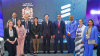
The collaboration is a strategic move to empower Moroccan entrepreneurs, bridge the digital skills gap, and drive sustainable economic growth per the nation's Digital 2030 objectives.
At GITEX Africa 2025 (April 14-16), held in Marrakesh, Morocco's Ministry of Economic Inclusion, Small Business, Employment and Skills (MIEPECC) and Ericsson signed a Memorandum of Understanding (MoU) to explore collaboration aimed at digitally upskilling and empowering entrepreneurs in the Kingdom of Morocco.
Younes Sekkouri, Minister of Economic Inclusion, Small Business, Employment and Skills (MIEPECC), stated, "This potential collaboration with Ericsson reflects our shared interest in enhancing digital inclusion in Morocco. We look forward to exploring how such an initiative could help strengthen our entrepreneurial ecosystem and support the ambitions of Morocco’s Digital 2030 Agenda."
The initiative seeks to provide Moroccan entrepreneurs and small businesses with access to Ericsson's global educational programs, fostering in-demand digital skills essential for the nation's evolving digital economy. The collaboration aligns with MIEPECC's broader vision of promoting economic inclusion and supporting small businesses through accessible digital transformation initiatives.
Majda Lahlou Kassi, President of Ericsson Morocco and Vice President and Head of Ericsson West and Southern Africa, expressed enthusiasm about the partnership, emphasizing the role of Ericsson's global expertise and digital learning platforms in supporting the capacity building and upskilling of Moroccan small enterprises and startups.
This collaboration underscores a mutual commitment to developing inclusive and sustainable pathways for digital transformation and economic opportunity in Morocco, in line with the country's ambitious Digital 2030 Agenda.
Morocco's Digital 2030 Strategy aims to transform the nation into a leading digital economy in Africa by creating 240,000 jobs in the digital sector and launching 3,000 startups by 2030. However, a significant challenge remains: the shortage of skilled professionals in key areas. By leveraging Ericsson's global educational programs, this partnership aims to equip entrepreneurs and small business owners with essential digital skills, thereby enhancing their competitiveness in the digital economy.
Hikmatu Bilali
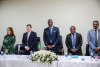
With the rapid global shift toward the digital economy, equipping young people with digital and business skills is essential for fostering innovation, entrepreneurship, and economic growth.
Zambia has launched an Online Entrepreneurship Learning Program to foster digital innovation and entrepreneurship. The initiative, launched on March 31, was unveiled by Hon. Felix Mutati, Minister of Technology and Science, alongside Mr. Ville Tavio, Finland’s Minister for Foreign Trade and Development. It aims to equip young Zambians with critical digital and business skills.
During the launch event, the Zambia Information and Communications Technology Authority’s (ZICTA) Director General, Eng. Collins Mbulo highlighted how the initiative aligns with ZICTA’s mission to build an inclusive digital society.
The program is implemented by Nokia in partnership with Airtel Networks Zambia PLC. It is designed to empower aspiring entrepreneurs by leveraging technology for business growth and job creation.
Youth unemployment remains a significant challenge in Zambia. Data from the Zambia Statistics Agency shows that in 2023, the youth unemployment rate was 12%, leaving many young people struggling to find formal jobs. This underscores the importance of entrepreneurial skills, enabling young individuals to create their own employment opportunities rather than depending solely on traditional job markets.
By providing access to essential digital skills, the Online Entrepreneurship Learning Program is expected to drive economic growth, foster innovation, and create opportunities for Zambia’s youth in the evolving digital economy.
Hikmatu Bilali
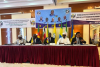
Over the past four years, Cameroon, Gabon, Chad, the Central African Republic, Congo, and Equatorial Guinea have collaborated on a project designed to enable seamless communication for their citizens traveling within the region, eliminating the need to change SIM cards. This initiative seeks to foster greater sub-regional integration.
Central African citizens could soon communicate freely across borders without incurring extra charges, as regional telecommunications ministers have issued a three-month deadline to finalize a free roaming project.
The decision followed a meeting of Telecommunications Ministers of the Central African Economic and Monetary Community (CEMAC) held last week in Bangui, Central African Republic. During the meeting, participants discussed obstacles hindering the initiative, which seeks to eliminate disparities in roaming costs that lead to expensive communications and impede the telecommunications sector's development.
In November 2021, CEMAC countries signed bilateral agreements to implement free roaming. However, the project has faced substantial delays. In April 2024, the Assembly of Telecommunications Regulators of Central Africa (ARTAC) reported that only two of the 213 planned interconnections had been established. These connections involved MTN Cameroon and MTN Congo, and Airtel Gabon and Orange Cameroon.
While the specific obstacles to free roaming were not disclosed, ARTAC's objectives for a 2024 seminar aimed at accelerating the process shed light on potential issues. These include delays in finalizing minutes, including tariff agreements between regulators, late signing of interconnection and roaming contracts, potential technical and legal difficulties for the involved parties, issues related to the separation of roaming and traditional international traffic on direct interconnection links, and the selection of technology for those links.
By Isaac K. Kassouwi,
Editing by Sèna D. B. de Sodji