




Telecom (187)
In 2022, only 34% of the population in West and Central Africa had access to broadband connectivity, according to the World Bank. To improve this situation, regional initiatives are underway to increase connectivity rates in these regions.
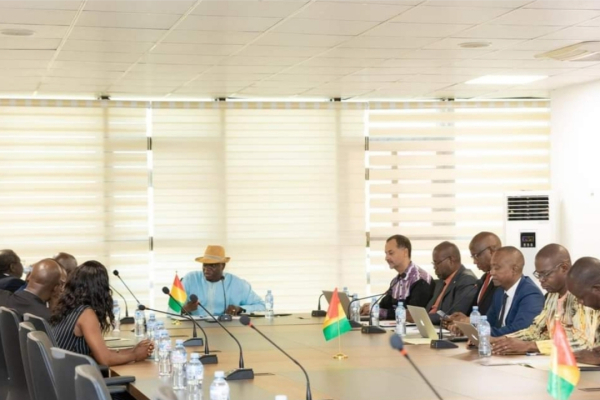
The deployment of the Amilcar Cabral submarine telecommunications cable, aimed at connecting Cape Verde, Gambia, Guinea, Guinea-Bissau, Liberia, and Sierra Leone, is gradually taking shape. A delegation from the Economic Community of West African States (ECOWAS), led by Mr. Sediko Douka, Commissioner for Infrastructure, Energy, and Digitalization, met with Mr. Nouha Traoré, Secretary General of the Ministry of Posts, Telecommunications, and the Digital Economy of Guinea, on Monday, June 3, to discuss the development of this strategic project.
"The discussions focused on several key aspects of the project, including its regional significance and importance for ECOWAS integration, the technical milestones to be implemented, obtaining the necessary permits for cable deployment, and the financial aspects of the project," said the Guinean Ministry of Digital Economy in a press release.
The meeting occurred more than a year after the signing of a memorandum of understanding with the ECOWAS Commission for the project's development. Under this partnership, the six countries involved committed to participating in the evaluation of the project's technical, economic, financial, social, and environmental feasibility, as well as mobilizing the necessary resources for its implementation. The ECOWAS Commission will coordinate the project's execution by interacting with the beneficiary countries, donors, and other stakeholders.
Guinea and Gambia, through the West Africa Regional Digital Integration Program (WARDIP), have secured funding from the World Bank for the implementation of the crucial project estimated to cost over $90 million.
Once completed, the Amilcar Cabral submarine cable is expected to enhance international telecommunications capacity, improve access to digital services, and provide essential redundancy to ensure the resilience of high-speed Internet in the affected countries. The cable is also expected to improve the digital infrastructure necessary to attract foreign investment, create jobs, and support the development of the digital economy in the region.

Djibouti currently has only one operational data center. Known as the Djibouti Data Center (DDC), it is a Tier 3 facility that was commissioned in 2013.
Pan-African data center specialist PAIX Data Centres announced a joint venture with the Djibouti Sovereign Fund (FSD) on Tuesday, May 14. The partnership aims to build a cloud-neutral and carrier-neutral data center in Djibouti to address the growing demand for connectivity, content delivery networks, social media, and cloud computing services.
Dubbed JIB1, the new facility will boast roughly 50,000 square feet (approximately 4,645 square meters) of usable space up to 5 megawatts of computing capacity. The first phase of the project is slated for completion by 2026.
JIB1 will bolster Djibouti's telecommunications infrastructure as the nation undergoes a rapid digital transformation. Djibouti boasts connections to ten submarine cables, with three more under construction. However, the country currently has only one data center, the Djibouti Data Center (DDC), a Tier 3 facility launched in 2013.
"As the heart of Africa's digital economy, Djibouti plays a strategic role in facilitating connectivity between Africa, the Middle East, and Asia, PAIX Djibouti will serve as a catalyst for digital inclusion and economic development, empowering businesses to unlock new opportunities and realize their full potential in the digital age," said Jean-André Gbarssin, CEO of the FSD.
Isaac K. Kassouwi

Nigeria aims to expand its fiber optic network to at least 125,000 km to ensure complete coverage and offer high-speed internet services to its entire population.
Nigeria's Minister of Communications, Innovation, and Digital Economy, Bosun Tijani, announced the approval of a special purpose vehicle (SPV) on May 14. The SPV will oversee the construction of an additional 90,000 kilometers of terrestrial fiber optic cables, significantly expanding the country's broadband infrastructure.
This decision, made during the Federal Executive Council (FEC) meeting, is expected to benefit Nigerians across the board, particularly the nation's burgeoning startup ecosystem.
"Building on our existing work with the Broadband Alliance," Tijani wrote on a social media platform (formerly known as Twitter), "this increased connectivity will help plug the current non-consumption gap by connecting over 200,000 educational, healthcare and social institutions across Nigeria, ensuring that a larger section of our society can be included in the benefits of internet connectivity."
Partnering with public and private stakeholders, the SPV will build the additional fiber optic network, extending Nigeria's national connectivity backbone to at least 125,000 kilometers, up from the current 35,000 kilometers. Upon completion, this will position Nigeria with the third-longest terrestrial fiber optic backbone in Africa, behind Egypt and South Africa.
The fiber optic expansion is expected to have a substantial impact on the Nigerian economy. It is projected to increase internet penetration beyond 70%, potentially reduce internet access costs by over 60%, and connect at least half of the estimated 33 million Nigerians currently without internet access. Additionally, it could drive GDP growth from $472.6 billion in 2022 to $502 billion within the next four years.
Samira Njoya

Data centers are becoming the backbone of cloud services adoption. They provide users with everything they need to get started – online storage, computing power, software, servers, and applications – all accessible over the internet.
From 2012 to 2022, the number of data centers in West and East Africa saw a significant increase, jumping from 9 to 134. This information was highlighted in the "Digital Progress and Trends Report 2023" published by the World Bank in March 2024.
The report explains: “Development funding for data centers is increasing to fill the financing gaps. In Africa, where an estimated annual investment of between US$4 billion and US$7 billion is needed to bridge the region’s data center gap, the US International Development Finance Corporation is providing funding of US$300 million to Africa Data Centers to support the expansion and development of seven existing and greenfield data centers in five African countries.”
The ongoing technological revolution in Africa, accelerated by the digital transformation spurred by the COVID-19 pandemic, has made digital infrastructures, especially data centers, essential. An increasing number of globally recognized providers have established a presence on the continent, leading to a rise in the number of these infrastructures in Africa.
Several American companies, including Raxio Data Centres, Digital Realty, and Oracle, along with France's Orange and China's Huawei, have set up operations in various African countries. Local entities like Africa Data Centres, Paix Data Centres, Onix Data Centres, and MainOne continue to expand across the continent. In addition to private sector involvement, African governments are also investing in these infrastructures in their pursuit of digital sovereignty.
The "Cloud Computing Market" report published in December 2023 by U.S.-based market research firm MarketsandMarkets projected that the global cloud market would grow from $626.4 billion in 2023 to $1,266.4 billion by 2028, with a compounded annual growth rate of 15.1%. While this growth is promising, Africa and the Middle East hold marginal shares compared to North America, the undisputed leader in the sector, according to the same source.
Adoni Conrad Quenum
Undersea cable disruptions are a recurring issue in Africa, resulting in considerable financial setbacks for numerous stakeholders in the continent's telecommunications industry. Significant improvements could be realized through investment in this sector.
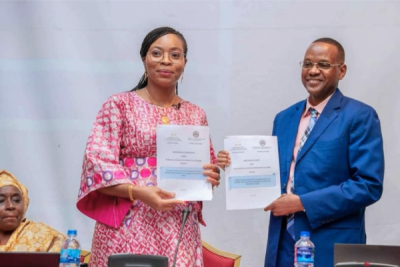
Guinea and Gambia are set to be linked by a second subsea optical fiber cable in the near future. The Minister of Posts, Telecommunications, and Digital Economy for Guinea, Rose Pola Pricemou, and her Gambian counterpart, Minister of Communications and Digital Economy Ousmane Bah, signed a memorandum of understanding to this effect on Wednesday, April 24, in Banjul.
The memorandum aims to combine efforts and resources to carry out a feasibility study for the creation of a new submarine cable. The World Bank will fund the future infrastructure as part of the West African Digital Integration Project (WARDIP).
Under this agreement, both countries stand to benefit from reduced project-related costs. For example, Guinea could see its expenses cut by more than 40%. This initiative underscores the two nations’ commitment to bolstering their cooperation for a more accessible and prosperous digital future.
Gambia and Guinea are currently connected to the ACE (Africa Coast to Europe) cable, which they primarily depend on for high-speed internet services. Frequent disruptions on this infrastructure lead to service interruptions, making it imperative for the two nations to connect to a second submarine cable capable of providing backup.
The rollout of the second subsea cable is expected to not only enhance the quality of high-speed telecommunications services but also to broaden the reach of these services to thousands more individuals and lower costs. The project is also poised to accelerate the implementation of the two countries’ digital transformation goals.
Samira Njoya
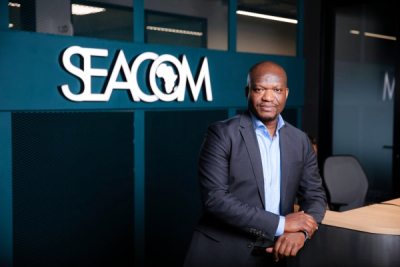
In 2024, a series of internet disruptions across Africa were linked to cuts of undersea fiber optic cables. As a countermeasure, Seacom, a Pan-African submarine cable provider, has launched internet services through low earth orbit (LEO) satellites in South Africa.
Seacom, a Pan-African submarine cable provider, recently unveiled its satellite internet services in South Africa. These services leverage low Earth orbit (LEO) satellites, as announced in a press release on Monday, April 15.
For the launch, Seacom joined forces with Eutelsat Oneweb, a renowned British satellite internet provider. The partnership is designed to deliver superior internet connectivity, especially to businesses, in response to the growing need for high-speed connectivity throughout Africa.
The launch of Seacom’s satellite internet service is timely, given the recurrent disruptions in undersea cables that have been affecting connectivity in several parts of the continent. In February of last year, Seacom faced disruptions in its cable network in the Red Sea, which hindered internet connectivity between Africa and Europe, impacting countries like Egypt and Kenya. In March, technical glitches on the West African coast affected the WACS, MainOne, ACE, and SAT3 cables, leaving people in roughly ten countries without internet access.
In light of these incidents, satellite internet has emerged as a favored solution. Seacom has chosen to adopt LEO technology, which involves satellites orbiting the Earth at distances of approximately 2,000 kilometers or less. This technology promises lower latency for quicker communications and improved coverage for remote areas.
Alpheus Mangale, President and CEO of the Seacom Group, stated, “The end goal is to make the LEO service an essential value offering for organizations of all shapes and sizes. Connectivity is on track to become a wholesale service made up of different technologies that work together to meet clients’ needs and deliver the uptime and performance that’s expected from market leaders.”
Adoni Conrad Quenum

Russia has emerged as a significant technological ally in Africa, assisting numerous countries in satellite design. Mali, harboring similar ambitions, has also sought Russia's expertise.
Mali and Russia are collaborating on several imminent projects, including the launch of a telecommunications satellite and the use of Russian spacecraft for monitoring Malian territory, according to a recent announcement. A Malian delegation, led by Finance Minister Alousséni Sanou, visited Moscow to discuss the action plan for these initiatives.
“We need four years to build and then launch the satellite. To achieve this, Mali needs to equip itself with specialists in all fields. We have agreed on a training program for ten students a year for four years in specialized fields relating to satellites… There is also a question of sending a series of specialists to deepen knowledge and acquire expertise in aerospace activities,” Sanou stated.
These initiatives are part of a memorandum of understanding signed last year between the Malian government and Glavkosmos, a subsidiary of the Russian Space Agency (Roscosmos). In addition to aiding Mali in the production of its satellite, the agreement stipulates that a Russian satellite will be made available to the country to meet needs in security, telecommunications, and other sectors that promote national development.
Bamako will also utilize satellite images to gain a precise understanding of the human impact on the environment. These images will assist leaders in better tracking and neutralizing terrorists. This initiative follows the recent liberation of the Kidal region, which had been plagued by terrorism for approximately a decade.
Samira Njoya
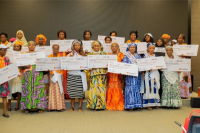
African development strategies prioritize lifting women out of financial insecurity. Various stakeholders across the continent are contributing initiatives to address the issue.
Fondation Orange Côte d’Ivoire (FOCI) and Orange Bank Africa (OBA) have advanced their commitment to empowering women entrepreneurs by establishing the Women’s Digital Home Fund for Women’s Empowerment (Fomdaf). Announced at a signing ceremony on March 21, 2024, the initiative aims to provide financial backing to vulnerable women entrepreneurs, enabling them to fully realize their business potential.
The guarantee fund, valued at XOF100 million ($165,700), is provided by Fondation Orange Côte d’Ivoire and managed by Orange Bank Africa. It is designed to enhance financial access for women beneficiaries of the Digital Homes project. With this guarantee, eligible women entrepreneurs can access loans totaling up to XOF500 million. Each woman can borrow between XOF1 and 20 million, with flexible repayment terms over a period of 6 to 24 months, at a competitive annual interest rate of 8.5%.
“Today, 32% of Orange Bank customers are women […] We are now moving on to another stage with this fund, which will support women as they grow,” stated Alexandre Oro, Secretary General of Orange Bank.
The signing ceremony also featured the presentation of the Coups de Coeur Ô Féminin Awards, an initiative launched in 2017 by the Fondation Orange Côte d’Ivoire to support women trained at the Maisons Digitales in their entrepreneurial endeavors. These awards, divided into three categories, offer prize pools of up to 10,000 euros (around XOF6,500,000) for the winners, bolstering their financial access and their ability to transform innovative ideas into reality.
To date, only 48 projects have been financed out of 6,871 women trained. This figure underscores the distance yet to be covered to fully achieve the goal of economic empowerment for women in Côte d’Ivoire.
Moutiou Adjibi Nourou
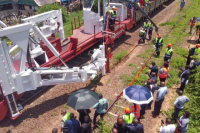
Broadband is central to Zimbabwe's development agenda, which is centered around digital transformation. In collaboration with the private sector, the government aims to bolster the national telecommunications infrastructure to ensure affordable Internet access for all citizens.
The Zimbabwean government announced on Thursday, March 7, the commencement of the second phase of the fiber optic rail project. The project, executed by wholesale telecoms infrastructure provider Bandwidth & Cloud Services Group (BCS), aims to enhance connectivity within Zimbabwe’s cities by deploying fiber along national railroads.
This phase will extend fiber optics over 800 km, connecting the village of Somabhula to the capital Harare via the town of Gweru. It will also span the Bulawayo - Plumtree and Harare - Mutare routes. The first phase of the project, initiated in 2022, has already laid 1,180 km of fiber from the border town of Beitbridge in Matabeleland province to the city of Victoria Falls, in the north of the country. The network infrastructure costs $18 million, and the second phase is projected to incur a similar expense.
The project aligns with the government’s strategic goal of transforming Zimbabwe into a self-sufficient and prosperous upper-middle-income society by 2030, leveraging digital technology. It also corresponds with the national broadband program for 2023-2030, which encompasses several state and privately financed infrastructure deployment projects. This program is expected to accelerate broadband penetration in the country and reduce costs.
Ultimately, the fiber optic system will cover the country's entire rail network, from Rutenga to Chikwalakwala, before extending into Zambia and other regions. According to the Honourable Owen Ncube, Minister of State for Provincial Affairs and Decentralization, this project ensures that Zimbabwe will be connected to the rest of the world, marking a positive stride in the “Leave no one behind (LNOB)” principle enshrined in the 2030 Agenda for Sustainable Development and its Sustainable Development Goals (SDGs).
Samira Njoya
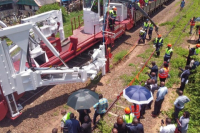
Broadband is central to Zimbabwe's development agenda, which is centered around digital transformation. In collaboration with the private sector, the government aims to bolster the national telecommunications infrastructure to ensure affordable Internet access for all citizens.
The Zimbabwean government announced on Thursday, March 7, the commencement of the second phase of the fiber optic rail project. The project, executed by wholesale telecoms infrastructure provider Bandwidth & Cloud Services Group (BCS), aims to enhance connectivity within Zimbabwe’s cities by deploying fiber along national railroads.
This phase will extend fiber optics over 800 km, connecting the village of Somabhula to the capital Harare via the town of Gweru. It will also span the Bulawayo - Plumtree and Harare - Mutare routes. The first phase of the project, initiated in 2022, has already laid 1,180 km of fiber from the border town of Beitbridge in Matabeleland province to the city of Victoria Falls, in the north of the country. The network infrastructure costs $18 million, and the second phase is projected to incur a similar expense.
The project aligns with the government’s strategic goal of transforming Zimbabwe into a self-sufficient and prosperous upper-middle-income society by 2030, leveraging digital technology. It also corresponds with the national broadband program for 2023-2030, which encompasses several state and privately financed infrastructure deployment projects. This program is expected to accelerate broadband penetration in the country and reduce costs.
Ultimately, the fiber optic system will cover the country's entire rail network, from Rutenga to Chikwalakwala, before extending into Zambia and other regions. According to the Honourable Owen Ncube, Minister of State for Provincial Affairs and Decentralization, this project ensures that Zimbabwe will be connected to the rest of the world, marking a positive stride in the “Leave no one behind (LNOB)” principle enshrined in the 2030 Agenda for Sustainable Development and its Sustainable Development Goals (SDGs).
Samira Njoya
More...

Seven months ago, Sonatel acquired the super broadband license for almost $57 million. It aims to revolutionize usage in the local telecoms market and remain the leading operator.
The commercial fixed 5G connectivity offers of Sonatel, 42.33%-owned by Orange, are now available for residential and business customers in Senegal. The telecom company announced in a press release on Tuesday, March 5, that it would soon be expanding its services to include mobile internet offers for ultra-high-speed broadband.
With the advent of 5G, Sonatel promises its customers instantaneous download and streaming speeds, as well as enhanced responsiveness for real-time applications such as online gaming, virtual reality, telemedicine, e-education, among others. The company is inviting customers to explore the “boundless possibilities” of the technology at a dedicated laboratory at the Orange Digital Center in Dakar.
The launch of Sonatel’s commercial 5G comes seven months after the company secured Senegal’s first ultra-broadband license from the local telecom regulator, ARTP, for XOF34.5 billion ($57 million). The telecom firm has been preparing for the deployment of the technology since 2020, confirming its readiness through a successful test in December 2021 and launching its 5G laboratory in July 2022.
In the 5G market, Sonatel leads its main competitors, Expresso Sénégal and Saga Africa Holding Limited (Free), the latter of which obtained its operating license in December 2023 for XOF13.5 billion.
This advantage positions Sonatel to boost its revenues and solidify its leadership in the Senegalese telecom market. As per ARTP data, Orange had 12.5 million mobile telephony subscribers in the third quarter of 2023, accounting for a market share of 56.47%. Expresso and Free held 16.8% and 23.89% of the national mobile subscriber base, respectively. In the internet segment, Orange commanded a market share of 66.52%.
Isaac K. Kassouwi

The strategic partnership was inspired by Tencent's Weixin/WeChat ecosystem and its billion monthly active users.
Orange wants to double the adoption of its Max it super-app by 2025. To this end, the French group decided to sign a partnership with China's Tencent Cloud on Tuesday, February 27 at the Mobile World Congress in Barcelona, Spain.
Orange will leverage "Tencent Cloud's Mobility framework and the Tencent Cloud Mini Program Platform (TCMPP) solution to create an open platform for Max it, enabling the integration of a wide range of mini-apps within its super-app." The aim is to enrich the Max it ecosystem and enhance the customer and partner experience for businesses and people in Africa and the Middle East.
Commenting on the partnership, Jérôme Hénique, CEO of Orange Middle East and Africa, said: "This partnership with Tencent Cloud is a key step in our vision to offer innovative and high value-added services to our users. Enriching Max it with innovative mini-apps is key to strengthening its value proposition, increasing its penetration among Orange and non-Orange customers, and amplifying our social impact."
Max it, launched last November, is a super mobile application that aggregates all the services offered by Orange and its partners. The French company aims to position its super-app in this part of the world as a hub for all mobile services. Deployed in half a dozen countries at launch, it will expand to eight more destinations in the first quarter of this year, before covering all the countries where the group operates before the end of the year.
Adoni Conrad Quenum

African digital financial inclusion remains a challenge. In that context, the new partnership seeks to expand access to financial services.
US Fintech Visa and the GSMA Mobile for Development Foundation (GSMA Foundation) launched the Digital Finance for All (DFA) initiative on Monday during the Mobile World Congress in Barcelona, Spain. This initiative aims to boost digital financial inclusion among 20 million individuals across Africa, Asia, and Latin America by providing targeted educational resources and facilitating access to mobile money services.
The DFA program seeks to equip women, small-scale farmers, and entrepreneurs running nano-, micro-, or small-sized enterprises with essential financial knowledge via technological tools. By doing so, it hopes to enable these groups to leverage mobile money platforms effectively within their respective nations.
"At Visa, we believe that digital payments are critical to including everyone in the digital economy by helping provide access to economic livelihood. Together with the GSMA Foundation, we seek to empower those in underserved communities across the world and provide equal access to help build better financial futures for all," said Chiagozie Nwabuebo, Vice President of Global Growth and Social Impact at Visa.
Despite progress over the past decade, Africa's bank account penetration remains low globally. As a result, many African citizens have increasingly relied on mobile money as a viable alternative form of payment. With the expansion of fintech companies throughout the region, mobile money has become an integral aspect of daily life in Africa.
As per the GSMA's "State of the Industry Report on Mobile Money 2023," the number of active mobile money accounts in Africa rose by 17%, reaching approximately 763 million, while total transactions approached $832 billion - an increase of 22% from 2021. Although growth rates were lower in Latin America and Asia compared to Africa, these markets have also seen significant increases in mobile money usage.
As stated by Ashley Olson Onyango (photo, left), Head of Financial Inclusion and Agri-Tech at the GSMA, “Mobile money can play a transformative role in advancing financial inclusion and resilience for the nearly 2 billion people who remain unbanked globally. However, poor digital and financial literacy is a key barrier to accessing digital financial services, especially for certain population segments like women, farmers, and micro-merchants.”
Adoni Conrad Quenum
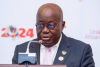
Africa's digital landscape is undergoing a rapid transformation, fueled by a surge in mobile phone adoption. By 2022, the Sub-Saharan region was boasting 489 million unique mobile subscribers, translating to a 43% penetration rate.
Ghanaian President Nana Akufo-Addo urged African Union (AU) members to adopt a continent-wide mobile interoperability system, arguing it would boost trade and financial inclusion amid rapid digital transformation.
Speaking at the 37th Ordinary Session of the AU Assembly in Addis Ababa, Akufo-Addo said such a system would accelerate the implementation of the African Continental Free Trade Area (AfCFTA) by facilitating seamless cross-border transactions and potentially eliminating roaming charges.
If implemented, the initiative “can truly and meaningfully fast-track the inclusive realization of the AfCFTA,” he stated.
His push echoes sub-regional efforts toward similar goals. The Southern African Development Community (SADC) is pursuing a single network area (ONA) for a unified digital market, while the East African Community (EAC) and Economic Community of West African States (ECOWAS) are implementing comparable projects.
ECOWAS members Ghana and Côte d'Ivoire already abolished roaming charges within their borders in July 2023, following regulation C/REG.21/12/17. Benin, Togo, Mali, and Burkina Faso are also working towards compliance.
Once implemented, the interoperability of cell phone networks in Africa should facilitate communications between the continent's countries, notably by reducing costs. It is also expected to drive economic integration and empower marginalized communities within the growing digital landscape.
Isaac K. Kassouwi