




Telecom (187)
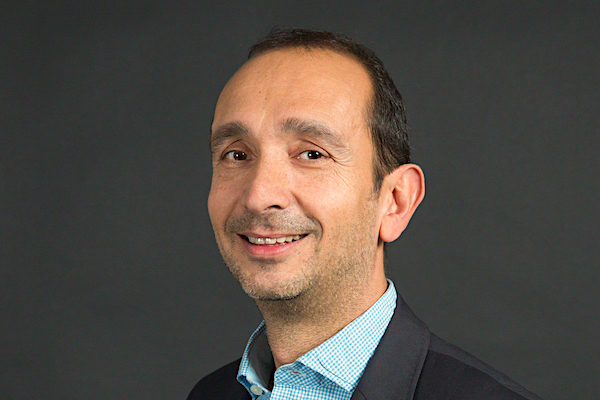
On the sidelines of the 2022 Climate Change Conference (Cop27), Jean Michel Canto, Orange Middle East & Africa's Director of Sustainable Energy & Partnerships, gave an exclusive interview to We Are Tech. During the interview, he highlighted the French group’s climate commitment in Africa.
We Are Tech: Why is Orange taking part in the Cop27?
Jean Michel Canto: Several years ago, Orange made clear environmental and climate commitments. For a long time, we are committed to these issues, which are very important to us. We have already taken several actions in our markets to reduce our environmental impact. Through the Cop27, we want to support governments in reaching their ecological and energy transition goals. We want to work with governments to develop renewable energy, to develop ecosystems, and circular economies. At the Cop27, Orange Group, through the Director of the Environment, is reiterating its environmental commitments and its availability to support governments in their projects to their reduce carbon footprint. We are ready to work daily with countries to collectively achieve these commitments.
WAT: You keep mentioning support to countries. What does such support concretely entail?
JMC: One of the major challenges in achieving our environmental objectives and for countries to achieve theirs is access to renewable energy. The second axis is the whole ecosystem of the circular economy.
Presently, it's true that regulations don't allow us to do exactly what we would like to do, notably build and develop solar farms and directly use this renewable energy. But by working hand in hand with countries, we are confident that we will be able to change these regulations and attract the necessary investments in African countries to multiply the deployment of solar and wind farms wherever possible.
The circular economy is the recycling of telephones and telecom equipment that we use every day. For renewable energy, as an operator and private industry, we can attract the capital needed to develop renewable energy in Africa. In Africa, no factories are specializing in refurbishing telecom equipment and phones for new use. Our ambition is to work with governments so that such factories can be set up in Africa.
For the time being, telecom equipment and phones are sent to Asia and Europe to be refurbished. We are sure that the development of this type of activity on African soil will create jobs but will also contribute to the development of the circular economy and reduce raw material extraction, which is harmful to our planet.
WAT: Phones become electronic waste when they are no longer useful. This is obvious but how does Orange’s infrastructure harm the environment?
JMC: Like every activity, industry, and company, we need electricity. So do the infrastructure through which we provide services to our subscribers. Using non-renewable energies such as diesel to guarantee the continuity of our services in certain areas with poor access to electricity accentuates the impact of our infrastructure on the environment. Put simply, it is through carbon emission. Renewable energy greatly reduces this carbon footprint. We are already working with our infrastructure and equipment suppliers to ensure that they have a strong commitment to limiting their impact on the environment right from the design stage.
Objectively, in Africa, the major factor contributing to our carbon emissions is the use of energy to power all our telecom towers, data centers, etc. This is why we are insisting on the use of renewable energy sources. That's why we put a lot of emphasis on working with countries or governments to develop renewable energy. A few years ago, we were using so many generators to power our telecom towers. But we are gradually deploying solar panels, which generate clean energy, to replace them.
Digital technologies are great tools. They enable videoconference and teleworking but telecom infrastructures are mostly needed for all that. With eco-responsible telecom infrastructures and equipment, we can greatly limit the impact we could have on the environment and the climate.
WAT: Orange has developed a program called "Net Zero Carbon 2040". What is it about?
JMC: Net Zero Carbon 2040 is Orange's strong commitment to the climate. It means that we are committed to strongly reducing our carbon emissions through the use of renewable energy. We are aware that there will still be an incompressible minor part of our carbon emissions. Not every activity can be fully clean. To compensate for these residual carbon emissions, we must commit ourselves to solutions that are called carbon sinks, i.e. solutions that will capture the CO2 that we will emit.
We have already launched major carbon sink projects in countries like Senegal, Cameroon, and Madagascar. We have made commitments to plant trees and protect the mangrove ecosystem. We have signed a partnership with experts in the field. Orange is specialized in the telecommunication industry. So, we rely on environmental experts for climate-related issues, including the protection and development of the mangrove, which is a great carbon sequester. We are committed to taking such actions in Africa and we believe that thanks to them, we can meet our net zero carbon goal by 2040.
We have a milestone for 2025. This milestone is that by that time, more than half of the energy used by the group must be generated by renewable sources. This is a big challenge. That's why we continue to power our sites with solar panels and do the same for our data centers, which are energy-intensive.
In Africa, we have more than 6,000 telecom sites equipped with solar panels. We will continue and accelerate this energy transition to the rest of our equipment. In countries such as Guinea, Sierra Leone, Madagascar, and Jordan, more than half of the energy consumed by the network comes from renewable energy sources that we produce ourselves. If possible, we would like to develop solar and wind farms, to inject this clean electricity into the electricity grid of the countries in which we operate and use this clean electricity on all our telecom towers. In addition to that, we have commitments to reduce our carbon footprint on what we call SCOPE 1 and 2, fuel and electricity namely. Orange as a group plans to reduce the use of such energy sources by 30%.
WAT: Orange works with telecom tower managers. How does the group reconcile this operational cost management with its environmental commitments?
JMC: We work with tower managers (towercos) in five countries. In the twelve other markets, we operate our own towers. When we operate our own towers, we call on experts to help us with this transition. We call these experts ESCOs. These energy experts from the telecom industry help us to modernize our energy production chains in our telecom towers, adding as much solar energy as possible, and adopting the right size for our current and future needs. In Africa, all three tower managers we work with have renewable energy commitments for 2030, 2040, and 2050.
WAT: In addition to reducing the environmental impact of its business activities and carrying out direct actions in favor of the climate, such as carbon sinks, how does Orange's investment in the environment integrate the well-being of the African population?
JMC: The impact on society is as important as the impact on the environment. Through all the direct climate activities, such as the protection of the mangrove, which meets our environmental objective, Orange also aims to develop the entire ecosystem around it to benefit populations. Training will therefore be organized and new jobs created as we know that the mangrove produces wood and by-products can therefore be produced and sold. We have included support in this very important project. We also are deploying Orange Digital Centers (ODC) everywhere in Africa. Through those infrastructures, we will raise awareness of environmental issues by organizing activities like coding competitions focusing on the environment for young people. Africans are awaiting those environmental projects because they will be the first parties affected by climate change. With the drought in some regions, fishing villages disappearing in Senegal, etc, those populations are beginning to feel the impacts of climate change.
WAT: Can we consider Orange Energie as one of the components of Orange's environmental action?
JMC: Yes, it is. Orange Energie allows access to solar kits, which are symbolic since by definition solar kits provide renewable energy for schools, professionals, etc. It is not limited to solar kit distribution, however. It also projects to build mini-grids, namely small solar farms that can supply one or two villages with no access to energy.
Once again, these are, by definition, renewable energies since they are solar fields that will be deployed. These are two examples that bring essential services to the populations, in addition to responding to strong environmental issues.
The environmental issue is a broad subject and Orange is fully committed because it is important for us and the development of the African continent.
Interview by Muriel Edjo
In Africa, telecom operators used to shun rural areas, which were deemed not attractive enough. However, with the acceleration of digital transformation, most of them are operating strategic repositioning.
Last Tuesday, Orange -through Orange Côte d'Ivoire- announced a service agreement with tech innovation company Vanu Inc to extend its network coverage in Côte d'Ivoire, Burkina Faso and Liberia. The agreement includes the provision of technology upgrades and will be based on the innovative "Network-as-a-Service" (NaaS) model. It will begin with the rollout of 1,070 sites, including 700 in Côte d'Ivoire, 170 in Burkina Faso and 200 in Liberia.
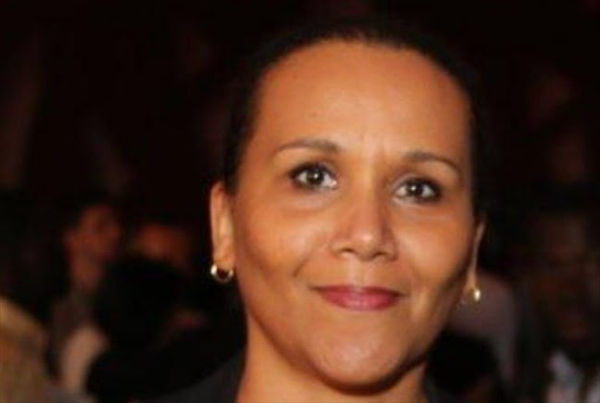
According to Nafy Coulibaly (photo), Orange's deputy general manager in charge of operations in Côte d'Ivoire, Burkina Faso and Liberia, "Orange will roll out its services by strategically improving/increasing its network coverage so that no one is left behind.”
“Our goal is to provide free and open access to digital services, anywhere and to as many people as possible [...] to make digital services accessible to millions of people in rural areas of Côte d'Ivoire, Burkina Faso and Liberia who were not covered before,” she added.
The partnership between Orange Côte d'Ivoire and Vanu, Inc. is part of Orange's IDEAL program, which aims to extend network coverage in rural areas to 20 million people through the construction of 5,000 sites over four years. Rural areas in Africa, where a large proportion of the population still resides, are poorly covered by telecom networks. Yet, they have high-growth potential.
By strengthening its presence in rural areas, Orange Group is moving to increase its subscriber base, facilitate access to digital services and ultimately become the main operator in the targeted markets.
Muriel Edjo
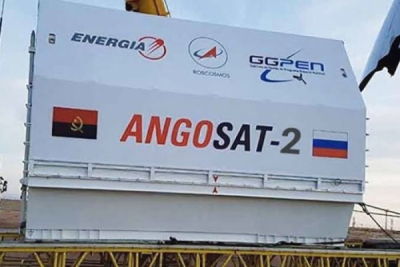
Five years after losing its first satellite, Angola announces the coming launch of Angosat-2, its second satellite delivered last July 26.
Angola will launch its second satellite, Angosat-2, built by Russia next Wednesday, October 12. The planned launch was announced, on October 4, by Mário Augusto da Silva Oliveira, the Angolan Minister of Telecommunications, Information Technology, and Social Communication (MINTTICS).
The satellite will be launched from the Baikonur Cosmodrome in Kazakhstan, through the Russian Federal Space Agency (Roscosmos). It is the result of the complementary protocol to the contract signed by Russia and Angola, providing for the construction of a replacement satellite in case of failure of the first Angosat-1 satellite, worth US$327.6 million.
According to the director general of Angola's National Space Program Management Office (GGPEN), Zolana João, Angosat-2 will be seven times faster than its predecessor Angosat-1, which was lost hours after its launch in 2017.
With a high data rate (HTS), providing 13 gigabytes in each illuminated region (satellite signal coverage range), the new satellite will cover the whole national territory and provide telecommunications services (telephony, Internet, telemedicine, broadcasting, and radio). It will cover the entire African continent, in particular Southern Africa, and will be based on the Eurostar-3000 platform with a 15-year design lifetime.
The launch of Angosat-2 is part of the 2016-2025 national space strategy that will contribute to unifying and developing Africa."We want to have a strong national space industry that serves the interests of our economy and brings benefits, not only for Angola but as a way to create synergies in our region while fostering the establishment of a united Africa," Minister Mário Augusto said.
Samira Njoya
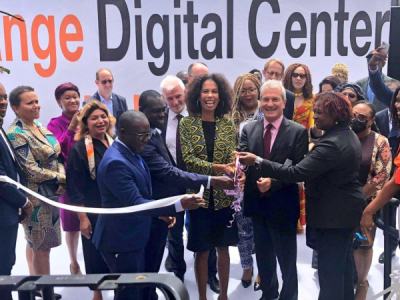
The telecom operator’s goal is to help offer digital skills to the youth, boost their employability and prepare them for the evolving job market.
French telecom group Orange and the German cooperation Agency (GIZ) inaugurated, Monday (October 3), a new "Orange Digital Center" in Liberia. The technology center was officially inaugurated in a ceremony attended by Brelotte Ba, Deputy CEO of Orange Middle East and Africa. The center, based in Monrovia, aims to offer digital skills to everyone.
"I am very proud to inaugurate the 11th Orange Digital Center today in Liberia, which is part of a network of 32 Orange Digital Centers that will be deployed not only in Africa and the Middle East but also in Europe. The objective is to democratize access to digital technology to young people - with or without qualifications - giving them access to the latest technological skills to strengthen their employability and prepare them for the jobs of tomorrow," said Brelotte Ba.
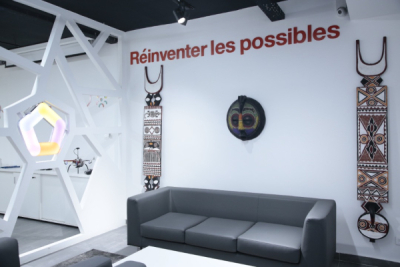
The 715 square meter infrastructure “brings together four strategic programs of the Orange group, namely; a coding school, a solidarity FabLab - one of the Orange Foundation's digital manufacturing workshops, and an Orange Fab start-up accelerator, supported by Orange Ventures Africa, the investment fund.”
“All of the programs are provided free of charge and open to everyone. They range from digital training for young people, 90% of which are practical, guidance for project bearers, start-up acceleration, and investment in these,” an official release informs.
The digital center, which has been operational since January 2022, has already hosted several digital training courses and events. It also aims to establish Orange Digital Center Clubs, extensions of the coding school, in partner universities in the country. That way, as many people as possible can access the new technologies and use them to their full extent.
The center inaugurated yesterday is the eleventh inaugurated by Orange in the Middle East and Africa. The first ten were inaugurated in Tunisia, Senegal, Ethiopia, Mali, Côte d’Ivoire, Cameroon, Egypt, Jordan, Madagascar, and Morocco. It is in line with the group’s approach to digital inclusion and aims to “empower every person to take advantage of the opportunities of digitalization and work hard to close the digital divide.”
Samira Njoya
In Africa, actors are implementing plans to prepare the telecom market for the advent of mobile broadband. From field tests to dedicated spaces, operators are multiplying actions to raise awareness of the challenges and opportunities of that technology.
Mobile operator Orange Côte d'Ivoire inaugurated, Tuesday (September 20), its first 5G Lab. The space dedicated to the discovery and experimentation of mobile broadband technology was officially opened in the presence of Christel Heydemann, CEO of Orange Group.
The 5G Lab, hosted at the Deux Plateaux Smart Store in Cocody, is dedicated to businesses, startups, and digital professionals. According to Jérôme Hénique, CEO of Orange Middle East and Africa (OMEA), "like the Orange Digital Center inaugurated a year ago, the Orange 5G Lab will help accelerate businesses’ adoption of this technology in Côte d'Ivoire. Not only will they benefit from the expertise and tools set up here in Abidjan, but they will also have access to feedback from the more than 1,500 companies and local authorities that have had access to an Orange 5G Lab worldwide, including 127 that have already designed experiments based on their respective practical cases.”
The lab will host a space for demonstrations of 5G use cases in various business sectors. It will also host conferences, training, co-working, co-innovation sessions, and practical 5G application sessions.
Orange 5G Lab Côte d'Ivoire is the second similar infrastructure launched by the French telecom group in Africa (and the fifteenth it launched worldwide). The first one was launched in Senegal in July 2022. It is a way to prepare the local market for the ultra-high-speed broadband that Orange Côte d'Ivoire wants to launch in 2023. Currently, twelve telecom operators already offer 5G in ten African countries.
"We are aware that 5G is a new opportunity for companies wishing to diversify, optimize or boost their business. To support them, it is essential that this space offers turnkey tools and allows for practical evaluation of the results of these experiments. This initiative is in line with our historical commitment to digital inclusion. Our aim is to encourage innovation and contribute to value creation in the local ecosystem," said Mamadou Bamba, CEO of Orange Côte d'Ivoire.
Muriel Edjo

Internet is currently a crucial tool for students. In that regard, Algerian authorities want to improve its quality in universities.
Algeria will accelerate the digital transformation of its universities. For that purpose, the country plans to increase the internet speed in higher education and research institutes by ten by January 2023. The move was announced by Higher Education Minister Abdelbaki Benziane, during the Higher Education Conference held in Annaba, last Saturday.
According to Minister Abdelbaki, “digitalization is a strategic choice and universities are about to successfully implement it to improve management, assessment, and [learners’] performance.”
The government official recalled that an integrated information system, called “Progrès” (Progress in French), and digital platforms have already been deployed to improve educational management, research, and university life.
By increasing universities’ internet speed, the government will help students save time during their research with lower latency. The move will also allow a large number of students to access the internet and have a positive impact on their studies.
The acceleration of universities’ digital transformation is in line with the Algerian President’s instructions for the digitalization of every state institution. The country initiated its digital transformation years ago but, the coronavirus pandemic accelerated the process.
Adoni Conrad Quenum
Currently, just a few countries implement virtual court hearings. However, it is gradually being picked up, allowing the public to attend many court hearings at the same time.
Kenyan courts will be connected to the Google-funded National Optic Fibre Network Backhaul Initiative (NOFBI) by October 2022. The project was launched by Chief Justice Martha Koome last Friday, July 15. Overall, 300 courtrooms in 67 court stations can broadcast live.
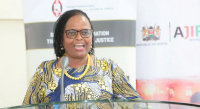
“It is in appreciation of the transformative impact that this project will have on access to justice and performance of the judiciary, that I on behalf of the judiciary, extend our sincere gratitude to Google for thinking about access to justice and performance of the Judiciary as a key outcome area that Kenyan Government should target.[...] The e-courts will benefit from reliable, faster, and stable internet access that has been a challenge to the dispensation of justice through the virtual courts.[...]This project is going to solve the challenge that has stood in our way from fully realizing the full potential of virtual courts, mainly reliability, speed, and stability of the internet, ” said Martha Koome (photo).
The project aims to improve access to justice for Kenyans. It is part of Kenya's program to automate and digitize the justice system by leveraging technology as a catalyst for efficiency in the justice delivery system. It is also part of a Connectivity support program funded to the tune of Ksh500 million (US$4.2 million) by Google. In the framework of the program, apart from the 67 courts, six hospitals and eleven technical and vocational training institutions will be connected to network infrastructures across Kenya.
Samira Njoya

In 2020, connectivity demand accelerated worldwide with the change in consumption habits induced by the coronavirus crisis. In many countries, the Internet is now considered a basic service, just like drinking water and electricity. Such transformations are leading to major changes in the African telecom market.
Mobile broadband will represent 78 percent of mobile subscriptions in the Sub-Saharan African region in the next five years, Ericsson reveals in its June 2022 Mobility Report. According to the Swedish multinational, those subscriptions will be mainly driven by 4G subscription uptake. In 2021, it explains, 4G subscriptions increased by 26 percent and are expected to grow further this year due notably to migration to 4G devices.
“3G mobile data traffic is still increasing, but the majority of traffic growth is expected to be in 4G,” the report reads. However, it should be noted that 3G will still account for the majority of mobile subscriptions in 2027, i.e. 40% compared to 28% for 4G. As for 5G, it will represent 10% of mobile Internet subscriptions in 2027.
In some markets such as South Africa and Kenya, where additional spectrum has recently been allocated, service providers have been able to expand the coverage and capacity of their 3G/4G networks, increasing mobile broadband subscriptions. Ericsson forecasts Sub-Saharan African average monthly data traffic per smartphone to reach 11 gigabytes by 2027 with the Covid-19 crisis-induced change in Internet consumption habits.
By that period, Africa will be the only global market where 2G networks will still be significantly present. The technology will account for nearly 20% of mobile subscriptions compared to an average of 7% in other continents.
Muriel Edjo

The coronavirus pandemic accelerated digital transformation in Africa. In its wake, governments committed to strengthening telecom infrastructures and expanding network coverage to allow access to digital services for most of their populations. For those investments to be effective, the services offered by telecom operators need to be affordable to everyone, even low-income earners. This is why by overtaxing telecom services, governments are negatively affecting digital transformation.
In 2010, the level of taxation on the Sub-Saharan African telecom sector caused heated debates between governments and operators. Governments, which were intent on securing more revenues, claimed that the tax rates were fair in the ever-growing sector. On the other hand, the GSM Association (GSMA) was warning of the long-term dangers of over-taxing the telecom sector. The taxes would affect the viability of telecom operators but also negatively affect development. Ten years later, the issue is still much present and the level of taxes levied on telecom operators is rising.
By 2017, Sub-Saharan African governments had already introduced new taxes because of the growth recorded by the telecom sector over the years with new services. Seven years earlier, the region was considered the third most taxed region in the world after Central/Eastern Europe and the European Union, but ahead of Latin America, according to the Global Mobile Tax Review 2010/2011 report by GSMA and ITU. It is now the first most taxed ahead of North Africa - the Middle East, and the Asia Pacific. On average, the taxes paid by the sector represent 25% of revenues. In 2016, the telecom sector contributed US$13 billion to tax revenues in Sub-Saharan Africa. In 2018, this contribution rose to US$15.6 billion but in 2020, it declined by US$600 million year on year.
Threat to digital inclusion
While corporate taxes are already affecting telecom operators’ profitability, the most concerning are sectoral taxes like those levied on mobile and internet services. Indeed, those taxes can directly affect the cost of the services, making them unaffordable for some populations. As a consequence, telecom may experience a drop in revenues, profitability, and the amount of tax paid to governments.
In 2019, the World Bank estimated that in Sub-Saharan Africa, nearly 85% of the population was living on less than US$5 a day. In the region, the mobile penetration rate was 46% in 2020. At the same time, internet penetration was 34%, including 28% for mobile internet, according to Hootsuite and We Are Social. Also, the average cost of a 1.5 Gigabit mobile data plan was US$6.1 or 6.4% of gross national income (GNI) per capita according to the ITU. This is highly unaffordable considering that, according to the Broadband Commission for Sustainable Development, a data plan is considered affordable when its cost is about 2% of GNI.
With internet taxes, some countries like Uganda (which introduced a 12% internet tax) make the service more expensive and exclude more people from the digital economy. The tax also threatens the survival of several businesses like e-commerce operators and those in the video-on-demand segment.
According to GSMA, of the 1.084 billion people living in sub-Saharan Africa in 2020, 303 million people (28%) were connected to the Internet via mobile, 570 million people (57%) were covered by a mobile network but not using the Internet and 210 million (15%) were not covered by a mobile network at all. A total of 495 million people were subscribed to mobile services, representing 46% of the population. Also, the smartphone adoption rate was 48% because of the costs of smartphones (according to the Alliance for Affordable Internet-A4AI). Even the low-cost smartphones offered by some manufacturers are still inaccessible for most because of import duties. The situation prompted Chad to issue, on January 24, 2022, a 5-year tax exemption for the importation of mobile devices (both smartphones and feature phones), automatic data processing equipment (desktops, laptops, and tablets), and dedicated accessories.
Threat to financial inclusion
Over the last ten years, mobile money has become one of the strong segments in the telecom industry, with millions of users and billions of dollars in transactions processed. Four years ago, a few countries started taxing that segment. They included Uganda, which introduced a 0.5% withdrawal tax in July 2018. The same year, Tanzania set its mobile money withdrawal tax to 1% before reducing it to 0.5% in October. In 2019, Zimbabwe introduced a 2% tax on every mobile money transaction.
The growth recorded by the segment during the coronavirus pandemic convinced more governments to tap into that windfall to fund post-pandemic recovery. In 2021, Cameroon introduced a 0.2% tax on electronic transaction. This year, Ghana introduced a 0.5% e-levy. In those markets, the taxes (both new and old) have always given rise to protests and disputes. In the Ghanaian parliament, e-levy discussions even led to physical confrontations between the pro and anti-e-levy.
Nevertheless, the contested taxes and levies allowed some governments to raise more revenues than expected. For instance, the Uganda Revenue Authority estimates that from July to December 2018, the mobile money tax generated US$28.3 million of revenue. Despite such stellar performance, mobile taxes have hampered financial inclusion. According to the World Bank, those taxes forced wealthy individuals to use banks instead while low-income populations who depend on family remittances experienced a reduction of their already meager resources.
The United Nations Capital Development Fund (UNCDF) reports that mobile taxes demotivated off-grid renewable energy users (usually located in rural areas) who used to pay their bills via mobile money. The fact threatens the profitability of the off-grid energy segment and the jobs created. Mobile money tax can also affect the e-commerce and agriculture sector given that many small farmers buy agricultural inputs, make micro-savings, etc., using Mobile Money.
The GSMA reports that telecom operators are not against taxation. They support effective taxation that does not unnecessarily hinder growth and negatively impact marginalized groups, it explains. So, corporate taxation could be the most effective way for governments to capitalize on growth in the telecom industry since corporate taxes are levied on the service providers’ turnover.
Muriel EDJO

Because of the coronavirus pandemic, African countries have sped up their digital transformation plans. Demand for the internet is growing, as a result. However, though internet adoption is rising tremendously, millions of residents are still unable to access the service because of its prices. Yet, affordable and quality internet is one of the requirements for successful digital transformation.
The Internet now appears like a necessary service in the likes of drinking water and electricity. According to the GSM Association (GSMA), in 2020, global internet penetration was 51% with 4 billion users. However, some countries have lower penetration rates. In its 2022 internet poverty index, the World Data Lab identified Nigeria as the country with the largest number of people living in internet poverty, meaning the number of people who “cannot afford a minimum package of mobile internet.”
The World Data Lab based its index on three factors, including affordability, quantity, and quality. “Affordability refers to the price of mobile broadband service and is set with a person’s total expenditure. (...) quantity refers to the amount of data that can be sent or received per theoretical use” while “quality describes a multitude of factors such as download and upload speed, bandwidth, latency, 2G, 3G, and 4G coverage, as well as the number of servers per 100,000 inhabitants,” the data agency explains.
The World Data Lab estimates that 103.015 million people are internet poor in Nigeria out of an estimated 217.366 million people. In the world, Nigeria is followed by India and China, we learn. In Sub-Saharan Africa on the other hand, Burundi is the country with the highest percentage of the internet poor in 2022, that is 96.6% of its 12.026 million residents.
According to the latest broadband affordability data from the Alliance for Affordable Internet (A4AI), in Africa, one-gigabyte bundles cost less than US$3 in ten countries while in 17 countries it ranges between US$3 and 5. In the remaining countries, it is over US$5. For the A4AI, broadband internet is deemed affordable when it is less than 2% of average monthly per capita incomes.
High internet cost is one of the obstacles to digital transformation in Africa because it prevents millions of residents from accessing the socio-economic opportunities it offers.
For the International Finance Corporation and Google, the digital economy can help generate up to US$180 billion of GDP in Africa by 2035. For that, however, affordable internet is needed.
Muriel Edjo
More...
In 2020, Nigeria decided to boost its broadband penetration rate to 70%, by 2025. To this end, it is developing partnerships with actors that will contribute to the achievement of that goal.
The Nigerian Communications Commission (NCC) and Google Global Services Nigeria recently announced their commitments to collaborating for “ubiquitous” broadband access in Nigeria. The alliance formed in that regard was revealed during a visit paid, Thursday (April 14), by a Google Global Service delegation to the NCC headquarters in Abuja.
The visit was organized to discuss possible joint actions that could accelerate digital transformation in Nigeria and Africa as a whole.
During the visit, Umar Garba Danbatta, NCC CEO and executive vice president stressed the importance of such an alliance and the need to make their joint initiatives more impactful and measurable through enhanced collaboration. As for Juliet Ehimuan, country manager for Google Nigeria, she commended the consultative approach always adopted by the NCC, the local telecom regulator, to formulate policies that impact digital and economic transformation in the country by promoting optimal delivery of telecom services.
On April 7, 2022, a Google Nigeria delegation announced to the Minister of the Digital Economy Isa Ali Pantami the coming landing (by late April) of Google’s subsea cable Equiano in Lagos. Through this high-speed teleNigeriacom infrastructure, Googles Global Services Nigeria wants to ensure that Nigeria's large population has access to high-quality data connectivity in line with the government's ambitions to increase broadband penetration to 70% and ensure digital inclusion by 2025.
For Umar Garba Danbatta, the subsea cable will have a significant impact on socio-economic development in Nigeria. He also urged approved telecom operators to collaborate on the creation of more landing points inland to make sure broadband internet is accessible everywhere.
Ruben Tchounyabe
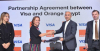
Mobile operator Orange Egypt recently signed an exclusive 5-year partnership agreement with electronic payment network VISA. The agreement officially announced on Twitter, Tuesday, April 12, aims to provide Orange Cash clients with exclusive digital payment solutions through VISA virtual and physical bank cards.
Thanks to the partnership, Orange Egypt’s clients can make online and in-store transactions using Visa’s various payment services (both domestic and international services) right from their mobile money wallet (Cash wallet). It will also allow merchants to accept transactions via the digital wallet just by scanning QR Codes.
The partnership signed by Orange is in line with its commitment to “provide unique and innovative features to facilitate clients’ daily transactions as well as save them time and energy.” It will thus help Orange Egypt's clients carry out financial transactions in a simple, fast, efficient, and secure manner. It will also help the operator attract new customers and improve its position in the digital payment market in Egypt.
For VISA, the initiative is part of plans to "diversify payment methods, encourage digital payments, and support Egypt's evolution to a cashless society." In May 2017, the electronic payment network signed a memorandum of understanding with Egyptian authorities to develop the infrastructures needed to transform the country into a regional digital payment hub. So, Visa Inc. will capitalize on the "extraordinary opportunity" offered by the new partnership to pursue its growth ambitions.
Overall, the exclusive deal will contribute to Egyptian authorities’ efforts to move to a cashless society as the country is, since 2016, engaged in a digital transformation process, which was accelerated by the Covid-19 pandemic.
Isaac K. Kassouwi

Sattelite internet access has become a popular alternative for operators that want to provide internet in remote communities. However, it has limitations that AST SpaceMobile tries to overcome.
Orange, the French telecom group, is moving to test space-based cellular broadband internet in one of its African markets. The group signed a non-binding memorandum of understanding with AST SpaceMobile on March 25 in this framework.
Under the terms of the agreement, AST SpaceMobile will deploy its services through the BlueWalker 3 satellite with no additional ground. It will thus allow internet access to Orange users in the targeted market, through standard 3GPP frequency bands.
For Chris Ivory (photo), AST SpaceMobile chief commercial officer, with its space-based cellular broadband internet solution, "AST SpaceMobile seeks not only to fill cellular broadband coverage gaps for millions of existing subscribers but also to extend mobile service to areas which currently have little to none at all."
Like most telecom operators, Orange is currently taking new initiatives to meet the growing demand for quality telecom services in Africa. Satellite is one of the options it looks into. It has its limitations, however. For instance, sometimes, ground equipment transmitting satellite signals fails to effectively cover remote areas.
Thanks to AST SpaceMobile's space technology, Orange will be able to bring the signal everywhere it is needed. Its users will be able to directly receive satellite signals. The memorandum of understanding signed by the two parties paves the way for discussions on a potential agreement for Orange to use the BlueBird satellite network being built by AST SpaceMobile.
Adoni Conrad Quenum

The government of Seychelles announced it is now connected to a second undersea optical fiber system that will boost access to connectivity in the country. The Pakistan East Africa Cable Express (PEACE) system landed on the Perseverance Island, a man-made island northeast of Mahé, the country's largest island, on Monday, March 7.
Benjamin Choppy (pictured), the Principal Secretary of the ICT Ministry, sees this infrastructure as an opportunity for the country to secure and improve its means of communication. Since 2011, Seychelles has been connected to a single undersea optical fiber cable, the Seychelles East Africa System (SEAS), which links it to Tanzania.
“For over 10 years, we had only one and this presented a risk for us if anything happens, especially today. If you look at the amount of traffic that we have on the cable, over 95 percent is on the SEAS cable. If something went wrong it would be catastrophic,” said Benjamin Choppy.
The PEACE is a 15,000 km undersea cable system spanning Africa, Europe, and Asia. It incorporates the latest 200G and WSS technology in its design to transmit more than 16 terabits of data per second per fiber pair. These capabilities give it the means to meet the growing connectivity needs in the country.
The Seychelles government has invested $20 million to connect to this new high-speed telecom infrastructure that will support the digitization of public services and the development of the digital economy. Amadou Dina, managing director of Airtel Seychelles, said the telecom company has already designed new products that will be launched when the new system goes live next May.
Adoni Conrad Quenum