


Despite his medical background, he is dedicated to fostering a connected Africa that actively participates in the global digital revolution. He has launched numerous initiatives to bridge the gap between African communities and innovations in blockchain and financial technologies.
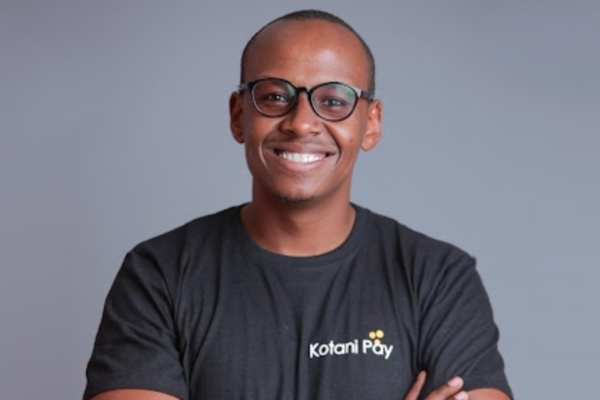
Felix Macharia (photo) is a Kenyan serial entrepreneur specializing in technology and blockchain innovation. He is the co-founder and CEO of Kotani Pay, a startup launched in 2019 alongside Samuel Kariuki, Brian Kimotho, and Jonathan Morgan.
Kotani Pay aims to make Web3 services accessible to African users, including those without smartphones or internet access. The startup offers a wallet accessible via SMS, enabling users to receive and withdraw funds through their mobile money accounts.
The technology converts foreign currencies into stablecoins and then into local currency, and vice versa, providing a simple, fast, and secure way for businesses to transfer money to Africa. Kotani Pay’s mission is “to serve as a frictionless bridge between digital assets and fiat for new digital currency and blockchain adopters in Africa,” according to the company.
Macharia’s involvement in blockchain extends beyond Kotani Pay. He serves as Chief Operating Officer at EOS Nairobi, a community of blockchain enthusiasts who believe the technology will be central to the future. He is also a research affiliate at the Institute for Blockchain Studies, where he explores practical applications of blockchain technology across Africa.
In efforts to formalize the blockchain sector, Macharia co-founded the African Digital Asset Framework (ADAF) in 2019. ADAF is an open-source protocol designed to establish transnational standards for digital assets on the continent. Two years earlier, he launched First Nexus Company, which develops technology solutions inspired by the Fourth Industrial Revolution.
Macharia’s path to technology entrepreneurship is unconventional. He graduated from the University of Nairobi with a bachelor’s degree in medical physiology in 2016 and earned a second degree in medicine and surgery in 2020.
By Melchior Koba,
Editing by Sèna D. B. de Sodji

A visionary rooted in the heart of Burundi, he builds bridges between African youth and the technologies of tomorrow. Driven by the ambition to make digital technology a catalyst for sustainable transformation.
Chris Clement Igiraneza (photo) is a Burundian entrepreneur and program manager known for his leadership in digital innovation and education. He is the founder and president of KIT Hub, a digital innovation center launched in 2019 that provides training and support to young people and women in Burundi, helping them bring innovative projects to fruition.
KIT Hub focuses on training, raising awareness, and supporting beneficiaries in key digital fields including web and mobile development, artificial intelligence, data science, and cybersecurity. The organization prioritizes enhancing employability and nurturing an entrepreneurial mindset, especially within the technology sector.
In addition to his work with KIT Hub, Igiraneza is an ambassador for the international Women in Tech movement and has initiated several other projects in Burundi. In 2020, he founded InnoTech Impact, a company dedicated to developing innovative digital solutions.
Continuing his commitment to education and technology, Igiraneza established the African Sustainable Education Academy (ASEA) in 2024. ASEA aims to transform education across Africa by promoting digital skills, encouraging the use of emerging technologies, and integrating sustainable principles to tackle the continent’s educational and social challenges. He also serves as an ambassador for the Polytechnic University of Gitega.
Igiraneza holds a bachelor’s degree in electrical and health engineering from the Royal Institute of Technology in Sweden, earned in 2011. He furthered his education with a master’s degree in energy systems from the University of Gävle, Sweden, completed in 2014.
His professional experience spans healthcare and technology sectors. From 2007 to 2011, he worked as a caregiver at Attendo, a Swedish healthcare service provider. In 2012, he became head of the commercial department and project manager at Bioenergy Burundi, a bioenergy company. In 2016, he joined Mycronic, a firm specializing in electronic manufacturing equipment, where he worked as a research and development engineer focusing on ejection systems.
Chris Clement Igiraneza’s multifaceted career and initiatives underscore his dedication to advancing digital innovation, education, and sustainable development in Burundi and across Africa.
By Melchior Koba,
Editing by Sèna D. B. de Sodji
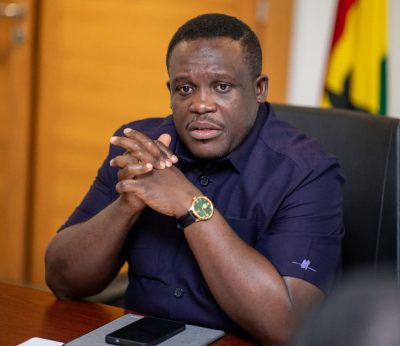
Ghana will showcase its digital progress at the World Expo 2025 in Osaka, Japan, led by Minister for Communication, Digital Technology and Innovations, Hon. Samuel Nartey George (MP). The focus will be on Ghana’s achievements in Information and Communication Technology (ICT) and its vision to become a digital innovation hub in Africa.
A sub-committee has been formed to guide preparations, with sector agencies developing content aligned with the Sustainable Development Goals (SDGs).
The Expo offers Ghana a global platform to attract investment, build partnerships, and promote its digital economy. The event started from April 13 and will go on till October 13, 2025.
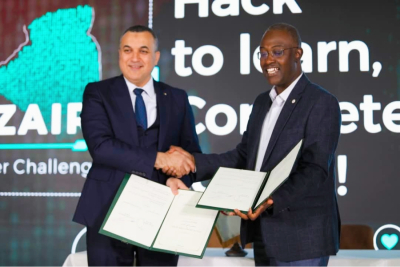
• Algeria will launch “Chabab Tech” program to train youth in cloud computing, AI, cybersecurity, and IoT
• Rollout will start via four existing “Skills Centers” but implementation timeline unclear
The Algerian government is set to launch "Chabab Tech," a new program aimed at equipping young people with essential digital skills in areas such as cloud computing, cybersecurity, artificial intelligence, and the Internet of Things. This initiative marks the latest government effort to bolster digital proficiency among the nation's youth.
A framework agreement for the program was formally signed on Saturday, May 24, by Sid Ali Zerrouki, Minister of Post and Telecommunications, and Mostapha Hidaoui, Minister of Youth and head of the Higher Council for Youth.
"Through this initiative, the ambition is to train a generation of 'ambassadors of digital transformation,' exemplary in innovation and responsibility, and capable of actively contributing to the promotion of digital culture and the building of a more competent Algerian society prepared for the challenges of tomorrow," the Ministry of Post and Telecommunications stated in a press release.
"Chabab Tech" builds on previous government efforts to enhance digital literacy. In February, Algeria began rolling out "Skills Centers" to provide free digital training to young individuals. These centers are currently operational in the wilayas of Annaba, Sétif, Oran, and Chlef. The "Chabab Tech" program will initially be implemented through these existing centers, with plans for expansion to other wilayas to ensure equitable national coverage.
These initiatives align with Algeria's "Digital Algeria 2030" strategy, which identifies skills development as a cornerstone among its five main pillars. The strategy underscores the government's commitment to advancing the information society by integrating information and communication technologies (ICTs) across all economic sectors. The executive aims to cultivate a new generation of talent capable of leading the country's digital transformation. While Algeria is not part of Sub-Saharan Africa, the World Bank's estimate that nearly 230 million jobs in that region will require digital skills by 2030 highlights the broader importance of digital training for African nations' development.
However, the government's efforts to enhance youth digital capacities are still in their nascent stages. For instance, the "Skills Centers" currently cover only four of the country's 58 wilayas. Furthermore, a precise timeline for the full implementation of the "Chabab Tech" program remains unspecified, with authorities indicating that details regarding registration and participation will be announced at a later date.
By Isaac K. Kassouwi,
Editing by Sèna D. B. de Sodji

Africa is steadily embracing digital transformation. While most countries on the continent face challenges in fostering an environment that supports globally competitive, cutting-edge technological innovation, a growing number are proving to be exceptions.
Thirteen African countries have secured spots in the global Top 100 for best startup ecosystems, a report published Wednesday by research firm StartupBlink revealed.
The "Global Startup Ecosystem Index 2025" leverages 33 indicators, categorized across "quantity," "quality," and "business environment," to assess global startup landscapes. These indicators include the number of startups, co-working spaces, and accelerators; total investment in startups, the presence of unicorns, and R&D centers established by major international tech companies; and internet connection speed, internet cost, and R&D expenditure.
South Africa (52nd globally) maintained its lead as the continent's top startup ecosystem. Kenya (58th globally) ascended five places from its 2024 ranking to claim the second spot in Africa.
The rest of the African Top 10 includes Egypt (65th globally), Nigeria (66th), Cape Verde (75th), Ghana (81st), Tunisia (82nd), Namibia (85th), and Morocco (88th). Senegal (92nd globally) rounded out the top ten, followed by Uganda (94th), Rwanda (96th), and Somalia (100th).
Overall, ten African countries improved their rankings from the previous edition, while two (Senegal and Nigeria) experienced a drop. South Africa was the sole country to retain its position. Tunisia saw the largest jump, climbing eight places, followed by Ghana (+7), Kenya (+5), and Morocco (+4).
In its city-level ranking of 1,000 startup ecosystems worldwide, StartupBlink highlighted only Lagos (76th globally) and Cairo (90th globally) within the Top 100. Both cities were recognized for their vibrant ecosystems, which boast multiple unicorns, a high concentration of successful startups, and prominent incubators and accelerators.
Walid Kéfi
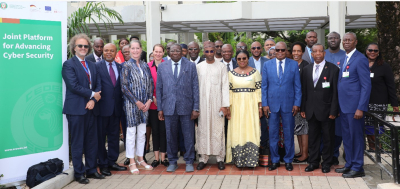
With digital infrastructure expanding and cyber threats rising, the region is increasingly asserting leadership in shaping the global rules that govern cyberspace.
The ECOWAS Commission, in partnership with the European Union and the German Federal Foreign Office, held a High-Level Briefing on Cyber Diplomacy on 20 May 2025 in Abuja, Nigeria. The meeting brought together ambassadors, senior diplomats, and technical experts to explore how ECOWAS Member States can coordinate their positions and act with coherence on the international digital stage.
“Cyber diplomacy is no longer optional. It is essential,” said H.E. Sédiko Douka, ECOWAS Commissioner for Infrastructure, Energy and Digitalisation. “It allows us to defend our digital sovereignty, build trust among Member States, and shape the rules that will govern cyberspace — both in Africa and globally.”
The session focused on strengthening regional cyber diplomacy capacity, building political will, and aligning legal and strategic frameworks with global processes. The event also featured expert insights on multilateral processes such as the UN Open-Ended Working Group and the Global Digital Compact.
The message was echoed by European and German partners, who linked cyber diplomacy to democratic integrity, economic stability, and shared development goals. “Our cooperation on cybersecurity is not only about technical capacity — it is about protecting citizens, businesses, and the democratic space,” said Mr. Massimo De Luca, Head of Cooperation at the EU Delegation to Nigeria and ECOWAS.
As cyber threats increasingly intersect with development, security, and governance, ECOWAS is positioning itself as a credible and strategic actor. The briefing reinforced that cyber diplomacy is not the preserve of advanced economies but a vital tool for regions seeking to protect their sovereignty, foster trust, and shape an inclusive digital future. With cyber threats becoming more complex and borderless, the briefing underscored the urgency of regional cooperation and strategic alignment.
Cyber diplomacy involves the use of diplomatic tools and strategies to address issues related to cyberspace, digital technologies, and internet governance at the international level. It involves negotiations between countries and regional or global organizations to set rules and norms for responsible behavior online, promote cybersecurity cooperation, protect critical digital infrastructure, and ensure rights such as data privacy and access to information. For citizens, improved cybersecurity cooperation means stronger protection from cybercrime. With better coordination across West African states, authorities can respond more effectively to threats such as online fraud, identity theft, and data breaches that affect everyday people. This also enhances the safety of digital platforms that citizens rely on for services like mobile money, online education, and digital health care.
Through continued engagement with partners such as the EU and Germany, ECOWAS is advancing its broader mandate to integrate digital governance into regional security and diplomacy efforts, ensuring West Africa’s voice is heard in shaping tomorrow’s digital order.
ECOWAS has been working to strengthen cybersecurity in West Africa. In January 2021, The ECOWAS Parliament adopted a regional strategy for cybersecurity aimed at increasing cyber resilience and helping member states enhance their cybersecurity capacities.
Hikmatu Bilali

Bridging the digital divide unlocks untapped economic potential, improving access to critical services, and giving youth and entrepreneurs the tools they need to succeed. As the province looks to build a resilient, inclusive economy, digital infrastructure will be its backbone.
KwaZulu-Natal Premier Thamsanqa Ntuli has unveiled a public-private partnership aimed at accelerating rural connectivity and fostering inclusive economic growth across the province. This was during a stakeholder engagement at the Port of Richards Bay.
Speaking at the meeting, Ntuli highlighted digital access as essential to unlocking opportunities, especially for the province’s youth. He described internet access as a necessity, not a luxury, and a key tool for education, entrepreneurship, and employment.
The initiative includes the rollout of 130 new cellular network sites by Vodacom, with over 100 dedicated to rural communities in all 11 districts of the province. These sites will be built on traditional land held under the Ingonyama Trust, with the support of local leaders and various stakeholders, including the South African Local Government Association (SALGA), the Department of Cooperative Governance and Traditional Affairs (CoGTA), and the House of Traditional and Khoisan Leaders.
Ntuli noted that high youth unemployment—currently over 30%—is exacerbated by the lack of digital infrastructure in underserved areas. Many young people struggle to access online education or launch businesses due to poor connectivity. The Premier said the new infrastructure would help remove these barriers, allowing programmes like the KwaZulu-Natal Youth Fund and Women’s Advancement Fund to achieve greater impact.
The project forms part of the KwaZulu-Natal Digital Transformation Strategy (2025–2030), which promotes a coordinated approach between government, traditional leaders, businesses, and municipalities. The strategy also seeks to improve access to services like healthcare, policing, and small business support in rural areas.
Ntuli reaffirmed the provincial government’s commitment to creating an investment-friendly environment and called on more private sector players to partner with the government in expanding digital access.
The Premier emphasized that this initiative is not exclusive to Vodacom and that other businesses are encouraged to join efforts to drive connectivity, create jobs, and uplift communities. He described digital inclusion as a pathway to dignity, opportunity, and generational change.
This initiative directly addresses digital inequality, which remains a significant barrier to socio-economic development in South Africa, particularly in rural areas like those in KwaZulu-Natal. Ensuring equitable access to the internet is now widely recognized as essential for education, employment, entrepreneurship, healthcare, and public service delivery. As of 2021, over 20% of South African households still lack access to the internet, with rural areas significantly lagging behind urban centres, according to the 2023 State of the ICT Sector Report in South Africa by the Independent Communications Authority of South Africa (ICASA).
Hikmatu Bilali
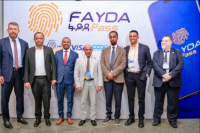
• Ethiopia launches Fayda Wallet to boost digital inclusion
• Developed by NIDP in partnership with TECH5 and Visa, the wallet uses advanced biometric and identity technologies to enable secure online/offline verification
Ethiopia officially launches Fayda Wallet, a digital wallet backed by the national biometric ID, designed to simplify access to financial and administrative services.
Presented during the ID4Africa 2025 conference, which concluded on Friday, May 23 in Addis Ababa, the wallet was developed by the National ID Program (NIDP) in partnership with TECH5 and Visa.
“We are thrilled to support the launch of the Fayda Wallet, a groundbreaking initiative that will significantly enhance financial inclusion and streamline digital transactions in Ethiopia. This collaboration underscores Visa’s commitment to empowering communities through innovative digital payment solutions,” said Yared Endale, Visa’s General Manager for East Africa.
The launch of Fayda Wallet is part of Ethiopia’s Digital Strategy 2025, which aims to assign a digital identity to 70 million people by 2028. Through this application, users can generate a secure digital identity certificate (VC) from the Fayda ID system. This certificate, aligned with Self-Sovereign Identity (SSI) principles, enables secure verification, both online and offline, to access a variety of services including payments, public services, and, account opening.
The wallet is based on advanced technologies, including TECH5’s T5-AirSnap and T5-OmniMatch for contactless biometric capture and matching, as well as KeyShare Wallet for secure digital identity management. It also allows users to access instant banking services, such as account opening via biometric eKYC and the issuance of a virtual Visa card. The Cooperative Bank of Oromia (Coopbank) is the first to have integrated this solution.
To ensure broader digital inclusion, Fayda Wallet also offers agent-based access points, allowing citizens without smartphones to access digital services using their biometric data, in compliance with W3C standards and the European Union’s eIDAS frameworks.
In a country where less than 47% of adults had a bank account in 2022, according to the World Bank, the launch of Fayda Wallet could transform access to essential services and strengthen trust in digital interactions.
By Samira Njoya,
Editing by Sèna D. B. de Sodji

He develops technological solutions to address mobility challenges in Senegal. An engineer by training, he combines digital expertise and on-the-ground knowledge to structure a true local transport service.
Seyni Ndiaye, a Senegalese computer scientist and entrepreneur, is the co-founder and CEO of Kai Ñu Dem, a transport company providing services to individuals and businesses.
Founded in 2018 by Ndiaye and Birane Diagne, Kai Ñu Dem aims to enhance mobility across Africa through innovative solutions. The company offers a digital platform, also named Kai Ñu Dem, that allows users in Senegal to book taxis or private vehicles.
Kai Ñu Dem distinguishes itself with a fleet of new vehicles and certified drivers, ensuring a reliable and secure transport service. "We didn't just want to be a tech platform, but a true transport company," Ndiaye explained.
Ndiaye holds a degree in information technology engineering, which he earned in 2007 from Polytech Paris-UPMC in France. That same year, he joined the tech company Atos, where he held successive roles as project manager and IT consultant.
In 2011, he became an information systems consultant at Carra Consulting, a French consulting firm. The following year, he relocated to Montreal, Canada, working as a business analyst and project manager at Logient, an IT services company. He later continued his career as a project manager at GMCR Canada, a company in the beverage sector.
From 2015 to 2018, Ndiaye served as Chief Data Officer at Société Générale in Dakar before dedicating himself full-time to Kai Ñu Dem.
By Melchior Koba,
Editing by Sèna D. B. de Sodji

As an engineer with a passion for technology, he transitioned into entrepreneurship to address the practical needs of small African businesses. He now provides them with straightforward, accessible digital tools that simplify their management and facilitate their digital transformation.
Razak Hachimou, a Beninese telecommunications engineer and tech entrepreneur, is the co-founder and CEO of Iwo Group, a company established in 2020 that specializes in digitalizing and optimizing management processes.
Iwo Group has developed a fully digital accounting platform tailored for small and medium-sized enterprises (SMEs), self-employed individuals, and accountants. This comprehensive solution streamlines financial operations, enabling users to produce financial statements, manage daily accounting, and access expert professional support. A key advantage of the platform is its robust data security, safeguarding information against loss due to theft or device failure.
Among its features, the application includes a module called "la caisse" (the cash register), specifically designed to simplify accounting for users without a financial background. This system bypasses traditional debit-credit entries, making financial management more accessible.
"It offers an SME manager the opportunity to make minimalist accounting entries such as income and expenses, allowing them to access data like their revenue, profit, and expenses over a period through a dashboard, and to generate their financial statement (balance sheet) at the end of their fiscal year with a single click," Hachimou explained in 2024. "It also allows accounting firms to remotely monitor their clients’ accounts."
Before co-founding Iwo Group, Hachimou was the Deputy CEO of Wanee Sarl, a firm he co-founded in 2017, specializing in continuing education in digital technologies and computer engineering. He held this position until 2022.
Hachimou's academic background includes a higher technician diploma in industrial computing and maintenance, obtained in 2011 from the Cerco Institute in Benin. He furthered his education by earning an engineering degree in telecommunications in 2014 from the Multinational School of Telecommunications (EMST) in Dakar, Senegal.
Following his studies, Hachimou worked as a trainer for SES Satellites in Senegal and Niger. From 2015 to 2022, he also served as the West Africa representative for PoulSAT, a telecommunications company based in Washington D.C.
By Melchior Koba,
Editing by Sèna D. B. de Sodji
More...

• DRC signs smart village deal with Huawei
• Plan includes internet, digital training, and public service upgrades
The Democratic Republic of Congo signed, on Friday, May 23, a partnership with Chinese technology multinational Huawei for the launch of a pilot smart village. This project aims to improve the living conditions of rural populations through digital technologies integrated into an ecosystem of services and connected objects.
“This project reflects our commitment to offering rural populations equal access to digital opportunities, while building the foundations of a modern, transparent, and connected state,” declared Mickael Lukoki Nsimba (photo, left), Chief of Staff to Prime Minister Judith Suminwa Tuluka, during the signing ceremony.
The smart village, planned as a pilot project, intends to demonstrate the feasibility of technological solutions adapted to local realities. It notably provides for the implementation of high-speed internet access, training of young people in digital skills, as well as the connection of local public services, such as civil registry, health, and education.
This initiative is part of the national digital transformation strategy led by the Congolese government, which aims to modernize the state and reduce inequalities in access to digital technologies. It also reflects a trend observed at the continental level, supported notably by the African Development Bank (AfDB) and the World Bank, which consider the digitization of rural areas as a lever for sustainable development and inclusion.
In the Democratic Republic of Congo, where the digital divide remains pronounced, the initiative appears as a structural response to imbalances in access to connectivity. According to the Regulatory Authority of Posts and Telecommunications of Congo (ARPTC), only 30.79% of Congolese had access to mobile internet as of mid-2023, and barely 0.0174% to fixed internet. These figures reflect the considerable gap between urban and rural areas.
This imbalance is reinforced by the high cost of data, the lack of telecom infrastructure in remote areas, and the low integration of digital services in public administrations.
By equipping rural areas with digital infrastructure, the Congolese government intends to stimulate local economic development, strengthen access to essential services, and promote digital inclusion. This project could also serve as a model for other regions of the country facing the same challenges.
By Samira Njoya,
Editing by Sèna D. B. de Sodji

• Morocco places AI at center of digital strategy, minister tells Parliament
• Plans include a new AI directorate, a UNDP-backed digital hub, and 12 regional Jazari Institutes
• Youth training programs to target ages 8–18 in digital and AI skills
Morocco is putting artificial intelligence (AI) at the forefront of its digital transformation efforts. Speaking before Parliament earlier this week, Minister Delegate for Digital Transformation and Administrative Reform, Amal El Fellah Seghrouchni, said the aim is to leverage digital tools to accelerate social and economic development.
The government plans several key initiatives, including the creation of a dedicated AI directorate and the launch of a regional Arab-African digital hub in partnership with the United Nations Development Programme (UNDP). Additionally, a network of centers of excellence, dubbed the “Jazari Institute,” will be established across Morocco’s 12 regions.
Two national training programs targeting digital and AI skills for youth aged 8 to 18 are also in the works. To further unify efforts, a national AI conference is scheduled for July 1-2 in Rabat, aiming to foster a shared and responsible vision for AI development among stakeholders.
These measures are part of Morocco’s broader “Digital 2030” strategy, which seeks to harness AI’s potential to fast-track the digitalization of public and private services while nurturing a thriving digital economy. The government intends to back projects that consolidate data registers and frameworks, deploy AI use cases to improve citizen and business services, attract international AI experts, and support startups and companies in high-value-added sectors.
Moreover, the plan includes developing the skills and infrastructure necessary for responsible AI deployment, establishing evaluation mechanisms, and initiating multidisciplinary discussions on AI’s societal, legal, and economic impacts.
The United Nations recognizes AI’s potential to drive digital transformation. In its “E-Government Survey 2024,” the UN Department of Economic and Social Affairs (DESA) noted that AI technologies can enhance public sector operations by automating administrative tasks, increasing efficiency, and reducing backlogs and redundancies. The report also highlighted AI’s role in advancing sustainable development goals.
However, many of Morocco’s AI initiatives remain in the project phase, with their success hinging on effective implementation. DESA also cautions about AI-related risks, including algorithmic biases that may misrepresent certain groups, as well as ethical, security, and social challenges. The UN agency underscored that the ongoing digital divide poses a significant barrier to integrating AI technologies effectively in the public sector.
By Isaac K. Kassouwi,
Editing by Sèna D. B. de Sodji

The centre is one of many steps Nigeria is taking to bridge the digital divide and build a resilient, inclusive, and innovation-driven economy.
The Federal Government, through the National Information Technology Development Agency (NITDA), has announced plans to establish at least 1,600 Information and Communication Technology (ICT) centres across Nigeria in the coming years as part of its push for inclusive digital transformation.
Speaking on May 15 during the inauguration of a new ICT centre in Akesan, Lagos, NITDA Director-General Kashifu Inuwa said the initiative aims to ensure every Nigerian—regardless of location or background—has access to digital tools, skills, and opportunities. According to Inuwa, NITDA has already established 222 ICT centres in the last two years, spread across three categories: school ICT facilities, community centres, and innovation hubs. So far, 18 community centres and three ICT hubs have been completed.
“Our goal is to build over 1,600 centres nationwide. We want every Nigerian to be part of our digital prosperity,” Inuwa said, stressing the importance of a sustainable model to operate these centres efficiently without relying on NITDA for minor issues.
He linked the initiative to President Bola Tinubu’s Renewed Hope Agenda, which identifies economic diversification and digital inclusion as top priorities. One of the Agenda’s seven key pillars is focused on accelerating diversification through industrialization, digitization, innovation, and the creative economy. “That’s why NITDA is building these centres—to ensure no Nigerian is left behind in our digital economy,” Inuwa explained.
Also present at the event, Minister of Communications, Innovation, and Digital Economy Dr. Bosun Tijani—represented by Johnson Bareyei, Director of e-Government—described the centre as a vital extension of government policy aimed at decentralizing opportunity and embedding innovation in everyday life.
He noted that the centre will support the 3 Million Technical Talent (3MTT) programme, serve startups and tech entrepreneurs, offer regulatory guidance, and foster collaboration among government, private sector, and local communities.
The establishment of ICT centres aligns with Nigeria’s National Digital Economy Policy and Strategy (2020–2030), which emphasizes digital literacy and job creation as key pillars. The centres are instrumental in supporting innovation ecosystems by providing co-working spaces, tech incubation, and mentorship for startups. This is vital for a country seeking to diversify away from oil, where the ICT sector already contributed 16.66% to GDP in Q4 2023.
Hikmatu Bilali

He aims to transform daily commuting. With fresh ideas and solid experience, he envisions practical solutions to make mobility easier.
Samir Bennani, a seasoned Moroccan entrepreneur with expertise in finance and mobility, is at the forefront of innovating public transport solutions for emerging countries through his latest venture, Enakl. Launched in 2023, Enakl is a technology startup where Bennani serves as founder and Chief Executive Officer.
Enakl's flagship offering is a digital platform that connects commuters heading in the same direction with minibus operators. This service aims to streamline daily commutes by providing a practical and affordable option.
"Our promise is as follows: a guaranteed seat in a comfortable minibus, professional and punctual drivers, an affordable price for high quality of service, the possibility of booking recurring trips in advance, and a walking distance between the home and the pick-up point less than 500 meters," the startup explains.
Before establishing Enakl, Bennani founded Ma-Navette.com in 2010, another Moroccan mobility startup that he continues to manage. Ma-Navette.com operates in two key sectors: corporate transport and chauffeur-driven vehicle (VTC) services.
Bennani's extensive career in finance began after he earned a master's degree in finance from ESCP Business School in France. In 2001, he started as a consultant at the accounting firm Arthur Andersen Business Consulting. He then joined the Moroccan investment fund Al Mada Holding in 2005, where he worked as a project manager within the development and strategy department. From 2008 to 2010, Bennani held the position of Director of Strategy and Development at Wafa Assurance.
By Melchior Koba,
Editing by Sèna D. B. de Sodji