


Blockchain technology is increasingly transforming African economies by providing innovative solutions in finance, energy, and agriculture. Its adoption boosts transparency, streamlines transactions, and accelerates digital transformation.
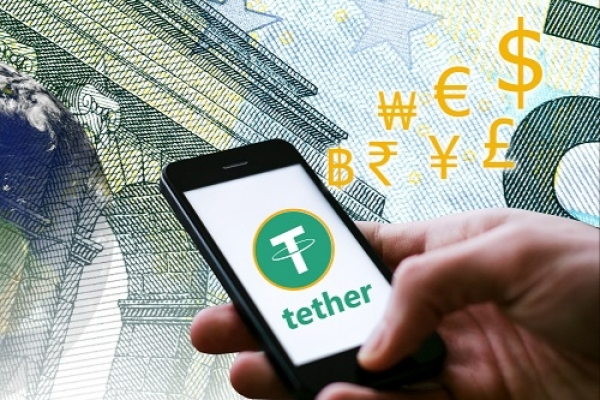
On Monday, February 17, cryptocurrency company Tether announced it signed a memorandum of understanding with the government of the Republic of Guinea. The strategic collaboration aims to establish a framework for the adoption of blockchain and peer-to-peer technologies to drive economic growth and position Guinea as a key player in Africa’s digital transformation.
"We are thrilled to collaborate with the Republic of Guinea to potentially unlock the immense potential of blockchain and digital technologies across Africa. This MoU reflects our commitment to helping countries build resilient digital economies. Together, we aim to implement efficient blockchain solutions that benefit both public and private sectors, paving the way for economic growth and establishing Guinea as a leader in technological innovation,” said Paolo Ardoino, CEO of Tether.
The agreement focuses on education, innovation, and sustainable technological practices. It includes the introduction of educational programs in both the public and private sectors to raise awareness, enhance skills, and develop local talent in digital technologies. This framework is expected to facilitate blockchain adoption in Guinea and create an environment conducive to innovation.
Tether has undertaken several similar initiatives internationally. The company has been involved in the Lugano Plan in Switzerland, aimed at promoting blockchain adoption, as well as educational projects on digital assets in Turkey and the Middle East.
This initiative is part of the Simandou 2040 project, launched by President Mamadi Doumbouya, which places technology at the core of the country’s development strategy. The agreement follows a recent meeting between the Minister of Posts, Telecommunications, and the Digital Economy, Rose Pola Pricemou, and a Tether delegation. The meeting aimed to establish a favorable framework for implementing the collaboration.
In Guinea, where digital transformation is underway, blockchain adoption could play a crucial role in financial inclusion. This technology offers solutions tailored to local realities, such as facilitating cross-border payments, reducing transaction costs, and securing financial exchanges. With a low banking penetration rate, digital assets and blockchain present a significant opportunity to modernize financial systems and promote more inclusive growth.
Beyond finance, blockchain can also contribute to sustainable development in Africa. In agriculture, it enables tracking product value chains, ensuring compliance with sustainable practices and certification. Farmers can thus prove that their products are organic and fair trade, gaining access to new markets and increasing their incomes.
In the energy sector, blockchain facilitates the management of decentralized power grids and promotes the adoption of renewable energy. Blockchain-based microgrids make it possible to monitor energy production and consumption in real time, improving electricity access in rural areas while reducing dependence on fossil fuels.
By Samira Njoya,
Editing by Sèna D. B. de Sodji

The Federal Ministry of Communication, Innovation, and Digital Economy has launched the National Girls in ICT Competition to increase female participation in technology. The initiative provides secondary school girls with a platform to showcase their skills in coding, web development, cybersecurity, and data analytics while addressing gender gaps in the industry.
Participants will develop hands-on ICT skills and gain recognition from industry leaders. They will also access mentorship, workshops, and networking opportunities.
Interested participants must register online and form a team of three with teacher support. Teams must identify a community problem and develop a tech-based solution. Applications close by March 6, 2025.
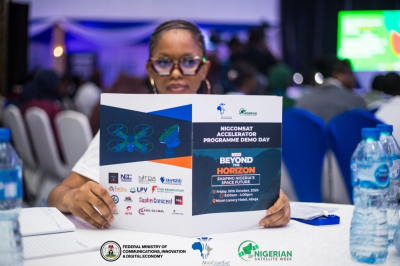
NIGCOMSAT invites Nigerian startups to develop innovative solutions using space technology. The program offers mentorship, global exposure, networking, and funding opportunities.
Applicants must be at least 18, have a registered Nigerian startup, possess a Minimum Viable Product, and integrate space-based technology into their solutions.
The application period runs from February 1 to March 17, 2025. The selection process will occur from March 24 to April 25, followed by the cohort presentation from April 28 to May 2. The program will launch on May 5, with an intensive deep-dive phase from May 12 to October 10.
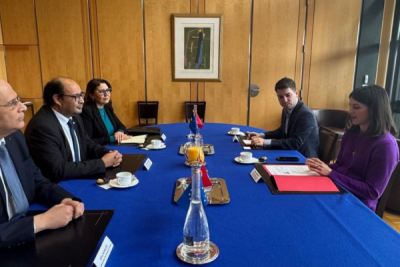
Like many African countries, Tunisia is relying on international cooperation to develop its rapidly growing digital sector. It recently strengthened its ties with India.
Tunisia and France discussed potential digital cooperation, including artificial intelligence, during the AI Action Summit held in Paris from February 10-11, according to the Tunisian Ministry of Communication Technologies.
On the sidelines of the summit, Tunisian Minister of Communication Technologies Sofiene Hemissi met with Clara Chappaz (photo, right), France’s Minister Delegate for Artificial Intelligence and Digital Affairs.
“On this occasion, the minister expressed Tunisia’s ambition to actively contribute to the implementation of the orientations and initiatives discussed at the summit, aiming to harness artificial intelligence technologies for the benefit of humanity in a responsible and inclusive manner,” the Tunisian ministry said in a press release.
The potential partnership could support Tunisia’s broader digital transformation strategy, which the government considers a key driver of socio-economic development.
France ranks 34th globally in the United Nations e-Government Development Index, with a score of 0.8744 out of 1, exceeding the global average of 0.6382. Tunisia’s score is 0.6935.
In cybersecurity, France is recognized by the International Telecommunication Union (ITU) as a global leader. Tunisia is categorized in Tier 3 out of 5, indicating potential for improvement, particularly in organizational measures, capacity building, and international cooperation.
Regarding ICT development, the ITU gives France a score of 89.8 out of 100, while Tunisia scores 77.2, ranking 8th in Africa out of 47 countries.
Discussions between the two countries are in preliminary stages. The specific framework for potential collaboration remains undefined, and no official agreement has been signed or announced. The future of negotiations will determine the specific direction and implications of any partnership.
By Isaac K. Kassouwi,
Editing by Sèna D. B. de Sodji
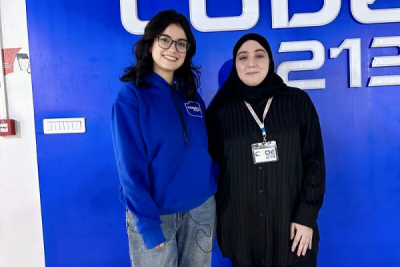
Africa's growing digital economy and technological advancements are driving demand for specialized skills, but training opportunities remain limited.
The digital training platform Code 213 has announced the opening of its third coding school in Algeria, further strengthening its presence in the country. This initiative is part of a broader strategy to expand into other North and Sub-Saharan African countries, where demand for digital skills is rising rapidly.
"Our mission is to create a pipeline of highly skilled digital professionals who can compete in the global job market. Expanding into new regions allows us to reach more young talents, empowering them with the skills they need to succeed," said Amina Bergui, Code 213’s marketing manager.
Since its launch in July 2023, Code 213 has offered training programs in software development, cybersecurity, data science, artificial intelligence, and digital marketing. The platform combines online courses with in-person mentoring and provides internationally recognized certifications, including CompTIA, Microsoft, and Google. Additionally, the use of Noor AI enables personalized tracking of learners’ progress.
The expansion comes at a time when Africa is facing a severe shortage of skilled labor in the tech sector. According to the "Foresight Africa 2025-2030" report by the Brookings Institution, an estimated 230 million jobs in Sub-Saharan Africa will require digital skills by 2030. The report also predicts up to 650 million digital training opportunities, representing a potential $130 billion market. However, access to specialized training remains limited, largely due to high costs and inadequate infrastructure.
With its growing presence and ambitious expansion plans, Code 213 aims to contribute to the development of a competent digital workforce, a crucial factor for Africa’s economic future. By offering training in high-growth industries, this initiative could also help reduce youth unemployment, a persistent challenge across the continent.
By Samira Njoya,
Editing by Sèna D. B. de Sodji

To help African freelancers and entrepreneurs receive funds and manage USD payments efficiently and securely, Philip Mburu has launched an innovative fintech solution.
Hurupay is a fintech solution designed to help freelancers, remote workers, and businesses in Africa create virtual U.S. dollar accounts backed by stablecoins—a type of cryptocurrency that maintains a stable value by pegging its market price to an external reference. The fintech company, based in Nairobi (Kenya) and San Francisco (USA), was founded in 2023 by Philip Mburu.
To open an account, users need to download the mobile app, available on iOS and Android, where it has already surpassed 1,000 downloads, according to the Play Store. Registration requires identity verification with an official document. Opening a virtual account on Hurupay is free, with no monthly fees. A 2% commission is charged on each incoming transaction, while withdrawals and transfers are free of charge.
These accounts allow users to receive USD payments with no hidden fees and offer the flexibility to withdraw funds to cryptocurrency exchange platforms. Hurupay is already available in more than 40 countries, including Nigeria, Ghana, South Africa, Tanzania, the Philippines, and the United States.
Users can receive payments via the Automated Clearing House (ACH), an electronic fund transfer system commonly used in the U.S. for interbank transactions, or through domestic wire transfers from American banks. The platform also supports payments from services like PayPal, Venmo, and Stripe.
Funds received are automatically converted into USDC, a stablecoin, ensuring protection against the volatility of local currencies. Withdrawals can be made to exchange platforms such as Binance or Bybit to obtain USDT, or directly to local banks and mobile money services at competitive rates.
By Adoni Conrad Quenum,
Editing by Feriol Bewa
Madica, a pre-seed investment program for African startups, announced on February 12, funding for four tech-driven ventures: Medikea, Motherbeing, Pixii Motors, and ToumAI.
Each received up to $200,000 and will join Madica’s 18-month support program, which includes mentorship, executive coaching, and immersion trips to startup hubs like Cape Town and London.
Marking its North African debut, Madica focuses on underrepresented founders in AI, FemTech, Mobility, and Healthcare. Affiliated with Flourish Ventures, it tackles funding and mentorship gaps in Africa’s startup ecosystem.
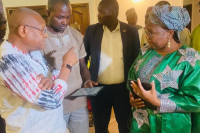
Information and communication technologies (ICT) enhance creativity and learning from preschool and primary levels. However, in Africa, digital integration in education remains limited due to a lack of preparedness for its adoption in early learning.
The Nigerien government has launched an ambitious program to equip over 7,000 teachers with educational tablets, aiming to improve teaching skills and student monitoring, particularly in remote areas. On Friday, February 14, Elisabeth Sherif, Minister of National Education, Literacy, Vocational Training, and Promotion of National Languages, visited the Niger-LIRE project headquarters to assess progress on the "One Teacher, One Tablet" initiative, which seeks to digitize education.
"These tablets contain dynamic content tailored to all regions, including the most isolated ones," explained Aboubacar Mamadou Diakité, Director of Statistics and New Technologies at the Ministry of National Education. "They have long battery life and come with 21,000 mAh power banks, allowing up to a week of use without recharging." He also announced the arrival of an additional 3,400 tablets under the project.
"One Teacher, One Tablet" is part of LIRE (Learning Improvement for Results in Education), a $140 million World Bank-funded government program. It aims to modernize education through digital tools to improve student outcomes, addressing Niger's historically low integration of technology in classrooms.
The initiative seeks to enhance teaching conditions and make learning more interactive through resources such as video lessons, interactive materials, teaching guides, practical exercises, and digital assessment tools. The tablets will also help teachers diversify their teaching methods and provide structured support, especially in regions with limited access to textbooks and specialized training.
This initiative aligns with the African Union’s Digital Education Strategy (2023-2028), which encourages member states to develop national policies for digital transformation in education. By 2027, the strategy aims to ensure that at least 50% of schools across the continent have reliable and affordable high-speed internet (less than $25 per Mbps per month). It also targets providing digital devices to 20% of students and 50% of teachers by 2027, expanding to one-third of students and all teachers by 2030.
Samira Njoya
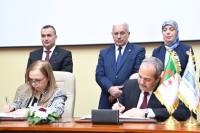
Digital transformation is a key priority for the Algerian government. On February 9, during a Council of Ministers meeting, President Abdelmadjid Tebboune called for measures to speed up the digitization process.
Algeria officially launched electronic signatures and certification on Sunday, January 16, as part of its ongoing digital transformation efforts. The launch ceremony was attended by Sid Ali Zerrouki, Minister of Post and Telecommunications.
According to a statement from the ministry, the Postal and Electronic Communications Regulatory Authority (ARPCE) has been designated as the national electronic certification authority. It will oversee and regulate service providers offering electronic signature and certification services to the public.
"Electronic certification, also known as digital certification or electronic certificates, is a process that ensures the authenticity, integrity, and security of electronically transmitted or stored information. It relies on cryptographic keys (public and private) to secure data and online transactions," the ministry explained on its website. The World Bank defines an electronic signature as "a signature generated by electronic means to authenticate an electronic transaction."
This launch comes about a month after the signing of a framework agreement between the National People’s Assembly (APN) and the Governmental Electronic Certification Authority (AGCE) to integrate electronic certification and signature services. It aligns with Algeria’s ambition to accelerate digital transformation, a pillar of its socioeconomic development strategy. The government aims to build a true information society by expanding the use of ICT across all economic sectors.
The World Bank has emphasized the importance of transitioning to electronic signatures as digital transactions become more prevalent. "The lack of trusted and legally-recognized means of authenticating electronic transactions has forced a continued reliance on in-person handwritten signatures, undermining digitalization efforts by necessitating recourse to in-person interaction to complete a transaction," the institution noted in its report "Electronic Signatures – Enabling Trusted Digital Transformation," published in September 2024.
By Isaac K. Kassouwi,
Editing by Sèna D. B. de Sodji
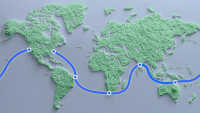
Many regions in Africa still struggle with limited and expensive internet access. By providing a direct undersea connection between South Africa and Brazil, Project Waterworth will improve bandwidth, lower latency, and reduce reliance on existing routes, making internet services faster and more affordable.
Meta, the parent company of Facebook, has unveiled an ambitious new undersea internet cable project, dubbed Project Waterworth, it announced on February 14. The initiative spans over 50,000 km and aims to connect North and South America, Africa, Asia, and Australia, making it the longest undersea cable ever deployed.
The cable will link major regions, including the U.S. East Coast, Brazil, South Africa, India, Australia, and the U.S. West Coast. Meta asserts that the project will promote economic collaboration, enhance digital inclusion, and accelerate technological advancements in these regions.
Furthermore, Meta has announced the deployment of advanced cabling technology to enhance resilience against natural wear and potential threats. The cables will be laid in deep waters, reaching depths of approximately 7,000 meters, making them more difficult to access and sabotage. Additionally, enhanced burial techniques will be used in high-risk fault areas, such as coastal waters, to protect against ship anchors and other hazards.
With Project Waterworth, Meta is not only securing its infrastructure but also positioning itself as a leader in global internet connectivity. This investment could transform digital access and economic opportunities in the connected regions while setting new standards for undersea cable security and resilience.
Project Waterworth could significantly boost African development by improving connectivity and driving economic growth. As of January 2024, internet access in Africa varies, with Morocco at 90.7% while Central Africa lags at 10.6%, according to Statista. By providing a direct undersea link between South America and Africa, Project Waterworth aims to enhance bandwidth, reduce latency, and make internet access more affordable and widespread.
Hikmatu Bilali
More...
In 2019, four Egyptian tech entrepreneurs ventured into the world of e-commerce. Their startup has been growing rapidly, and they have now secured $6.75 million in funding to expand across the MENA region, enhance their tools and data analytics, and strengthen their team.
Taager is an e-commerce platform developed by a Cairo-based startup. Founded in 2019 by Abdelrahman Sherief, Ahmed Ismail, Ismail Omar, and Mohammed Elhorishy, it offers online sellers a comprehensive solution, including logistics services such as warehousing and shipping, as well as an online marketplace to host their products, making it easier to connect with customers.
Earlier last week, it raised $6.75 million to support its growth. “Taager has created its own category, which means we have had to spend the past five years building social commerce fundamentals from the ground up. In the past two, we have refined the business, becoming more capital efficient, scalable and improved our core unit economics. Now it’s time to scale. We have laid the groundwork to enable us to grow five times within the next few years,” explains Mohamed Elhorishy.
Available exclusively on Android, Taager has been downloaded over 100,000 times, according to Play Store data. Leveraging AI and data science, the platform offers transparent pricing and an optimized product selection process, empowering sellers to focus on business growth while Taager manages operational complexities.
The startup is active in Egypt, the United Arab Emirates, Saudi Arabia, and, more recently, Iraq. To date, it has served over 45,000 online sellers.
By Adoni Conrad Quenum,
Editing by Feriol Bewa
Chadian authorities are looking to position digital technology as a key driver of the country’s socioeconomic development. To achieve this, N’Djamena is relying on international cooperation.
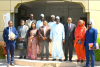
The Chadian government is exploring a partnership with India to bolster its digital economy. Discussions focused on this potential collaboration took place Friday between Chad’s Minister of Communications, Digital Economy, and Digitalization, Boukar Michel, and India’s Deputy Minister of Foreign Affairs for Central and East Africa, Sevela Naik Mude.
The talks centered on three key areas: training Chadian engineers in artificial intelligence (AI), supporting the National School of Information and Communication Technologies (ENASTIC) with specialized training for students and faculty, and accelerating the digitization of postal services, including a proposed postal bank.
Chadian officials see India as a global leader in digital technology. India ranks 97th out of 193 countries on the UN’s e-Government Development Index (EGDI), with a score of 0.6678 out of 1, surpassing the global average of 0.6382. The International Telecommunication Union (ITU) also recognizes India for its cybersecurity expertise.
Chad hopes to leverage India’s experience to make digital technology a driver of socioeconomic development. In December 2024, the government launched the $122.3 million (76.45 billion CFA francs) World Bank-funded Digital Transformation Support Project (PATN). Chad’s current EGDI score of 0.1785 lags behind the Central African regional average (0.3354), the African continent (0.4247), and the global benchmark. The country’s cybersecurity classification is Tier 4 out of five.
Discussions between Chad and India are in their early stages, and no firm commitments have been made. However, both sides expressed interest in formalizing the partnership through a memorandum of understanding. No timeline has been announced.
By Isaac K. Kassouwi,
Editing by Sèna D. B. de Sodji

To democratize access to long-term investments for young South Africans, two tech entrepreneurs have launched a fintech solution.
Fynbos Money is a fintech solution designed to simplify and make long-term investing more attractive in South Africa. Launched in 2024 by Matthew de Haast and Adrian Hope-Bailie, the platform offers an intuitive web-based interface that eliminates financial jargon and advisor fees.
“The platform is designed to make investing easy to understand by distilling the basics of long term wealth building into a platform that does it all for you without charging a share of your investment as a fee,” explains Adrian Hope-Bailie. “Instead we are trying to disrupt the way financial service providers structure their fees by only charging a flat subscription fee.”
Fynbos Money offers a free emergency account with low-risk savings that deliver an “attractive” annual return, as well as a savings account that allows users to choose from five equity funds to maximize long-term investment growth, all without capital gains tax. Unlike traditional platforms that charge fees based on the amount invested, Fynbos Money operates on a two-tier model: a free “Roots” plan and a paid “Protea” plan.
The “Roots” plan provides access to both types of accounts without requiring a subscription, enabling users to start investing with no upfront costs. The “Protea” plan, on the other hand, is a fixed monthly subscription that unlocks additional features, such as family accounts and dedicated savings options.
“We started with a friends and family pilot in October and have been growing steadily from there. We’re just over 2,000 users now and are seeing great growth week-on-week,” adds Adrian Hope-Bailie.
By Adoni Conrad Quenum,
Editing by Feriol Bewa

The country is steadily moving toward a cashless economy. In recent months, authorities have approved the interoperability of bank cards, followed by that of point-of-sale terminals.
Sierra Leone launched its instant payment service on Thursday, enabling real-time transfers between mobile operators, banks, and mobile money and bank accounts. Currently, seven banks and two mobile money service providers are connected to the system, with full integration deadline set for April 1st for all players.
"Today I have a system that is connected to the banks directly, with interoperability, I am going to shut that system down, that is one more cost removed. When our cost of business is reduced that means we can be able to translate it and give the customer a better service," explained Martison Obeng-Agyei, Managing Director of Afrimoney Sierra Leone (Africell).
David Mansaray, CEO of Orange Money Sierra Leone (Orange), believes the initiative will facilitate access to loans and, in the long run, streamline banking operations and business transactions.
This initiative aligns with the Bank of Sierra Leone’s (BSL) vision to modernize the country’s payment system and build a cashless economy. Following the launch of the national payment switch in April 2023, the central bank successively implemented interoperability for bank cards and then for point-of-sale terminals. The next phase will focus on opening an international payment gateway, allowing Sierra Leonean-issued payment cards to be used abroad.
As of December 31, 2023, Sierra Leone had 8.2 million mobile money accounts, including 1.7 million active accounts, according to central bank data. The country also recorded 22.3 million bank accounts, although the number of individuals holding these accounts was not specified. In 2022, the BSL estimated that 29% of the adult population had an account with a financial institution or a mobile money service provider.
By Isaac K. Kassouwi,
Editing by Sèna D. B. de Sodji