

-
PeerPesa, founded in 2020, uses Celo blockchain and stablecoins (cUSD, CELO) to enable cross-border money transfers across Africa.
-
The platform relies on a peer-to-peer liquidity model with local traders to convert stablecoins into national currencies.
-
PeerPesa targets faster, cheaper, mobile-based transfers to improve financial inclusion for unbanked populations.
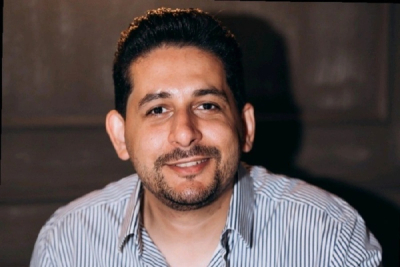
Mwambutsa Edgar, a Kampala-based technology entrepreneur and co-founder of PeerPesa, serves as the company’s chief executive. PeerPesa operates as a cross-border payment and money transfer platform that enables users to send funds to mobile wallets and bank accounts by relying on blockchain infrastructure.
PeerPesa, founded in 2020, positions itself as a P2P remittance and payment service dedicated to African markets. The company aims to connect Africa to international corridors by offering faster and low-cost transfers. It promotes financial inclusion by giving remote users access to DeFi-based tools outside traditional banking networks.
The platform seeks to remove common barriers in international transfers, such as high fees, long delays and complex banking routes. It uses stablecoins backed by strong currencies to provide predictable and lower-cost transfers completed via mobile phones.
PeerPesa uses the Celo blockchain and stablecoins like cUSD, along with the CELO token, to facilitate fund transfers to several African countries. The company executes transactions through a peer-to-peer model built on local traders who guarantee liquidity between crypto assets and national currencies.
Recipients can obtain funds directly in a bank account or mobile-money service, aligning with entrenched African practices such as M-Pesa. The use of blockchain ensures transaction traceability, while smart contracts reduce reliance on financial intermediaries.
Before PeerPesa, Mwambutsa co-founded Coinpesa in 2016, a digital-assets platform focused on expanding cryptocurrency access. The company states that it wants to broaden the use of these financial tools to support global financial inclusion.
Mwambutsa graduated from Makerere University in 2006 with a bachelor’s degree in quantitative economics. He later obtained an MBA in 2019 from the Edinburgh Business School at Heriot-Watt University in Scotland. He began his professional career in 2006 at Uganda’s National Social Security Fund, where he served as a relationship officer.
This article was initially published in French by Melchior Koba
Adapted in English by Ange Jason Quenum