

-
Benin launched consultations to draft a national digital strategy covering the period through 2031.
-
Authorities prioritized nationwide internet coverage, e-government expansion, and artificial intelligence development.
-
The strategy builds on reforms since 2016 that expanded fiber infrastructure and digital public services.
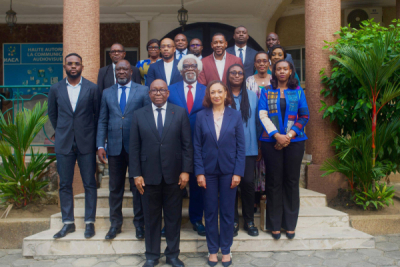
Benin launched a policy design process to develop its Digital Strategy through 2031. Key public and private sector stakeholders met in Cotonou on February 5, and Friday, February 6, during a strategic workshop that formally initiated work on the medium-term digital policy roadmap.
Participants focused discussions on several priorities. Stakeholders examined the expansion of internet coverage across the entire territory. Participants also assessed public service modernization through e-services and reviewed the deployment of emerging technologies, including artificial intelligence, in high-potential sectors. In addition, participants analyzed the alignment between local digital skills and labor market needs, as well as financing mechanisms required to implement the future strategy.
Authorities anchored the new roadmap in reforms launched since 2016. These reforms enabled the deployment of more than 3,000 kilometers of fiber-optic infrastructure. The reforms also improved nationwide connectivity, established the National Register of Natural Persons, and launched more than 250 digital public services. These advances positioned Benin among Africa’s top performers in the 2025 GovTech Maturity Index, alongside Algeria, South Africa, and Nigeria.
Despite this progress, authorities still face several challenges. Gaps in internet access persist in some areas. Limited adoption of digital services by parts of the population remains a constraint. The economy also requires deeper integration of artificial intelligence technologies. Through the forthcoming strategy, authorities aim to consolidate reforms, accelerate digital inclusion, and turn the digital sector into a sustainable engine of economic growth and structural transformation by 2031.
This article was initially published in French by Samira Njoya
Adapted in English by Ange J.A de BERRY QUENUM