
-
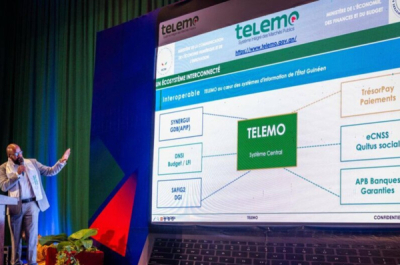
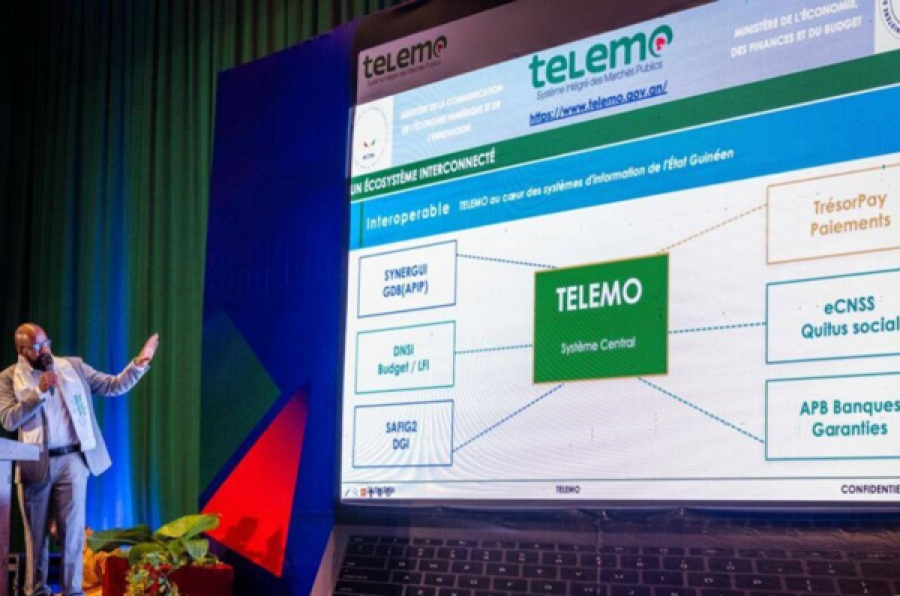
Guinea launched the TELEMO digital platform on May 22 in Conakry to fully digitize public procurement procedures.
-
Authorities developed the platform in partnership with Rwanda to improve transparency, reduce administrative delays and modernize public spending management.
-
Public procurement represents between 11% and 15% of Guinea’s GDP, according to official figures, making the sector a major driver of the national economy.
Guinea officially launched the TELEMO platform in Conakry on Friday, May 22, as the government accelerated efforts to digitize public procurement procedures and modernize public administration.
Authorities developed the digital platform through cooperation with Rwanda. The government aims to modernize public procurement management, strengthen transparency and reduce administrative processing times.
“TELEMO’s vision is to establish a single, reliable and secure national system for managing public procurement. The system tracks every action and records every decision, which enables full transparency. We also target efficiency and inclusion because the platform remains open to all companies, both domestic and international,” TELEMO project manager Mouslihou Diallo said.
The platform now allows authorities to manage the entire public procurement cycle digitally, from tender planning to contract awards.
In addition, the system centralizes tender publication, bid submission and evaluation, procedural monitoring and secure data archiving. The project also seeks to improve small and medium-sized enterprises’ access to public contracts through an online platform.
Meanwhile, the launch forms part of a broader strategy to modernize Guinea’s public finances and digitize government administration.
According to official figures, public procurement accounts for between 11% and 15% of Guinea’s gross domestic product, which makes the sector a major lever of the national economy.
At the regional level, the World Bank estimates that public procurement represents around 11.5% of GDP across West African countries, with governments in the sub-region spending roughly $80 billion annually on goods, services and infrastructure works.
For Guinea, the reform extends beyond administrative modernization.
Authorities expect the digitization of public procurement to improve the efficiency of public spending, strengthen the country’s business climate and increase local companies’ participation in government contracts.
This article was initially published in French by Samira Njoya
Adapted in English by Ange J.A de Berry Quenum