




He is a computer scientist and entrepreneur driven by a passion for leveraging technology to develop innovative solutions. He has already founded two companies—one specializing in finance and the other in healthcare.
Jessé Liula Schiceya (photo) is a serial entrepreneur from Namibia and the founder of Nikkle, a company specializing in financial management services for small and medium-sized enterprises (SMEs).
Launched in 2021, Nikkle offers a comprehensive financial management platform with a wide range of features. It helps businesses streamline accounting, manage human resources, optimize client relations, and coordinate projects. The platform empowers business leaders by providing tools to create invoices, draft quotes, manage recurring expenses, and automatically generate financial reports for tax filings. Today, Nikkle serves over 10,000 clients across six Southern African countries.
Schiceya is also a co-founder of Patient Care, a startup focused on improving the accessibility, quality, and affordability of healthcare in Africa. Additionally, he sits on the board of the Global Africa Leadership Council, an organization dedicated to promoting development financing, investment, and economic growth.
Schiceya earned a degree in computer science from the London Business School in 2014 but began his career earlier, in 2011, as an assistant at Shoprite, a leading retail company in Africa. By 2020, he had risen to the position of Head of IT, Digital, and Data Protection at GFA Consulting Group, an international consultancy.
His entrepreneurial talent gained widespread recognition in 2022. Schiceya was awarded the Most Promising Entrepreneur in Southern Africa by AfricArena and won the Startup Namibia Slingshot Pitch competition organized by Startup Namibia.
Melchior Koba

Africa is the continent with the most expensive mobile internet in the world, according to the International Telecommunication Union (ITU). On average, African populations spend 4.9% of their monthly gross national income (GNI) per capita to access a standard monthly internet plan, compared to the global average of just 1.3%.
In 2023, mobile internet costs in West Africa were most affordable in Nigeria, Ghana, and Côte d’Ivoire, according to data from the International Telecommunication Union (ITU), the UN’s specialized agency for information and communication technologies.
In Nigeria, accessing the cheapest mobile broadband plan offering at least 2GB of data per month using 3G technology required 1.61% of the monthly gross national income (GNI) per capita. In Ghana and Côte d’Ivoire, the cost was 1.94% and 2%, respectively, of the monthly GNI per capita. The ITU considers internet affordable when its cost is equal to or less than 2% of monthly GNI per capita. In West Africa, only Nigeria, Ghana, and Côte d’Ivoire met this benchmark in 2023. Across Africa, the average stood at 4.9% of monthly GNI per capita. Senegal (2.47%) and Mauritania (3.01%) were below this average but still above the affordability threshold.
In contrast, Guinea-Bissau, Burkina Faso, and The Gambia had the highest mobile internet costs in the region. Residents of these countries had to spend 9.79%, 9.81%, and 11% of their monthly GNI per capita, respectively, to access the same type of mobile broadband plan.
Factors Behind High Costs
Various factors contribute to the high cost of internet in these countries. According to the State of Broadband 2024: Leveraging AI for Universal Connectivity report published in June 2024 by the Broadband Commission, lack of affordability remains a significant barrier to internet access, especially in low-income economies. The report adds that compared to prices in high-income economies, the cost of mobile broadband services is 5.5 times less affordable in lower-middle-income countries and over 20 times less affordable in low-income countries.
The State of Mobile Internet Connectivity 2024 report from the Global System for Mobile Communications Association (GSMA) notes that Sub-Saharan Africa has the highest coverage gap globally, at 13%. This is largely due to the lack of telecommunications infrastructure, which forces some markets to impose high tariffs to make the most of limited resources. "Fixed broadband networks are very expensive to deploy, maintain, and upgrade, especially considering geography and the vast areas that need coverage," the ITU highlighted.
Adoni Conrad Quenum

Digital transformation is a key priority for the Beninese government. For instance, the administration plans to allocate a budget of 16.4 billion CFA francs to digital projects in 2025.
Benin's government plans to connect an additional 18 municipalities to fiber-optic networks by mid-2025, as part of its broader goal to expand high-speed internet access to all 77 municipalities nationwide. The announcement was made by Digital Economy and Digitalization Minister Aurélie Adam Soulé Zoumarou during a November 21 television program.
The deployment of fiber optics in these new municipalities will strengthen the national backbone, which currently links 50 municipalities via approximately 2,550 kilometers of fiber. The government aims to extend this network to a total of 3,300 kilometers. Additionally, nine municipalities will be connected through alternative technologies.
These efforts are part of a larger project to deploy high-speed and ultra-high-speed internet across Benin. This initiative, with an estimated cost of 207 billion CFA francs ($330.63 million), is a cornerstone of the government's 2021-2026 Action Plan. The government aims to position Benin as "West Africa's digital service platform, accelerating growth and fostering social inclusion."
Improving Coverage and Adoption
The project has the potential to significantly enhance telecommunications coverage, particularly internet access, nationwide. The government claims 4G network coverage already reaches approximately 90% of the population, a figure supported by the International Telecommunication Union's (ITU) ICT DataHub. ITU also reports that 2G and 3G networks cover 98% and 90% of the population, respectively, while 5G services are in the early stages of commercialization.
In June 2024, the Regulatory Authority for Electronic Communications and Postal Services (ARCEP) reported 11.06 million mobile internet subscribers and 20,000 fixed internet users. With a population estimated at around 13.7 million (World Bank, 2023), mobile telephony subscriptions stand at 17.8 million, while fixed-line telephony subscriptions are limited to 1,363. However, ITU data indicates internet and mobile penetration rates of 33.8% and 53.9%, respectively, as of the end of 2023.
Isaac K. Kassouwi
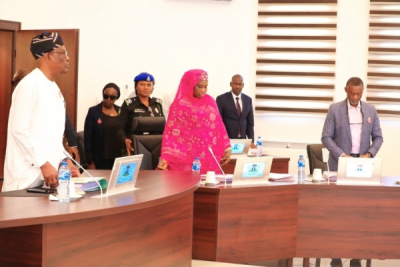
Nigerian states are ramping up initiatives to accelerate their digital transformation in line with the federal government's objectives. This effort spans all sectors of the economy, including education.
In Nigeria, the Federal Capital Territory (FCT) plans to distribute over 1,000 laptops to its secondary schools. Valued at approximately 990 million naira (around $589,000), the acquisition was approved by the FCT Executive Council during a meeting on Monday, November 25.
According to Danlami Hayyo, the FCT Secretary for Education, the laptops will come preloaded with educational content and learning materials focused on vocational skills.
“FCT schools will now transform into the digital education system, we will now move from normal teaching and learning classroom to media education system of learning,” said Chidi Amadi, Chief of Staff to the FCT Minister.
The laptop acquisition is part of a broader strategy to digitize the education system and improve teaching quality in the FCT. The Executive Council recently approved a contract for procuring examination materials. Earlier, in September, the FCT launched a program to train 3,000 primary school teachers in digital teaching methods.
The United Nations Educational, Scientific, and Cultural Organization (UNESCO) highlights two key benefits of digital technology in education. “First, it can improve instruction by addressing quality gaps, increasing available time and opportunities to practise, and personalizing instruction. Second, it can engage learners by varying how content is represented, stimulating interaction and prompting collaboration,” according to the 2023 Global Education Monitoring Report.
Isaac K. Kassouwi

Balancing professional and parental responsibilities has led many families to entrust their children to daycare centers, nurseries, or nannies. In Mali, a tech entrepreneur has introduced a tailored solution to address this challenge.
MaNounou is a digital platform developed by Malian startup La Classe de Bintou. Designed for parents, it connects them with qualified nannies for young children in their area. Founded by Bintou Doumbia and based in Bamako, the start-up addresses a growing need for reliable childcare solutions in Mali.
“The platform also enables daycare centers, preschools, and other childcare professionals to offer their services to parents in need. MaNounou provides unemployed young women with degrees the chance to train in early childhood care and apply their skills in a professional environment,” explains the startup.
The platform operates through a mobile app. After downloading the app, users create an account to access a range of services. These include viewing detailed nanny profiles—complete with experience, qualifications, schedules, and parent reviews—and using an integrated messaging system for secure, direct communication. Parents can also filter searches by specific criteria to find the ideal nanny for their needs.
To ensure the safety and quality of its services, MaNounou rigorously verifies all profiles on its platform. Hiring a nanny through MaNounou is formalized with contracts available for secure online signing, offering protection for both parties throughout the agreement period.
In 2024, MaNounou won the Malian stage of the Orange Social Entrepreneur Prize in Africa and the Middle East (POESAM), earning a prize of 5 million CFA francs (approximately $7,973) and a ticket to the international round of the POESAM competition.
Adoni Conrad Quenum

Guinea, confronted with the need for administrative modernization, is turning to digital solutions to streamline its processes. This initiative represents a significant step forward in public resource management, prioritizing innovation and international cooperation.
Guinea is looking to Rwanda as a model for its first-ever digital public procurement system. A strategic agreement was signed on Wednesday between the Guinean government and the Rwanda Cooperation Initiative (RCI).
“We have proven expertise in digitizing public procurement, particularly in public financial management, and it is this experience we aim to share with Guinea. We signed this contract to formalize our commitment and support the country in establishing its digital system,” said Patricie Uwase, Director-General of the Rwanda Cooperation Initiative.
This agreement builds on a collaboration that began in 2023 between RCI and Guinea as part of the E-Procurement project. Championed by the transitional president, Mamady Doumbouya, the project seeks to enhance transparency, improve administrative efficiency, and optimize public resource management. It is also a critical tool in the fight against corruption—a persistent issue in Guinea’s public procurement sector, frequently criticized for its lack of transparency and questionable practices.
The new digital system aims to simplify and tighten control over procurement processes, ensuring greater traceability of transactions. Additionally, the digitization of public procurement is expected to reduce both delays and associated costs while boosting the confidence of foreign investors drawn to transparent and modern administrative practices.
By leveraging Rwanda’s recognized expertise, Guinea hopes to lay the groundwork for effective and transparent governance. If successful, this initiative could redefine public procurement standards in West Africa, positioning Guinea as a model for digital innovation and anti-corruption efforts. The government is targeting swift implementation, aiming for full digitalization of all public procurement plans by January 1.
Samira Njoya

The London Internet Exchange (LINX) will launch LINX Accra, a new interconnection platform at PAIX Data Centres, in early Q1 2025.
This expansion responds to rising demand in Ghana’s networking community and will improve local and international internet traffic through faster, more reliable, and cost-effective connections.
LINX Accra will reduce latency and boost connectivity for businesses and consumers. The platform supports local ISPs while positioning Accra as a key internet gateway for West Africa.

She believes technology can significantly empower children and young people, helping them reach their full potential. To achieve this goal, she develops programs designed to train them in a variety of fields.
Nancy Sumari (photo) is a Tanzanian entrepreneur dedicated to advancing education and technological innovation. She is the founder of Jenga Hub, an educational center that leverages technology to make learning more interactive, inclusive, and creative.
Established in 2016, Jenga Hub provides children and young people with a space to develop digital skills and explore creativity through technology. Participants engage in creating art, animations, simulations, websites, robotics projects, musical compositions, and multimedia presentations.
Jenga Hub is part of a global network spanning 44 countries, connecting children and educators committed to equipping future generations with technology-driven skills. Currently, over 12,000 students are involved in STEM (science, technology, engineering, and mathematics) clubs across 50 schools, with more than 500 teachers trained through the initiative.
Before founding Jenga Hub, Sumari established the Neghesti Sumari Foundation in 2013, which focuses on community transformation through education, technology, and agriculture.
A graduate of the University of Dar es Salaam, Sumari earned a bachelor’s degree in commerce, management, and marketing in 2014. She later completed a master’s degree in economic and international development at University College London (UCL) in 2022.
Her professional journey began in 2006 at Sahara Communication Ltd, where she served as a programming officer. In 2009, she became the managing director of Bongo5 Media Group, a Tanzanian media company. More recently, in 2021, she joined Designathon Works, an organization dedicated to children’s education, as director of strategic partnerships.
Melchior Koba

Africa's cultural heritage, encompassing ancient artifacts, oral traditions, music, and manuscripts, forms the backbone of its identity. With thousands of artifacts at risk due to environmental degradation, conflict, and illegal looting, digitization safeguards against loss.
Telecommunications tower company IHS Nigeria announced, on November 21, a partnership with the National Commission for Museums and Monuments (NCMM) and the Federal Ministry of Art, Culture, and the Creative Economy (FMACCE) to digitize Nigeria’s cultural heritage. This collaboration seeks to preserve and showcase the nation’s historical artifacts and cultural monuments through a cutting-edge digital museum platform.
Speaking on the initiative, Mohamad Darwish, CEO of IHS Nigeria, emphasized the company’s dedication to cultural preservation and community development. “As a company deeply rooted in Nigeria, we recognize the importance of preserving, protecting, and promoting our cultural heritage,” he said.
The digital museum, the first major project under Nigeria’s Digital Culture Initiative, aims to provide greater public access to the country’s rich cultural heritage. Leveraging advanced technology, the initiative will ensure that Nigeria’s historical and artistic treasures are preserved and made accessible to a global audience.
The initiative aligns with President Bola Ahmed Tinubu's Renewed Hope program, which aims to promote Nigeria's rich cultural heritage, diverse tourism landscape, and creative potential to catalyze economic growth in these key sectors. The program aims to strengthen communities, create sustainable jobs, and reinforce Nigeria's position on the world stage.
According to Olugbile Holloway, Director General of the National Commission on Museums and Monuments, “We believe that to keep ahead of current trends and attract a younger demographic, it is imperative to create and make available to the public a digital experience of our rich cultural heritage. The digital museum will be an invaluable resource for researchers, students, and the general public, both in Nigeria and worldwide, and will play a crucial role in the preservation of our national heritage.”
Hikmatu Bilali

A serial entrepreneur, he excels in designing, developing, and deploying technology platforms. He has already launched three startups in Kenya.
Emmanuel Miriti is a Kenyan computer scientist and tech entrepreneur. He is the co-founder and CEO of Route.Money, a company specializing in marketing and payment technologies for businesses.
Founded in 2022, Route.Money’s mission is to deliver a cashback app tailored to restaurants, allowing users to save money while enjoying delicious meals. The platform helps restaurants boost sales by rewarding customers who participate in the cashback program.
Route.Money also fosters connections between restaurants and passionate content creators, including storytellers and food enthusiasts. These creators highlight their favorite establishments, enhancing visibility and engagement. Today, the platform boasts over 30 merchants, more than 100 creators, and a community exceeding 20,000 members.
“The Route revolution isn’t just reshaping how we dine it’s redefining how businesses, creators, and communities interact, making every engagement meaningful,” says Miriti.
Before launching Route.Money, Emmanuel Miriti co-founded ITA TEKSI in 2011, a mobile app for booking taxis, serving as its CEO until 2014. He then co-founded Cloud9xp, an online marketplace and booking service for leisure experiences, where he led as CEO until 2018.
A graduate of the University of Nairobi, Miriti earned a bachelor’s degree in computer science in 2015. Between 2018 and 2020, he served as the managing director of Threethousnd, a digital agency specializing in online marketing, website development, and software solutions.
With a track record of innovation and leadership, Miriti continues to shape Kenya’s tech landscape, driving solutions that bridge technology, business, and community engagement.
Melchior Koba
More...

Nigerian states are ramping up initiatives to accelerate their digital transformation in line with the federal government's objectives. Earlier this month, Anambra State approved a project to deploy a data management platform.
The Bauchi State government in Nigeria has partnered with Galaxy Backbone (GBB), a state-owned company specializing in ICT solutions and services, to strengthen digital infrastructure and expand the use of information and communication technologies (ICT) across the state. The two parties signed a memorandum of understanding (MoU) last week to formalize this collaboration.
The partnership aims to enhance connectivity, build local ICT skills, provide specialized consulting services, and offer hosted ICT solutions. These initiatives are part of broader efforts to modernize governance and improve the delivery of public services in Bauchi State. To achieve these goals, GBB will leverage its data centers located in Abuja and Kano.
This agreement aligns with Governor Bala Abdulkadir Mohammed's vision to transform Bauchi State into "a hub of digital innovation, ensuring efficient governance and improved service delivery for our citizens." As part of this vision, the state is working on digitizing its education system through the implementation of a Teacher Management Information System (TMIS) and an Education Management Information System.
The collaboration is expected "to lead to an enhancement of Bauchi State’s ICT Infrastructure, through GBB’s resources and expertise, deepen training and consultancy services, while, enhancing economic growth to attract investments, create jobs, and drive economic opportunities through improved digital connectivity and service delivery within the state," GBB said in a statement.
This initiative also contributes to Nigeria's broader digital transformation, as Africa’s digital economy is projected to be worth at least $712 billion by 2050, accounting for 8.5% of the continent’s GDP, according to a joint study by the International Finance Corporation (IFC) and Google. In Nigeria, the ICT sector contributed 19.78% to real GDP in the second quarter of 2024, according to data from the National Bureau of Statistics (NBS).
Isaac K. Kassouwi
Startups operating in the e-commerce sector are thriving across Africa. In Guinea, a tech entrepreneur has discovered an innovative way to sell second-hand goods through his online marketplace.
Seconde Main 224 is a digital solution developed by a Guinean startup that connects people looking to sell used items with those interested in buying them. Founded by Youssouf Sylla and based in Conakry, the platform enables users to trade pre-owned goods conveniently.
"We help our users earn money from their old items while allowing others with limited budgets to afford what they need at a lower cost," explains the startup.
Unlike many modern platforms, Seconde Main 224 does not have a mobile application. Users access the service through a web browser, where they can create an account and browse a wide range of items listed by other users. The marketplace features categories such as clothing, shoes, electronics, books, furniture, and more.
Sellers upload pictures of their products directly to the platform, providing details such as the item’s name, price, photo, and a brief description. They also select the appropriate category before listing the product. A registered account is mandatory for listing or selling items.
The company’s business model hinges on its premium service, “booster mon bien” (Boost My Item),which generates revenue by increasing the visibility of selected products. "This service displays boosted items to a larger audience of potential buyers based on their usage history and interests," the startup notes.
In 2024, Seconde Main 224 gained recognition by finishing second in the Orange Social Venture Prize for Africa and the Middle East. Representing Guinea in the final round, the startup was awarded 60 million Guinean francs (approximately $6,962.75).
Adoni Conrad Quenum

A serial entrepreneur, he is convinced of the potential of artificial intelligence and technology to simplify business management on a global scale. He is also committed to promoting leadership and innovation among African youth.
Fred Swaniker (photo) is a Ghanaian entrepreneur and a recognized expert in leadership development. He is the founder and CEO of Sand Technologies, a company specializing in data and artificial intelligence (AI) solutions.
Founded in 2023, Sand Technologies aims to help businesses harness the potential of AI and data to address commercial challenges and achieve meaningful results. The company offers innovative technological solutions across various sectors, including telecommunications, utilities, entertainment, manufacturing, healthcare, and insurance.
Operating in the Americas, France, and Africa, Sand Technologies provides services in enterprise AI, data science, software engineering, and the Internet of Things (IoT). It collaborates with both startups and large organizations, solidifying its role as a key player in the global tech landscape.
In parallel, Fred Swaniker is the founder of the African Leadership Group, an organization established in 2004 with the ambition of transforming Africa by training three million entrepreneurial leaders by 2035. This initiative aims to build a connected, talented, and influential community of African leaders through training centers, networking, and talent development programs.
In 2001, Swaniker co-founded Synexa Life Sciences, a South Africa-based provider of biomarker and bioanalytical services, where he served as Chief Operating Officer. He also founded Global Leadership Adventures (GLA) in 2004, an organization offering educational programs abroad for high school students, serving as its CEO until 2006.
Fred Swaniker holds a bachelor’s degree in economics from Macalester College, USA, earned in 1999, and an MBA from Stanford University Graduate School of Business, completed in 2004. His professional career began in 1999 at McKinsey & Company, where he worked as a business analyst.
Recognized for his influence, Swaniker was named one of Africa's 10 most influential young men by Forbes in 2011. In 2019, Time magazine included him in its list of the 100 most influential people in the world.
Melchior Koba

A trained computer scientist with 25 years of experience in the technology and telecommunications sectors, she is also a dedicated entrepreneur. Her mission is to promote and facilitate the commercialization of exclusively African products.
Nafy Diagne (photo) is a Senegalese telecommunications expert and tech entrepreneur who has dedicated her career to advancing African innovation. She is the founder of Awalebiz, an e-commerce platform designed to showcase African creativity and craftsmanship.
Founded in 2014, Awalebiz provides an online marketplace where designers, clothing manufacturers, artists, artisans, and local entrepreneurs can sell their products. This multi-vendor platform allows each producer to manage their own store, offering African talent a global audience. Through Awalebiz, the company aims to elevate local artisans and celebrate the richness of African culture.
“We launched the platform five years ago and validated the concept of a cross-border continental platform that unites sellers from different African countries, enabling them to market their products locally, regionally, and internationally,” explains Diagne.
Since 2023, Nafy Diagne has served as the Head of Strategy and Transformation at Free Sénégal, a telecommunications company. She joined the firm in 2019 as Director of Digital Transformation and Customer Experience.
A graduate of Centrale Lille Institut in France, where she earned a master’s degree in Computer Science and Industrial Technology in 1999, Diagne began her career at Capgemini as an integration team leader. In 2008, she joined Ericsson as a solutions architect, later holding roles such as customer project manager for system integration, program director, project lead for sub-Saharan Africa, and Chief Information Officer for the region.
In 2016, she became Telecommunications Market Director for Atos in the India, Middle East, and Africa region. Between 2020 and 2023, she served as Chief Digital Officer at Axian Group, a pan-African conglomerate specializing in telecommunications, finance, energy, real estate, and open innovation.
Awalebiz won the top prize at the Linguère Digital Challenge in 2017. In both 2022 and 2023, Diagne was named among the Top 100 Global Chief Digital Officers, a prestigious ranking by HP Enterprise and HotTopics.
Melchior Koba