



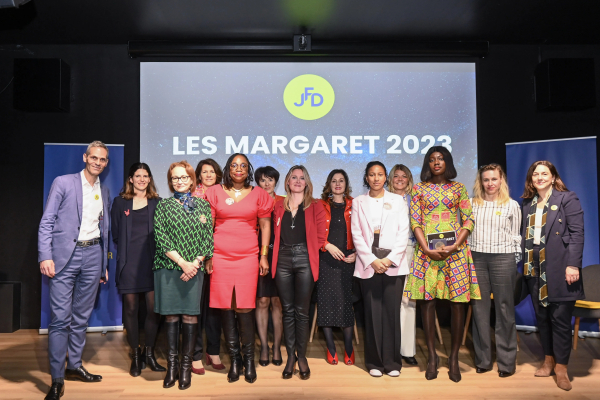
They are among the 18 finalists nominated out of hundreds of applications received by JFD, a network of women entrepreneurs. They were nominated in the Entrepreneur, Intrapreneur, and Junior categories in Africa.
On Monday, April 17, the women entrepreneurs’ network Journée de la Femme Digitale (JFD) unveiled the list of the winners of the 2023 edition of its “Les Margaret Awards.”
Of the 18 finalists in the three categories of the competition, three were African entrepreneurs. In the “Margaret Entrepreneur Europe & Africa” category, Cameroonian entrepreneur Nelly Chatué-Diop (co-founder & CEO of EJARA) was one of the two winners.
Ghanaian-born Rhoda Oduro, the Business Development & Operations Manager of Developers in Vogue, was one of the two winners in the “ Margaret Intrapreneur Europe & Africa” category.
In the Junior category, Melissa Djouka, another 17-year-old Cameroonian, won the award for the African region, thanks to her project Immo'Sure, a platform aimed at securing the real estate market and protecting its actors in Africa.
For one year, the winners will receive unique and exclusive opportunities to support and accelerate the development of their projects. They will be mentored by companies like La Poste, Google, Axa France, and Universal Music France. They will also receive support from some of the world's largest accelerators, such as the Transatlantic Fund of the French Chamber of Commerce and Industry in Canada.
For the African winners, CIO Mag, Affectio Mutandi, and Gabon 24 will offer targeted training worth €20,000. Africa Mutandi will also allow them access to its investors' network.
"For more than 10 years, we have been working with our partners to accelerate the growth of the Margarets and to reveal the economic and social potential of these future leaders to as many people as possible. This year, we are taking a new step by opening up completely new financing and outreach opportunities for them, " said Delphine Remy-Boutang, founder of JFD & Business Angel.
As a reminder, the Margaret Award was launched in 2013 by JFD. Each year, it rewards African and European women entrepreneurs and intrapreneurs whose projects and innovations address major societal challenges. The award honors Margaret Hamilton, former director of the software engineering department at the MIT Instrumentation Laboratory that developed the embedded software for NASA's Apollo space program.
Samira Njoya

The ecommerce industry has recorded an impressive boom in Africa, in recent years. Digital tools have become undisputable tools in the industry, leading even informal companies to enter the bandwagon. Tech entrepreneurs are offering suitable solutions to help them.
Cartona is a B2B platform developed by an Egyptian startup. It allows retail merchants to source from FMCG companies and wholesalers at competitive rates right from a mobile platform. Since its launch in 2020, it has raised over $16 million to support its growth.
“The trade market is completely inefficient and it’s not good for the supplier or the manufacturers, and it’s definitely not good for retailers.[...] So we came up with the idea of Cartona, which is basically a fully light-asset model that connects manufacturers and wholesalers to retailers,” said its CEO, Mahmoud Talaat, in 2021.
To access the list of suppliers and opportunities on the platform, users need to download its mobile app -available for Android and iOS devices- to create their accounts.
Cartona charges commissions on orders. It also collects fees from wholesalers to list their ads and provide information on retailer behavior, competition, and market information that would help wholesalers adjust their sales policies.
It also offers access to credit for its more than 60,000 retailers and over 1,500 wholesalers. It has signed partnerships with more than 250 companies to establish a one-stop shop that thousands of retailers can use daily to buy small or large quantities of products. However, expansion is not yet on its agenda.
Adoni Conrad Quenum

He runs an edtech company that focuses on teaching children coding. He is also behind several technology solutions that are revolutionizing the education sector in Africa.
Matthew Henshall (photo) is a South African serial entrepreneur who graduated from the University of Cape Town with a bachelor's in electromechanical engineering. He is the founder and CEO of educational technology startup Code4Kids, founded in 2018.
His startup enables teachers to teach children aged between 8 and 15 coding, robotics, and computer science using real-world tools and content. It also provides continuous training to keep teachers always abreast with new technologies. The startup was recently selected to participate in the Mastercard Foundation EdTech Fellowship program. The program, initiated in partnership with edtech accelerators and innovation centers, aims to support fast-growing and impactful edtech companies.
Matthew Henshall is also the founder and CEO of Lessonspace, a Twilio-like collaborative space launched in 2018. It allows teachers to deliver live, online lessons individually or in groups.
He also founded romm.sh, the video-conferencing software that powers Lessonspace, and Code4Kids. In 2016, he launched SkillUp Tutors, an online platform that connects students and tutors.
The serial entrepreneur started his professional career, in 2014, as a systems engineer for the nutritional company Vital Health Foods. Between 2015 and 2016, he worked for energy supplier BattCo Energy Storage Systems as an electromechanical engineer.
Melchior Koba
The labor market is undergoing a profound transformation as digital technologies keep growing. While many jobs are disappearing, more are being created and their requirements are changing. In that context, the government needs to urgently take appropriate measures to anticipate and find solutions to help fill the vacancies that are opening.
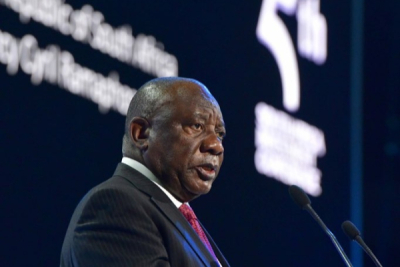
South Africa will soon launch a nationwide training program to equip the unemployed youth with digital skills, President Cyril Ramaphosa (photo) recently announced. In his weekly newsletter published on Sunday, April 17, he explained that ZAR800 million ($43.6 million) will be invested to fund this new youth initiative led by the National Skills Fund.
According to the World Economic Forum (WEF), “South Africa is projected to see the highest jobless rate globally. As the most industrialized nation on the continent, unemployment is estimated to hit 35.6% in 2023.”
This is due to a number of causes. They include low economic growth that has led to fewer job opportunities, a mismatch between education and skills that makes it difficult for many people to find work, and structural problems like unequal access to opportunities. There are also concentrated ownership, a limited domestic market, and a rigid labor market with labor laws, regulations, and collective bargaining agreements that limit access to employment, particularly in the SME segment.
As the digital economy creates new high-potential occupations, the government sees the retraining or reorientation of some South Africans as a way to respond to the new labor market realities brought about by the accelerating digital transformation. The project to equip the unemployed with digital skills is one of the many development initiatives taken by the government, since 2020, to prepare the country for the fourth industrial revolution.
Over the past three years, many international and local companies specializing in digital services or broadband connectivity have increased their investments in South Africa. New companies have expressed interest in the market. The various investments are expected to create thousands of specialized jobs, which the South African government wants to prepare the local workforce for.
Muriel Edjo

He is a remarkable entrepreneur who has contributed significantly to the development of technology in Africa. His vision and leadership have enabled his fintech startup, InTouch SA, to become one of the leaders in the African mobile payment industry.
Omar Cissé (photo), the founder and CEO of fintech startup InTouch SA, is a Senegalese entrepreneur renowned in the African fintech ecosystem. A graduate of the Polytechnic Institute of Dakar where he earned a degree in computer science and design engineering, he also holds a master’s in business administration from the Higher Institute of Management (still in Senegal).
In 2014, he founded InTouch SA, a financial technology company that provides a mobile payment platform for financial transactions in Africa. The company provides innovative technology that allows it to manage all of its customers' transactional needs in a secure, efficient, and simple manner.
His financial technology company enables its customers to collect and settle payments in real-time across the continent through an application that offers features such as payment acceptance, customer retention, airtime top-up, billing and dunning, expense management, deferred payment, money transfer, and intercontinental settlement.
InTouch SA has become one of the leaders in the mobile payment industry in Africa with partners such as Total, Orange Money Senegal, and IFAD (International Fund for Agriculture Development). To date, it has a network of 2,000 corporate customers and 50,000 TouchPoints (distribution points) in 14 countries. Far from sitting on its laurels, it is taking action to reinforce that network. The company has also built and regularly updates a catalog of over 400 digital services. It plans to establish its subsidiaries in 25 African countries and have a network of partners in every country on the continent by 2025.
Its founder and CEO, Omar Cissé, is also the administrator and co-promoter of Teranga Capital, a Dakar-based investment firm that invests in SMEs. In 2001, he co-founded 2SI, an IT engineering services provider. He managed the company from 2005 to 2010 before launching CTIC Dakar, Dakar’s first incubator.
Melchior Koba

The fintech startup, founded in 2016, accessed venture financing in 2020. Since then, it has become somehow unstoppable despite the coronavirus pandemic and the small size of its domestic market.
Lupiya is a fintech solution developed by a Zambian startup. It allows easy access to microloans for individuals and businesses. The startup behind it was founded, in 2016, by Evelyn Chilomo Kaingu and Muchu Kaingu. Based in Lusaka, its goal is to expand access to credit and reduce the cost of borrowing for all Zambians.
“We aim to level the playing field for all Zambians by offering low-cost lending products and attainable options for security. We distance ourselves from traditional lenders by being accessible to marginalized and unbanked communities and offering lending practices that are transparent and fair,” the startup says on its web platform.
Currently, it has no mobile app so everything happens on its web platform. On the platform, a user can fill out a form stating the desired loan amount or loan type and the estimated repayment duration to check eligibility. Once the startup replies, the user can then proceed with account creation, upload the required documents and apply for the loan.
Once the loan is processed, users are always notified. The startup charges up to 59 percent interest on its loans.
According to its CEO, Evelyn Kaingu, it started with just $500. That amount was lent to “a small community”, from there on, things moved with the startup acquiring its first hundred clients, and then more.
Since its launch, It has raised over $2.5 million to accelerate its growth in Zambia. It has helped smallholder farmers boost yields, improve soil health and reduce greenhouse gas emissions. These efforts caught the attention of Kamala Harris, Vice President of the United States of America, during her visit to Zambia in late March 2023.
Adoni Conrad Quenum

In recent months, South Africa’s digital sector has attracted several important investment pledges. Earlier, Amazon committed to investing in tech services in the country. It is now followed by pan-African digital solutions Cassava Technologies.
Last Friday, Pan-African tech company Cassava Technologies announced its commitment to investing ZAR4.5 billion ($250 million) in its South African operations over the next two years. The initiative was unveiled at the fifth South Africa Investment Conference (SAIC) held the previous day in Johannesburg.
The investment will be made through Cassava Technologies' business units, namely Liquid Intelligent Technologies, Africa Data Centres, and Distributed Power Africa. It is aimed at supporting the expansion of Liquid Intelligent Technologies' fiber network, the expansion of Africa Data Centre’s capacity and footprint, the enhancement of cloud and cybersecurity capacity, and the deployment of clean, renewable energy by Distributed Power Africa in South Africa.
“South Africa accounts for the largest proportion of Africa’s industrial GDP with a sophisticated and growing ICT sector. The country’s unique combination of highly developed first-world economic infrastructure and a stable macro-economic environment affords businesses like ours a conducive investment environment in which we can partner with government to drive economic development and create jobs,” said Hardy Pemhiwa, President & Group CEO of Cassava Technologies.
The initiative is in line with the ambitions of South African President, Cyril Ramaphosa, to stimulate the country's economy and attract ZAR2 trillion in investments over the next five years to achieve development objectives.
Cassava Technologies has eight subsidiaries, namely Liquid Intelligent Technologies, Liquid Dataport, Liquid C2, Africa Data Centres, Distributed Power Africa, Sasai Fintech, Telrad, and Vaya Technologies.
Samira Njoya
By reinforcing its cooperation with Estonia, which is the e-governance leader in Europe, Angola wants to become a digital government offering user-friendly and secure ICT solutions that make life easier for its citizens.
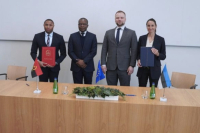
Last Friday, Angolan State Minister Adão de Almeida and Estonian IT Minister Kristjan Järvan signed a Memorandum of Understanding to strengthen cooperation between the two countries. The MoU, signed in Tallinn, Estonia, covers cooperation in the areas of digital governance, modernization of the administration, and capacity building.
“Estonia is one of the most advanced and innovative digital societies in the world, but reaching it is the fruit of decades of work. We are happy to share the accumulated knowledge, skills, and experience because digital capabilities are key to the social and economic development of any country,” said Kristjan Järvan.
Indeed, for several years, Estonia has been a model in the use of digital technology to simplify the lives of citizens, improve political efficiency and boost the economy. The country has succeeded in going digital. In 2020, the country was ranked 3rd in the E-Government Development Index unveiled by the United Nations. Last year, it was the 8th country with one of the best e-government development indexes in the world.
This status of e-government champion has earned the country invitations from many African countries -including Benin, the Democratic Republic of Congo, and Mauritius- for digital cooperation.
The Memorandum of Understanding it signed with Angola thus allows the latter to capitalize on its digitization experience. The agreement will also enable Estonian companies to enter the Angolan market and more African countries.
Samira Njoya

With its flexible rent payment solution, the proptech has revolutionized the sector in main Nigerian cities.
Rent Small Small is a proptech solution developed by a Nigerian startup founded in 2017. It gives landlords the possibility to delegate the management of their properties to real estate professionals. It also brings trust to the real estate industry by allowing renters to rent from reliable agencies only. Since its creation, it has raised over $3 million to accelerate its growth in Nigeria.
To access its services, a user needs to create an account on its web or mobile -Android and iOS- platforms. They can then browse the listed properties, including single-family houses, apartments, or even studios of different standings. After browsing the various listings, the user can schedule visits to choose one property over another. Visit scheduling is possible only for certified accounts, i.e accounts with a premium subscription.
Rent Small Small also saves legal, brokerage, and agency fees for users. It also offers flexible rent payment ways for users.
The proptech led by Tunde Balogun claims to have provided more than 25,000 monthly stays in 18 different locations and saved tenants more than NGN1.4 billion ($3 million) in legal fees. In 2021, the startup was selected to participate in the Techstars Toronto Accelerator program.
“We have stayed away from institutional investment for the past 3 years because we wanted to figure out a model that truly solves the rental problems and one that we can scale. Now that we have good traction and our solution is loved by both Landlords and Tenants, we need strong mentorship for our next growth phase. We believe that participating in the Techstars Toronto Accelerator at this time is right for us. Its network, skills, and resources are what we will be able to leverage as we expand,” Tunde Balogun said at the time.
Adoni Conrad Quenum
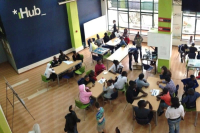
iHub provides a collaborative workspace, training programs, events, and networking opportunities to entrepreneurs. With its vibrant community and start-up support programs, it plays a key role in the development of technology innovation in Africa.
iHub is a technology innovation center based in Nairobi, Kenya. Founded in 2010 by Ushahidi founders Erik Hersman, Juliana Rotich, and David Kobia, it is a co-working space, startup community, and innovation platform that brings together entrepreneurs, software developers, innovators, and investors interested in developing tech solutions to address key issues in Africa.
With a global network spanning over 40 countries, it is one of the largest technology innovation communities in Africa. The center offers a collaborative work environment, training programs, events, and networking opportunities to its community members. Through its programs, start-ups can benefit from financial support, mentoring, and access to industry experts.
In February 2023, the Innovation Center partnered with the Mastercard Foundation to support education startups. The partnership led to the establishment of a three-year acceleration program targeting 36 edtech startups, of which 12 have already been selected for the first cohort.
The programs and events it organized include the Women in Business program that promotes women's entrepreneurship in the information and communication technology (ICT) sector in Kenya by helping targetted individuals create sustainable businesses. The program also provides training, coaching, funding, and networking opportunities to help beneficiaries overcome entrepreneurial barriers and strengthen their role in Africa's technology innovation.
In addition to Women in Business, iHub also implemented the Maarifa Kona Innovation Labs program from 2017 to 2019. This program supported agritech entrepreneurs from six African countries (Kenya, Uganda, Madagascar, Tanzania, Ethiopia, and Rwanda) in developing their innovative ideas and boosting their entrepreneurial capacities in agriculture.
iHub has a remarkable impact on the African innovation ecosystem and has inspired more than 450 start-ups over the years. It has several international partners such as Facebook, Google, Oracle, Safaricom, the World Bank, and Seacom.
Melchior Koba
More...

With its training programs, workspace, and communities, ActivSpaces helps African innovators launch and grow their promising businesses.
ActivSpaces -African Center for Technology Innovation and Ventures- is an open collaboration space, technology innovation center, and startup incubator for entrepreneurs and innovators in Africa.
The Douala-based center was founded, in 2010, by Rebecca Enonchong, Valery Colong, Bill Zimmerman, and Tse Fua. Apart from that base, it also has offices in Buea and Bangangté.
It acts as a unique community that seeks to foster the growth of innovative tech startups in Cameroon. To achieve its goals, it initiated an incubation program that offers office space, Internet connection, personalized coaching, and expert support to entrepreneurs.
Its workspaces allow members access to a variety of equipment such as 3D printing, laser engraving, Arduino and Raspberry Pi systems, solar kits, etc. to bring their projects to fruition. By joining ActivSpaces' incubation program, startups benefit from the community's expertise and personalized coaching that helps them overcome the obstacles they may face while starting and growing their businesses.
The center is open to everyone. “We don’t want to be just for the elite and those that will succeed. Rather than [having] the best of the best coming to us, we wanted to reach out to the people who don’t even know they’re entrepreneurs,” said Rebecca Enonchong.
In 10 years of operation, the incubator has implemented more than 25 projects, supported more than 150 entrepreneurs, and created 10 communities. As a non-profit organization, it is supported by partners committed to entrepreneurship and innovation in Africa. These include AfriLabs, Afric'Innov, CIPMEN, Investment Partners, GIZ, Cusco International, Venture Capital for Africa, Orange, and Business France.
Melchior Koba

Despite being the continent that possibly contributes the least to carbon emissions, Africa is paying a heavy price. In that context, local entrepreneurs are devising solutions to help mitigate and address global warming.
Plstka is a digital solution developed by an Egyptian start-up. It allows users to exchange their solid waste and used oil with coupons entitling them to discounts on services.
The solution has a mobile app -available for Android and iOS devices. Through the app, users can register for Plstka services. Once they accumulate waste, users have to segregate them into the three available categories, namely plastic, aluminum, and electronic waste. Then they can notify the startup and get feedback on when the Plstka teams will collect the waste. After collection, users receive coupon codes that give them discounts in restaurants, bars, etc.
According to its CEO Ahmed Elnagar, the solution aims to collect some 1,500 tons of waste, helping more than 100,000 households monetize their waste while preserving the environment. In 2021, the startup behind the solution raised an undisclosed volume of funding to cover the whole of Egypt.
Adoni Conrad Quenum

The coalition was founded in December 2022 to bridge the digital divide in Africa. To achieve this ambition, it focuses on universal acceptance.
The Coalition for Digital Africa announced, Thursday (April 13), the launch of a new initiative to strengthen Internet infrastructure across the continent. The initiative aims to prepare the websites, applications, and email systems of African higher education institutions to support all domain names and email addresses.
It is supported by the Internet Corporation for Assigned Names and Numbers (ICANN) and conducted in collaboration with the Association of African Universities (AAU). In its framework, the Coalition for Digital Africa will educate African higher education institutions on Universal Acceptance (UA), one of the foundations of a multilingual Internet that allows users worldwide to access websites in local languages.
It will provide training to help the targeted institutions configure their websites, applications, and email systems to make them AU-compliant and integrate AU concepts into their curricula.
The project is part of a series of initiatives announced by the Coalition for Digital Africa when it was founded, in December 2022, to ensure the safe and stable growth of the Internet in Africa and close the gap between communities and economies.
The initiative highlights an important step to building more useful and empowering websites and digital apps in Africa: expanding the choice of languages and scripts.
“This work truly lays the foundation for a more inclusive Internet. [...] By enabling the use of local languages and scripts, users here in Africa and around the world will be able to more readily access important content online – from within the continent and beyond – for academic purposes,” said Professor Olusola Bandele Oyewole, Secretary General of the AAU.
Let’s note that in Africa, some 1,000 to 2,500 languages are spoken, according to the Education for All Global Monitoring 2005 report published by the United Nations Educational, Scientific and Cultural Organization (UNESCO).

Digitalization has proven to have positive impacts on socioeconomic development. In that regard, most African countries, Congo included, have placed digitization on the list of their key priorities.
This year, Congo will invest CFAF13.995 billion ($23.3 million) to strengthen residents’ access to the Internet and digital services. During the first meeting of the steering committee of the Digital Acceleration Project (PATN), several projects were discussed.
At the meeting, Minister of Digital Economy Leon Juste Ibombo explained that the activities to be carried out this year will help, among other things, create "a secure government intranet, a single portal for e-government services to citizens and many information systems to better manage the services offered to citizens.”
Of the CFAF13.995 billion budget set for 2023, CFAF5.720 billion will be used, among other things, to develop broadband connectivity, particularly in the universities Marien Ngouabi and Denis Sassou Nguesso in addition to some administrative buildings and isolated areas such as the department of Likouala. CFAF3.737 billion will fund the improvement of digital services offered to the population, civil registration services notably.
This session of the PATN steering committee marks the effective start of the 5-year project, backed to the tune of $100 million by the World Bank, €25 million ($27.5 million) by the European Investment Bank (EIB) and a €15 million ($16.5 million) loan from the European Union.
By trying to make the Internet and digital services accessible to everyone, Congo bets on the digital economy as a driver of socioeconomic growth, productivity, and good governance.
Samira Njoya