


Nigeria : PocketApp gets approval in principle for mobile money license

In Nigeria, a new trend is developing with the booming e-commerce market. That trend in social commerce encourages social interactions and good bargains.
Fintech platform PocketApp recently secured an Approval in Principle (AIP) from the Central Bank of Nigeria (CBN) to become a mobile money operator. The approval was announced, Monday (June 27), by Piggytech Global Limited. It is the first step before the obtention of a mobile money license.
“For the last 18 months, we have been focused on building the core infrastructure that will enable us to secure social commerce and payments at scale. We believe that social commerce will thrive better in a more trusted environment. So we added escrow to our payment infrastructure, protecting buyers and sellers and many other features, ensuring a smooth shopping experience on the app,” said PocketApp COO Patricia Adoga.
PocketApp was launched, in 2021, as Abeg App. It was then specialized in money transfer but, over the months, it shifted to connect buyers and sellers in Nigeria. To date, it has two million users. It intends to add new features and target the whole African market.
Thanks to the mobile money license, PocketApp will be able to create and manage mobile money portfolios, issue electronic money, and payment cards as well as every other service authorized by the CBN.
According to Research&Markets, Nigeria’s social commerce industry would grow by 82.4% annually to reach US$1,003.8 million by end 2022 and US$23,817.4 million by 2028.
Muriel Edjo
Roger Nengwe Ntafam: May the unbanked become banked
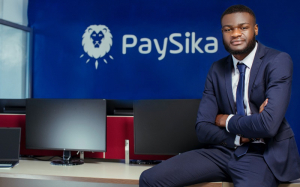
He plans to become the banker of the African unbanked population. To achieve his ambition, his idea is to combine mobile money services, which are popular on the continent, with international financial tools.
Roger Nengwe Ntafam (photo) is a Cameroonian artificial intelligence engineer and the co-founder of fintech PaySika. The startup he co-founded in February 2020, with Stezen Bisselou facilitates money transfers through a mobile app that can be loaded with mobile money. It also allows users to manage their money in real-time from Facebook Messenger, WhatsApp, and Telegram and offers requesters free virtual cards for international or online transactions.
The entrepreneur explains that he got the inspiration for this payment solution from the tribulations his father, a shop owner, used to go through for stocktaking, accounting, and petty cash management. The main thing that pushed him to create the solution was the challenge he faced while trying to pay his tuition fees during his engineering studies at Paul Sabatier University, Toulouse, France. At the time, he did not have a bank account, and paying those tuition fees was a real challenge for him.
The startup claims over 20,000 users were registered on its waitlist during the pre-launch phase. In October 2021, it raised US$300,000 from British, French, and Nigerian investors to launch activities (in the first quarter of 2022). Its current target markets are Cameroon and Gabon.
Roger's professional and entrepreneurial journey began after a brief stint in the oil industry, working as an assistant operator for Exxon Mobile.
Before starting the PaySika adventure, Roger Nengwe Ntafam sharpened his entrepreneurial skills with MyMoney, which he co-founded in 2019. The startup created a chatbot that allows users to easily manage their finances.
But even before that venture, he developed many skills, in financial technology notably, with several research centers such as the North-East Midi-Pyrénées Multidisciplinary Research Laboratory (LRPmip) and the Artificial Intelligence Center in Prague, Czech Republic.
He also participated in various entrepreneurial support and tech innovation programs such as the first cohort of French Tech Tremplin, a high-impact entrepreneurial coaching program, in 2019. In March 2022, he joined the Founder Institute's Entrepreneur in Residence program.
Melchior Koba
Nigeria: GetEquity connects startups with investors

African startups are increasingly relying on venture capital funding to support their growth but, that funding mechanism is still not accessible to every one of them. So, a Nigerian startup has come up with a solution that helps the ecosystem and also gets people to invest.
GetEquity is a digital platform developed by a Nigerian fintech startup founded in 2020. The platform connects African startups with investors to help fund their growth. According to co-founder and CEO Dike Jude, the startup challenges the status quo of startup financing and venture capital by democratizing access to startup financing, “thereby expanding the pie for previously underfunded, and underserved startups.”
It also allows users, be they individuals or institutional investors to invest in the local startups they like. To fulfill its mission, the platform has a mobile app available on AppStore and Playstore. Users can create their accounts through the app or web platform by filling in personal information and loading their wallets. Once those steps are completed, they can buy shares (as low as US$10) in growing African startups or sell previously owned shares.
GetEquity claims to have attracted more than 6,000 investors on the continent.
Adoni Conrad Quenum
Ghana: Motito gives the chance to buy items and pay later

Africa’s fintech sector is currently attracting huge amounts of investment capital. The reason for that interest is the continent’s poor financial inclusion and the startups offering interesting alternatives.
Motito is a Ghanaian fintech startup founded in 2020 by Tobi Martins. The startup allows its users to buy products and pay in installments from partner brands.
In its own words, it gives users “the chance to buy items for personal and business needs without breaking the bank.” It also promises partner brands “to turn window shoppers into actual paying customers” and increase their order value by 40%.
The startup has a mobile app (available on Android and Ios phones). The app, called Motito PayLater allows users to access all the services the startup offers. To access those services, users must first register and activate their accounts by filling in the information required at each stage of the process.
Once they activate their accounts, they can visit the online stores of partner brands, make purchases and select the payment plans most suited to their income flows. The maximum installment period is three months, however.
With Africa’s credit access challenges, solutions like Motito’s are needed to combat financial exclusion. In June 2022, the fintech startup was selected with eight others to participate in the second edition of the Norrsken Impact Accelerator.
Adoni Conrad Quenum
Africa: Edem Adjamagbo digitizes cash

After his university studies in France, he returned to his native country, Togo, to contribute his experience to local development. The fintech solutions he developed are used by notable companies and acclaimed by many.
Edem Adjamagbo (photo) is a Togolese entrepreneur and business intelligence engineer. He is also the founder and CEO of fintech company Semoa Group. His company develops innovative payment solutions tailored to the African socio-economic context. The aim is to “digitize cash and boost e-commerce in a continent [Ed.note: Africa] undergoing digital transformation” as well as “position Semoa Group’s solutions as alternatives to bank cards and mobile money.”
Semoa Group started as a simple online service that allowed electronic money transfers to African countries. Over the years, it diversified its activities and even allows users to pay various bills. It now has payment terminals -called Semoa Kiosque- where users can pay their bills. Users can simply load cash at the terminals, pay their bills, and even collect changes, therefore avoiding the usually long queue at the various payment counters.
The solutions developed by the fintech company are already used by notable groups and startups including Gozem, Ecobank, BMCE Capital, Moov Africa, Cofina, and RMO Job Center. The founder started his entrepreneurial career in 2012, while he was still at university. That year, he founded AEConsult, a digital consulting firm. Two years later, when he graduated from Polytech Nantes (France), he founded Semoa Group while at the same time offering his business intelligence consulting services to software development company Sopra Steria.
Back in Africa, in 2016, he became a project manager for Congo Digital academy GENC (Grande école du numérique du Congo). Since 2018, he has been combining his entrepreneurial occupations with contractual lecturing duties at the University of Lome, Togo. The tech entrepreneur has received several awards and recognitions, including the Diaspora Entrepreneur Award and the African Fintech of the Year (awarded by France Finance Innovation) in 2018.
Melchior Koba
Nigeria: Sproutly allows teenagers to open savings accounts

Budget management can quickly become cumbersome for teenagers living far from their parents. In Nigeria, entrepreneurs have addressed this issue by setting up an interesting alternative.
Sproutly is a Nigerian fintech startup that allows teenagers to open savings accounts with attached debit cards and parental supervision. The startup, founded in 2021, by Pierre Nwoke (photo), Maxwell Agu, and Prince Akachi, is based in the US and Nigeria.
Pierre Nwoke came up with Sproutly’s idea after he went through hell and high water to open a bank account for his underage brother who was preparing for university admission. “...it was one hell of a journey to open a savings account for him being underaged. We ended up doing so after one year and using one of my banks and my debit card for the entire period he was trying to open an account,” he explains.
Pierre discovered that it was a challenge faced by many. So, he decided to find a solution for it. “We took about three months researching pre-existing viable options and alternatives people use currently, like digital banks offering something close to what we wanted to build, and it was an amazing, eye-opening journey,” he told Disrupt Africa.
The startup has an Android and iOS app where teenagers can carry out their banking activities. It also has a mobile app to allow parents to monitor their kids’ spending and take preventive actions if needed. Sproutly also offers financial education and access to child-friendly loans and quick bailouts. The start-up is also developing additional services like school workshops to train children on financial management.
Adoni Conrad Quenum
Nigeria: Indicina raises US$3 mln to facilitate access to credit

The fintech’s mission statement is “to enable lenders to unlock economic inclusion for African businesses and consumers.” With the funds secured, it plans to further the mission.
Nigerian fintech startup Indicina announced, Monday (June 6), the successful completion of a US$3 million seed funding round to accelerate African expansion. Led by tech investment firm Target Global, the operation had Greycroft and RV Ventures as participating investors.
According to Indicina co-founder Yvonne Johnson (photo), the Nigerian fintech wants “lenders to be better informed about the decisions around credit so they can go to market faster with their digital products.”
“So we’ve never had a business model that included our balance sheet, which we’ve always worked with the lenders,” she told Techcrunch.
Indicina was founded in 2018 by Carlos del Carpio, Jacob Ayokunle, Yemi Ajao, Yvonne Johnson. Apart from Nigeria, it is also present in Kenya. It offers machine learning solutions that improve individuals' and businesses’ chances to get access to credit. As company insight platform Crunchbase puts it, it “provides analytics-driven credit decisions for lenders.”
The fintech claims more than 100 active clients (lenders), which it helped process over NGN3 billion (US$7.2 million) loans and disburse over NGN700 million. Since its launch in 2018, Indicina has raised some US$7.2 million to upgrade its technology and hire more talents.
Adoni Conrad Quenum
Nelly Chatue-Diop eases cryptocurrency investments in Africa with Ejara

Leveraging her professional experience, she created a secured and efficient platform that offers millions of Africans the possibility to invest in fractional shares and slivers of cryptocurrencies as well as get sound financial education.
Nelly Chatue-Diop (photo) is a Cameroonian tech entrepreneur specializing in the fintech sector. In 2020, she co-founded Ejara, a blockchain-powered mobile investment platform allowing users to buy slivers of high-priced cryptocurrencies and fractional shares. Thanks to the platform, users have access to financial education and can also save (starting from US$0.16 per deposit) through mobile money.
I created Ejara “to allow everyone to create, protect and increase their wealth and savings wherever they are in Africa,” Chatue-Diop explains. As a seasoned entrepreneur, she has much professional and entrepreneurship experience in the tech world. With an MSc in electronics, computer science, and telecommunications, she started her professional career, in 2004, as a software engineer for Accenture. In 2007 and 2008, she got an MBA in Corporate Finance from HEC Paris and an MBA in Finance from the London Business School. Concurrently, she made a brief stint as a summer associate at Credit Suisse before joining Revenue Management Solutions (RMS), a multinational offering data-driven solutions to help restaurants improve decision-making.
From 2011 to 2015, she climbed up the corporate ladder of grocery store chain Franprix before joining Darty as a pricing director. While still with Franprix, she co-founded Booper, a company offering price optimization solutions. In 2018, months after leaving Darty, she also co-founded Nzinghaa Lab, specializing in Artificial intelligence and blockchain. At the same time, she was still the chief data officer of Betclic Group, which she left in 2020. The same year when she left Betclic Group, she was appointed chairperson of the board of Giotto.ai, a “one-stop AI Cloud platform encompassing cutting-edge integrative tools and powerful libraries.” In 2021, she co-founded Sewelo Africa Digital Training, an online learning platform.
Nelly’s professional career earned her several awards. In 2013, she won the award of the most-committed woman in the French retail industry. She was named one of the Top 10 Chief Data Professionals in Europe and in 2020, she made it to CDO Magazine's Global Data Power Women list and the Global Top 100 Data Visionaries.
Melchior Koba
Africa: Dare Okoudjou interconnects mobile payment solutions

With years of combined professional and entrepreneurship experience in Africa’s fintech sector, Dare is committed to facilitating cross-border transactions.
Beninese fintech entrepreneur Dare Okoudjou (photo) is the founder and CEO of MFS Africa, Africa’s largest digital payment gateway. Through his startup, he interconnects close to 320 million mobile money wallets offering service providers the opportunity to reach more people with their products targeting unbanked and underbanked populations.
Dare founded MFS Africa in 2009 to help Africans make payments worldwide. The startup’s main goal is to make transactions as easy as ABC. Its mission is to develop solutions so that the only thing needed for payment anywhere in the world will be a mobile money wallet.
With an MSc in Telecom Engineering from Telecom Paris (in 1999), MFS Africa’s founder started his professional career as a telecom consultant for PricewaterhouseCoopers (PwC) in 1999. Some years later, he joined MTN Group first as a Senior Manager before his promotion to the position of Head of Mobile Money international development. In 2017, his startup was recognized by the U.S business magazine as one of the ten most innovative companies in the world. In 2020, the global community of impact entrepreneurs Endeavour selected him as one of the most impactful entrepreneurs in the world. The following year, he took part in MIT’s Foundry Fellowship along with 12 African innovators.
A few days ago, Dare Okoudjou made it to the list of Rof World’s 100 global tech changemakers. His ambition is to make borders meaningless in payment transactions. For that purpose, last year, he secured US$100 million during a Series C debt and equity financing round co-led by AfricInvest FIVE and several investors.
Melchior Koba
Perseus Mlambo decentralizes payment card issuance with Union54
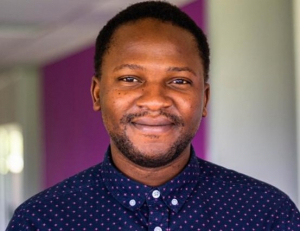
At the end of his University studies, Perseus Mlambo wanted to pursue a legal career but his entrepreneurial drive took the lead, taking him to the African fintech segment. With Union54, he intends to shorten settlement time and decentralize payment card issuance.
Zambian tech entrepreneur Perseus Mlambo (photo) is the co-founder of Union54, a fintech startup decentralizing the issuance of virtual and physical payment cards. Thanks to its API, the startup allows firms to issue branded payment cards without third-party processors or banks.
He launched Union54 in 2021, with Alessandra Martini, to help SMEs easily offer added-value services (loyalty, discount, or credit cards) to their clients. He wants to save them from the painstaking processes he went through to issue debit cards for Zazu, the startup he founded in 2015 to help clients better manage their income.
Perseus is an LLB graduate from Nottingham Law School. He is also a former Ethics Office Support Staff at the United Nations High Commissioner for Refugees. He estimates that it is important to create an alternative debit card issuing network to reduce Africa’s dependence on foreign solutions. With the foreign solutions currently used, Africa can be affected by political decisions and sanctions, he believes.
In April 2022, his startup raised US$12 million in a seed extension round led by Tiger Global. Participating investors included Vibe VC, Earl Grey Capital, and Packy McCormick’s Not Boring Capital. With the proceeds, Union54 will expand its coverage. Currently, the startup claims more than 500,000 virtual cards issued and hours saved for its users.
Melchior Koba