

-
Off-grid solar supplied 561 million people in 2023 and accounted for 55% of new electricity connections in Sub-Saharan Africa between 2020 and 2022.
-
Private operators like Sun King, Bboxx and Orange Energies expanded rapidly and secured major financing agreements in 2023–2024.
-
The sector needs $3.6 billion per year until 2030, including 40% in subsidies, to electrify the poorest and most remote households.
The lack of adequate grid infrastructure has turned Africa into a testbed for agile energy solutions. The rapid adoption of solar technologies is transforming millions of lives, although persistent constraints continue to slow progress.
Africa remains the global epicenter of energy poverty. The International Energy Agency (IEA) reports that most of the 730 million people without electricity live in Sub-Saharan Africa. The African Development Bank (AfDB) estimates that over 600 million Africans, nearly half the continent, still lack access to electricity.
AfDB states: “For these people, daily life is a struggle illuminated by the dim glow of kerosene lamps or the intermittent hum of diesel generators. These stopgap solutions are costly and polluting, perpetuating cycles of poverty and environmental degradation.” AfDB warns that the number of people without electricity will remain largely unchanged without “bold and immediate measures.”
Given the implications for productivity, education and health, the IEA considers decentralized solar a strategic priority for the continent.
The World Bank and AfDB partnered under the Mission 300 initiative to connect 300 million Africans by 2030. The World Bank states that off-grid solar represents the quickest and most cost-effective option to electrify 41% of the global population still without power by 2030.
Off-grid solar systems served 561 million people in 2023. Between 2020 and 2022, they provided 55% of new connections in Sub-Saharan Africa. The World Bank adds that off-grid solar remains cheaper and faster to deploy than grid or mini-grid connections for current levels of demand.
Growing network challenges—low coverage, limited capacity, aging infrastructure and expensive tariffs—continue to push households and firms toward off-grid solutions. The World Bank’s Off-Grid Solar Market Trends Report 2024 estimates that generators supply nearly 9% of the region’s electricity and cost households $28–50 billion per year in fuel, plus an additional 10–20% in maintenance.
Solar kits reduce energy costs, extend business hours, strengthen cold chains and boost small enterprise revenues. Electricity improves daily life by providing lighting, cooling, refrigeration, information access and nighttime security. Solar pumps help households adapt to drought and increase agricultural productivity, while refrigeration reduces post-harvest losses and preserves vaccines in health centers.
The Energy Sector Management Assistance Program (ESMAP) reports rapid growth in “productive uses” of off-grid systems across agro-processing, crafts and services.
ESMAP states: “Off-grid solar systems allow households, businesses and farmers to use electricity productively and generate income. Among 79,000 surveyed off-grid customers in 31 countries, 86% of solar pump users increased productivity and 60% expanded cultivated areas, resulting in higher incomes for 88% of them.” ESMAP adds that 88% of refrigerators served productive uses, and 81% of users reported improved quality of life. In 2023, more than 3 million people operated a business using home solar systems.
The Pay-as-you-go (PAYGo) model accelerated sector growth by allowing customers to pay for equipment in installments using mobile money, scratch cards, airtime credit or cash.
Private Sector Drives Expansion
Startups strengthened their position between 2018 and 2024, even as financing dropped from $194 million to $192 million in 2024 after peaking at $425 million in 2023.
Sun King became a leading operator and supplies solar energy to 30% of Kenyan households. The company signed a $156 million securitization deal in July 2024 with ABSA, Citi, Co-operative Bank of Kenya, KCB Bank and Stanbic Bank Kenya. This deal follows a $130 million 2023 transaction aimed at distributing 3.7 million solar products in Kenya.
Bboxx expanded significantly over the past five years. The acquisition of PEG in 2022 extended its footprint into Côte d’Ivoire, Ghana and Mali. The company now operates in about ten countries and supplies over 2.5 million people with solar products.
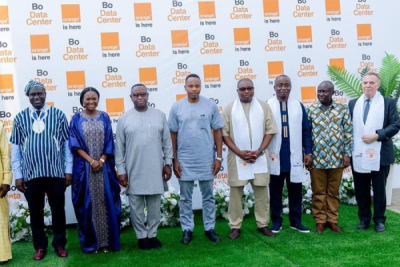
Telecom operator Orange also made off-grid energy a strategic priority. Through Orange Energies, the group connected over 600,000 households in 2024, giving nearly 4 million people access to electricity across 13 countries. The company developed the Orange Smart Energies IoT platform to support PAYGo and smart metering and now partners with vendors, utilities and mini-grid developers.
Orange Energies supplies solar panels, smart batteries, LED lamps, USB sockets and rural household appliances—including fans, freezers, TVs and radios—in partnership with Koolboks, Biolite, Sun King and Solar Run.
International institutions increasingly recognize Orange Energies’ expertise. In June 2024, the company won a €150,000 AFD tender to electrify more than 400 rural localities in Côte d’Ivoire under the EU-funded MAX project. In September 2024, the World Bank and GIZ awarded Orange Energies a $360,000 contract to equip 8,000 off-grid households in Liberia with autonomous solar solutions by June 2025.
Orange Energies also signed a public-private partnership in Guinea with the Rural Electrification Agency (AGER) and IPT PowerTech to build a mini-grid that will supply electricity to six localities.
Off-grid solar is no longer experimental. It has become an industrial, financial and social sector that electrifies communities, generates income and reshapes daily life. Yet several risks threaten long-term momentum.
Persistent Risks Threaten Scale
Market forces alone cannot electrify rural Africa. Reaching the poorest and most remote households requires public funding through subsidies, guarantees and concessional finance. The sector estimates that it needs $3.6 billion annually through 2030 to electrify those for whom off-grid solar is the lowest-cost solution. About 40% of this amount must come from targeted subsidies.
Extreme poverty limits the scale of PAYGo. Only a minority of rural households can afford monthly payments. Logistics challenges in remote or conflict-affected areas can raise final prices by 57%, pushing households back to candles, kerosene or shared generators. Only 22% of unelectrified households globally can afford PAYGo installments—a figure that drops to 16% in Sub-Saharan Africa.
Low household incomes directly weaken the financial health of solar companies. PAYGo repayment rates stagnate around 62%, and one in four customers faces payment difficulties. Most startups borrow in foreign currencies but collect revenue in local currencies, exposing them to FX risks.
Inflation and currency depreciation add further pressure. In Nigeria, the price of basic solar lanterns rose 91% to 300% in 2023 in local currency, erasing gains from lower global component prices.
Africa’s dependence on imports and the lack of local assembly also constrain scale. Without domestic assembly, reliable maintenance networks or affordable spare parts, systems break down frequently and leave households without electricity. Low-quality solar products—estimated at 70% of sales—undermine consumer trust. Shortages of skilled technicians in remote areas further hinder deployment.
Muriel Edjo