



Nigeria has launched the DeepTech_Ready Upskilling Program to train 20,000 young people in AI and Data Science, equipping them for high-demand tech roles, the Federal Ministry of Communications, Innovation, and Digital economy announced on January 31.
The initiative, led by the 3 Million Technical Talent (3MTT) program, Data Science Nigeria, and Google, is part of a N2.8 billion grant under Google’s $5.8 million investment in Africa’s digital transformation.
The six-month program combines self-paced learning, project-based training, and job readiness support to bridge Nigeria’s digital skills gap. This initiative strengthens the country’s tech workforce, attracts investment, and advances its role in AI innovation across Africa.
As industries worldwide embrace artificial intelligence (AI), automation, and advanced analytics, Africa is positioning itself at the forefront of this revolution. In the energy sector, digital technologies are becoming essential for optimizing production, reducing costs, and enhancing efficiency.
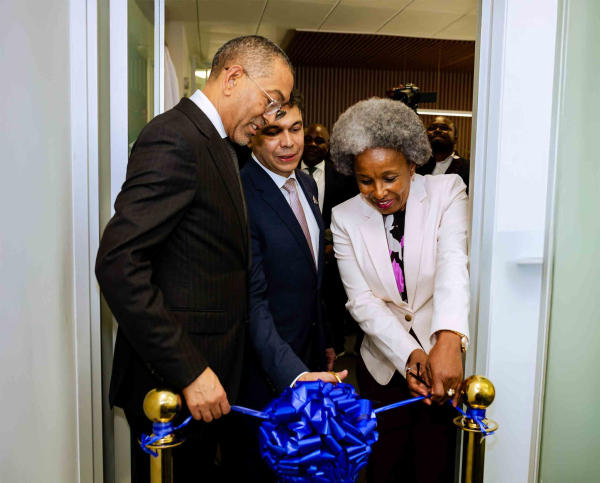
Global technology company SLB announced the launch of its Africa Performance Center in Luanda, Angola, on January 28. The event marks a major milestone in advancing digital transformation, artificial intelligence (AI), and energy sector innovation across Africa. The 3,200-square-foot facility will serve as a collaborative hub for industry stakeholders, offering cutting-edge solutions in oil and gas, new energy, and digital technologies.
Miguel Baptista, SLB’s Managing Director for Angola, Central, and East Africa highlighted the importance of the center saying: "With this Performance Center, we aim to work closely with customers, drawing on our global expertise, diverse technology portfolio, and digital workflows to provide localized solutions."
The Africa Performance Center will drive capacity building, skills development, and local talent empowerment, ensuring industry solutions are developed within Angola to foster sustainable economic growth. AI-powered digital workflows, advanced analytics, and automation will enhance efficiency, sustainability, and operational performance.
This initiative aligns with Angola’s broader vision for economic diversification and digital transformation. According to the World Economic Forum, digital transformation in the oil and gas sector could unlock approximately $1.6 trillion in value, optimizing energy production, reducing costs, and increasing efficiency.
SLB’s investment reinforces the role of AI-driven solutions in sustaining Angola’s oil output, improving productivity, and supporting economic stability. By equipping local professionals with in-demand digital skills, the center will create job opportunities and strengthen Africa’s position in the evolving global energy landscape.
Hikmatu Bilali

As a computer scientist and entrepreneur, Ousseynou Diop leverages innovation to advance education and entrepreneurship, driving Africa into the global digital economy.
Ousseynou Diop (photo) is a Senegalese software developer and tech entrepreneur. He is the founder and CEO of Xarala, a startup specializing in technology education.
The name Xarala, which means “technology” in Wolof, reflects the platform’s mission: to provide Africans with access to quality education to help them unlock their full potential. Founded in 2018, Xarala offers hands-on and accessible training in key digital fields, including software development, digital marketing, design, and data analysis.
The startup provides a mobile app for self-paced learning, along with personalized mentorship and certifications upon course completion. Xarala allows learners to study in their preferred language, making education more inclusive and accessible.
Alongside his work at Xarala, Ousseynou Diop serves as Software Technical Lead at ORYA TECHNOLOGIES, a financial services provider in Senegal. His tech journey began in 2016 as a freelance web developer. From 2017 to 2022, he was Vice President of the Programming Commission at Daara-IT, a Senegalese community of young tech enthusiasts.
Diop later joined OuiCarry, a logistics company, as a full-stack developer, before moving to Digital.in in 2020, where he worked on AI-driven recruitment solutions. From 2022 to 2023, he was a full-stack developer at Gemography, a platform connecting software engineers and data specialists with global tech companies.
By Melchior Koba,
Editing by Sèna D. B. de Sodji

He helps businesses develop innovative products by building a community of information and communication technology (ICT) experts.
Thierry Kientega (photo) is a telecommunications engineer and tech entrepreneur from Burkina Faso. He is the founder and CEO of OUIcoding, a consulting firm specializing in information technology.
Founded in 2018, OUIcoding specializes in digital transformation, offering custom development solutions, NoCode services, and data and artificial intelligence-based tools. The company focuses on process automation and rapid application development. It also identifies, vets, and connects coders, designers, and engineers from Africa and emerging markets with businesses across the continent.
The startup has built a community of talents, where members can train, learn, share knowledge, and innovate. Its ambition is to create an ecosystem conducive to innovation and collaboration. Today, this community includes over 360 experts and has supported more than 158 projects, involving 46 companies.
Thierry Kientega holds a telecommunications engineering degree obtained in 2008 from the École Supérieure d’Ingénieurs de Rennes in France. He also earned a PhD in telecommunications in 2011 from the École Nationale des Ponts et Chaussées in France.
His career began in 2007 at France Télécom (which became Orange in 2013) as a telecommunications engineer. In 2011, he joined the international consulting firm Leyton as a senior consultant, helping companies identify financial levers to accelerate growth and drive sustainable progress. In 2014, he became director of the commerce division at CFAO France, a company specializing in international trade.
By Melchior Koba,
Editing by Sèna D. B. de Sodji

Gabon is undergoing a significant digital transformation, embracing cutting-edge technology to modernize its public services and upgrade key urban infrastructure. This initiative aims to solidify its position as a leader in e-governance.
Gabon's Minister of Transport and Merchant Marine, Jonathan Ignoumba (photo, center), signed a memorandum of understanding on Wednesday with DSD, a company specializing in digitalization, according to government officials. The initiative aims to modernize transport documents, such as driver’s licenses and vehicle registration cards, while upgrading Libreville’s urban infrastructure with solutions like rotating parking systems and smart traffic lights.
Djemory Doumbouya, CEO of DSD, said his company, which is already active in Guinea, Uganda, and Liberia, will quickly mobilize resources to conduct feasibility studies. "Following this signing, we will develop a business plan, set an implementation timeline, and submit these elements to Gabonese authorities for approval before finalizing the contract," he explained.
The project aligns with Gabon Digital, a government initiative launched last November and overseen by a steering committee (Copil), focused on modernizing public services and streamlining administrative procedures. A digital platform will be deployed later this year to support these efforts, according to the committee.
If the implementation details are agreed upon, the project could significantly improve traffic management in Libreville, a city of nearly one million residents—about half of Gabon’s population. The capital faces growing congestion and stands to benefit from smart mobility solutions designed to reduce traffic jams, enhance road safety, and optimize urban space.
The digitalization of transport documents is also expected to bring multiple benefits, including fraud reduction, better data traceability, simplified administrative processes for citizens, and greater efficiency in managing public infrastructure.
By Samira Njoya,
Editing by Sèna D. B. de Sodji
Digital governance has been shown to improve transparency by cutting bureaucratic inefficiencies and improving public trust in government institutions.
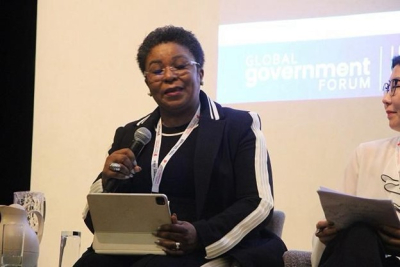
Nigeria has launched an AI-powered assistant designed to revolutionize public service delivery. Didi Esther Walson-Jack, head of the Federation's civil service, introduced the technology, Service-Wise GPT, at the Global Government Summit 2025, held Jan 21-22 in Singapore. The summit brings together senior public servants to discuss and address the challenges facing civil services globally.
During her presentation, Walson-Jack highlighted AI’s potential to drive national and global economic growth while advocating for responsible, ethical, and inclusive governance in harnessing AI.
Service-Wise GPT, currently in its Beta phase, is a user-centric AI tool designed to enhance efficiency in Nigeria’s Federal Civil Service. It provides instant access to Public Service Rules, Statutory Instruments, Regulations, Guidelines, and other essential governance materials, enabling civil servants to streamline operations.
The AI tool’s key functions also include automated policy drafting, real-time research assistance, and instant memo generation.
By reducing manual workload, the Nigerian government aims to enhance compliance, boost productivity, and cut operational costs. AI-driven automation has been shown to increase global productivity by up to 2% annually, according to a 2018 McKinsey Global Institute study. As Nigeria embraces AI-driven governance, Service-Wise GPT is expected to set a new standard for efficiency, transparency, and digital transformation in the public sector.
Hikmatu Bilali
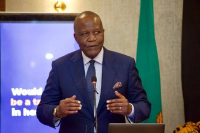
The digital transformation of healthcare is essential for development. The adoption of technology in health systems is poised to enhance medical access and streamline operations, especially in underserved African regions.
Zambia has launched a remote health diagnostics technology developed by Finnish company 73Health. Already operational in Finland, this AI-powered solution enables doctors to conduct medical examinations and diagnose patients remotely with high accuracy. The launch, announced on January 29, marks the start of 73Health Africa’s expansion, aiming to revolutionize healthcare accessibility across the continent.
Speaking at the launch, Felix Mutati, Minister of Technology and Science, highlighted the potential of digital innovation in healthcare. “Today, we stand at the forefront of a transformative era in healthcare, driven by the urgent need to address resource limitations and improve service delivery. Technology, particularly AI, is a powerful tool to overcome these challenges, enabling personalized care, reducing costs, and addressing the shortage of healthcare professionals,” he said.
The technology was introduced through a partnership between 73Health and Carepeak Specialist Clinic, establishing a new milestone for technology-driven healthcare in Zambia. At the core of this innovation is the eEva Kit, a remote diagnostics system that allows medical professionals to perform comprehensive check-ups, including ear examinations, heart and lung assessments, blood pressure monitoring, and temperature checks—without requiring a doctor’s physical presence. This is a game-changer for rural and underserved communities, where patients often face long travel distances and limited access to specialized care.
One of the most significant advantages of this AI-powered technology is its ability to connect Zambian patients with international medical experts. Through virtual consultations, specialists from India, Europe, and South Africa can assess patients remotely, particularly for pre-surgery evaluations and post-surgery follow-ups. This reduces costs and waiting times, offering Zambians access to world-class healthcare without the need for overseas travel.
According to the International Insulin Foundation’s report on Zambia’s health system, 99% of households in urban areas are within 5 kilometers of a healthcare facility, while in rural regions, only about 50% have the same level of proximity. The disparity in healthcare access between urban and rural areas in Zambia highlights the urgent need for innovative solutions like remote health diagnostics.
The introduction of 73Health’s remote diagnostics technology can help bridge this gap by enabling virtual consultations and remote medical examinations, reducing the need for long-distance travel and ensuring that even those in underserved areas receive quality healthcare.
Hikmatu Bilali

Despite growth, many Africans still face challenges in accessing digital financial tools. By collaborating, Network International and GIM-UEMOA can bridge gaps in financial access, offering secure and seamless digital payment solutions that cater to both banked and unbanked populations.
Network International, a payment solutions provider in the Middle East and Africa, has partnered with GIM-UEMOA, the regional payment scheme for the West African Economic and Monetary Union (WAEMU). The partnership, announced on January 28, aims to drive digital payment innovation and financial inclusion across the eight WAEMU member states. The two parties signed a memorandum of understanding (MoU) to that effect.
Dr. Reda Helal, Managing Director & Co-Head of Processing, Africa at Network International, described the partnership as a major milestone for Network International. "Together, we aim to harness our combined expertise to empower the UEMOA region with state-of-the-art payment solutions that drive economic inclusion and prosperity," he said.
Under the collaboration, both organizations will enhance the GIM-Pay framework, providing secure and seamless digital payment solutions that cater to the growing needs of businesses and consumers in the region. The initiative is expected to strengthen the value proposition for GIM-UEMOA’s member banks, equipping them with advanced payment technologies to better serve their customers and support economic growth.
GIM-UEMOA Managing Director Minayegnan Coulibaly emphasized the significance of the collaboration, stating, “This collaboration with Network International allows for the pooling of infrastructure and solutions to bring cutting-edge digital payment solutions to the West African banking sector."
In its State of Financial Inclusion in WAEMU (2021) report, the Central Bank of West African States (BCEAO) reported a financial inclusion rate of 67.2%, indicating that nearly 30% of the population remained unbanked. By introducing innovative digital payment solutions, this partnership will bridge this gap, providing more individuals with access to financial services.
The partnership reaffirms both organizations' commitment to innovation and collaboration in West Africa’s financial technology space, highlighting the role of strategic alliances in addressing the region’s evolving financial and economic needs.
Hikmatu Bilali

After studying in Europe, he returned to Algeria determined to use his skills to benefit his country. As an entrepreneur, he's leveraging technology to make healthcare more accessible.
Amine Babou (photo), an Algerian tech entrepreneur and business school graduate, is the co-founder and CEO of Beesiha, a digital health company.
Founded in 2019, Beesiha is an online medical appointment platform designed to improve healthcare access and simplify the patient experience in Tunisia. The service, available for free via a mobile app and website, helps patients find doctors and schedule consultations seamlessly. For physicians, Beesiha offers a synchronized online agenda, streamlining appointment management and reducing wait times.
"Beesiha addresses a challenge we all face—finding a doctor, locating their office, traveling for an appointment, returning for the consultation, and sometimes waiting for hours. These constraints can be solved through better organization. Our app is designed to simplify healthcare access," explained Hambli Charef, the startup’s public relations officer from 2020 to 2021.
Beyond healthcare, Babou expanded into sports marketing by co-founding DKS in 2022, an agency specializing in branding and communication for elite athletes.
A graduate of ESSEC Business School in France, where he studied entrepreneurship, finance, and economics, Babou began his career in 2014 as an analyst and surveyor at Junior ESSEC Conseil, a European junior enterprise. In 2015, he worked as a sales associate at Mercer Maurice Energy Solutions Limited in the UK. Between 2017 and 2019, he was a project management consultant at Atos Consulting, specializing in digital transformation.
Melchior Koba
Edité par Sèna D. B. de Sodji
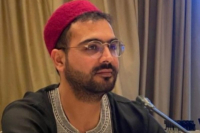
Concerned about the challenges facing Tunisian artisans and provides them with digital solutions to showcase their work on international markets.
Moncef Ben Rajeb (photo) is a Tunisian computer scientist and tech entrepreneur. He is the co-founder and CEO of Qartaj, a company specializing in e-commerce.
Founded in 2015, Qartaj operates as a business-to-business (B2B) platform with the mission of showcasing Tunisian craftsmanship to a global audience. The company provides an online marketplace that enables local producers and artisans to market their products internationally.
"We enhance the sales potential of local businesses by promoting their products online and helping them overcome their biggest challenges: acquiring customers and managing sales. This allows local producers and brands to focus on creating high-quality products," Moncef Ben Rajeb wrote on LinkedIn.
Beyond Qartaj, Moncef Ben Rajeb co-founded Five Story in 2017, a retail brand specializing in Tunisian ceramics. In 2021, he launched Safa Tableware, a company dedicated to supporting Tunisian artisans.
He holds a master’s degree in web intelligence from Jean Monnet University in Saint-Étienne, earned in 2014, and a master’s in culture and design management from the Institut d’Administration des Entreprises de Saint-Étienne (IAE) in 2015.
Since 2020, Ben Rajeb has been a member of the Emerging Young Entrepreneurs Society (EYES), a global network of leaders committed to entrepreneurial excellence and authentic business relationships. From 2019 to 2020, he served as project director for Traveltodo Artisanat, a private sales platform dedicated to 100% Tunisian-made products.
By Melchior Koba,
Editing by Sèna D. B. de Sodji
More...

Collaboration between startups is a key driver of innovation and growth. By pooling resources, expertise, and networks, startups can more effectively overcome challenges related to funding, expansion, and market access.
The Digital Tunisia program has officially launched its first phase, focusing on the agritech sector. Led by consulting firm STECIA International in partnership with Qawafel, a program supporting Tunisian startups, the initiative aims to facilitate market access for Tunisian companies in agritech, healthtech, and edtech in Senegal and Mauritania.
In this initial phase, five innovative Tunisian companies will receive tailored support, including specialized training and strategic guidance to help them break into the Senegalese market. A business prospecting mission is scheduled for May 2025, providing participants with the opportunity to meet local partners and explore collaboration prospects.
The second phase will shift focus to healthtech and edtech. Six Tunisian startups in these sectors will be selected for market entry support in Mauritania. A prospecting mission and B2B meetings will take place in October 2025, helping companies explore export and cooperation opportunities.
Funded by the French Development Agency (AFD) and implemented by Expertise France, the program is part of a broader regional cooperation effort to strengthen trade and technological exchanges between North and West Africa. It aligns with Qawafel’s objectives of fostering economic development initiatives across the Maghreb and West Africa.
In the long run, the project aims to enhance cooperation among businesses in the three countries, position Tunisian startups as key players in the regional entrepreneurial ecosystem, and pave the way for future collaborations in other strategic sectors. By fostering interregional cooperation and technological innovation, the initiative seeks to develop solutions tailored to the needs of the African market.
Samira Njoya
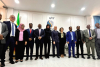
The Italian government aims to position the country as a digital and innovation hub in East Africa, relying on international cooperation to achieve this goal.
Ethiopian Finance Minister Ahmed Shide signed a €4.5 million ($4.6 million) grant agreement earlier this week with Italy’s Minister for Universities and Research, Anna Maria Bernini. The collaboration aims to foster the emergence of startups and accelerate the adoption of digital services in Ethiopia.
Specifically, the partnership includes the establishment of an e-services and startup incubation center, a training hub, and a high-tech talent development center. It also involves the creation of a Fab Lab (Fabrication Laboratory) equipped with cutting-edge tools for manufacturing and prototyping.
This initiative aligns with Ethiopia’s Digital Ethiopia 2025 plan, which seeks to harness digital opportunities to transform the country into a knowledge- and innovation-driven economy. Ethiopia has already partnered with the Global Innovation Initiative Group (GIIG) to strengthen its startup ecosystem and has launched a program to train five million coders by 2026.
According to the GSMA, investments in mobile technology and digitalization are expected to drive growth in key sectors such as agriculture, manufacturing, and public services. These efforts could create over one million new jobs and generate 57 billion birrs (around $446.4 million) in tax revenue. Additionally, digital expansion is projected to boost economic growth across various industries, contributing an estimated 140 billion birrs to agriculture and 114 billion birrs to manufacturing by 2028.
By Isaac K. Kassouwi,
Editing by Sèna D. B. de Sodji

African startups are increasingly vital to the continent's technological development, driving innovation, creating jobs, and attracting investment. Their growth requires a supportive environment to maximize their impact and strengthen their contribution to the digital economy.
Senegal's legal framework for startups is entering a new phase. On Wednesday, January 29, the government adopted the implementing decree for Law No. 2020-01 of January 6, 2020, governing startup creation and promotion. This long-awaited decree, years in the making, establishes a clear regulatory framework and introduces incentives for young, innovative companies.
The law aims to stimulate startup creation and growth in Senegal, focusing on creativity, innovation, new technologies, and national and international competitiveness. To qualify, companies must be based in Senegal, with at least one-third of their capital owned by Senegalese citizens, whether residing in the country or abroad. Existing businesses meeting the criteria can also benefit from startup status, which offers advantages such as streamlined administrative processes, preferential customs regimes, training and capacity-building programs, specific tax incentives, and access to financing.
This decree aligns with Senegal’s broader digital transformation strategy. In February, the country will launch the "New Technological Deal," an ambitious program designed to reshape the economy around four key pillars, including innovation and tech entrepreneurship. As part of this initiative, Senegal signed a memorandum of understanding with Google to provide artificial intelligence solutions and digital tools to accelerate the growth of local startups and SMEs.
The law's enactment is a major step forward for Senegal. By fostering a supportive environment for startups, it paves the way for increased entrepreneurial activity, greater competitiveness in global markets, and accelerated digital transformation. This structured legal framework is also expected to attract more investors and boost the tech sector, positioning Senegal as a leading innovation hub in West Africa.
By Samira Njoya,
Editing by Sèna D. B. de Sodji

Mobility solutions provider Moove announced, on January 28, the acquisition of Kovi, an urban mobility provider based in São Paulo, in a move to strengthen its presence in Latin America.
This acquisition expands Moove’s total fleet to 36,000 vehicles, with operations now spanning 19 cities across six continents.
The deal remains subject to regulatory approval from Brazil’s antitrust authority before its final completion.