
-
Mauritius has launched a nationwide project to digitize more than 10.5 million social security records and integrate them into its future E-Social Security platform.
-
Social protection spending reached 91.4 billion Mauritian rupees ($1.9 billion) in fiscal year 2024-25, representing 37.4% of total government expenditure and 12.8% of GDP.
-
Authorities expect the digital transformation to improve administrative efficiency, strengthen financial oversight and support the long-term sustainability of the pension system.
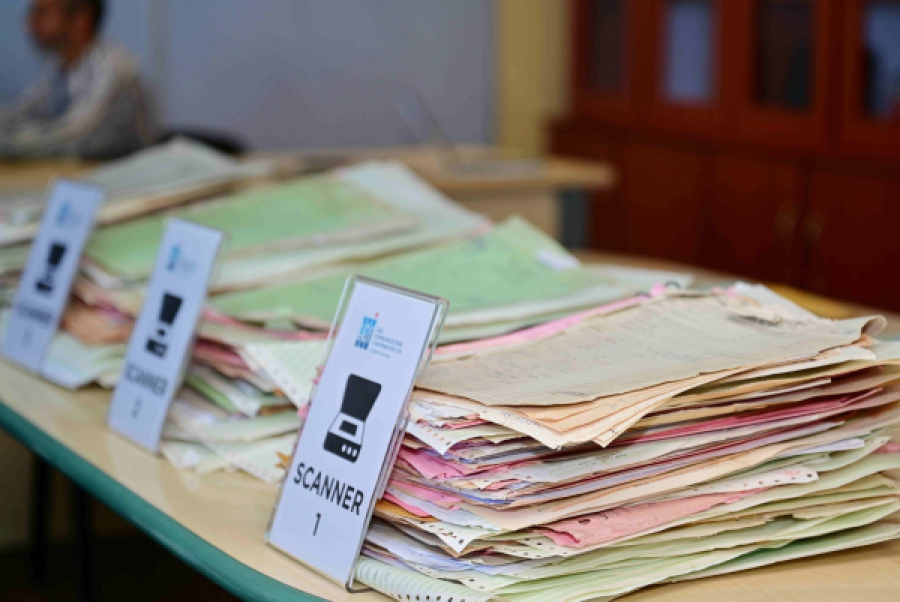
Mauritius has officially begun the digital transformation of its social security system after thirteen years of waiting. The government formally launched the digitization program for social benefit beneficiary records on May 27 under the “Bulk Scanning of Beneficiary Files” project.
The initiative aims to integrate more than 10.5 million documents into the future E-Social Security system.
The project comes as social protection remains one of the largest components of public expenditure in Mauritius. Official data show that social protection spending reached 91.4 billion Mauritian rupees ($1.9 billion) during fiscal year 2024-25, accounting for 37.4% of total government expenditure and 12.8% of gross domestic product.
As of June 2025, 279,559 people received the Basic Retirement Pension. Until now, authorities have managed a large share of social benefits through paper-based archives. In some Social Security offices, files accumulated from floor to ceiling and complicated the daily work of employees responsible for pensions, social assistance and contributor records, according to Minister of Social Integration, Social Security and National Solidarity Ashok Subron.
Administration Set to Gain Efficiency
The project will gradually digitize all records related to pensions, social assistance programs, disability benefits, as well as members of the National Pension Scheme (NPS) and the National Solidarity Fund (NSF). Authorities estimate that the complete integration of data will require approximately 18 months.
Every month, government agencies process nearly 800,000 payments for at least 350,000 beneficiaries. Against this backdrop, digital procedures offer significant potential to improve public service delivery.
Instant access to information should reduce application-processing times, lower errors associated with manual operations and improve working conditions for public-sector employees.
Consequently, authorities expect the modernization effort to make public services more efficient and accessible.
A Tool to Support Long-Term Sustainability
Beyond operational gains, the project also addresses long-term financial concerns. The reform comes as Mauritius undertakes a gradual restructuring of its pension system. The 2025-26 budget includes a phased increase in the eligibility age for the Basic Retirement Pension from 60 to 65 years.
Authorities introduced the measure to address population aging and rising fiscal pressures.
Meanwhile, several observers have highlighted structural weaknesses in the financing of pensions and social assistance programs. They have also raised concerns about the sustainability, intergenerational fairness and economic coherence of the generalized social contribution scheme that authorities introduced during the COVID-19 crisis.
In this environment, a centralized database could improve beneficiary monitoring, accelerate the identification of duplicate records and administrative anomalies, and provide greater visibility into financial flows.
These capabilities have become increasingly important for managing a system that represents more than one-third of national public expenditure.
Another Pillar of Mauritius’ Digital Strategy
The E-Social Security project also forms part of the Mauritian government’s broader digital roadmap. The administration has placed administrative modernization, transparency and public-sector governance at the center of its policy agenda.
The initiative mirrors a broader trend across Africa, where governments are investing in digital social registries to improve the targeting of public assistance, reduce inclusion and exclusion errors, and strengthen the effectiveness of social policies.
For Mauritius, the objective extends beyond the digitization of paper archives. Authorities aim to build a data infrastructure capable of supporting the future evolution of the social protection system and improving public decision-making as demographic and budgetary pressures intensify.
Challenges of the Digital Transition
However, the success of the project will depend on several factors. Cybersecurity remains one of the most significant challenges. The centralization of sensitive information concerning hundreds of thousands of citizens requires robust safeguards against cyberattacks and data breaches.
Authorities must also ensure compliance with personal data protection requirements, support public employees during the adoption of new digital tools and maintain access to services for vulnerable populations, particularly older citizens.
If authorities meet these conditions, the social security digitalization program could become one of the flagship projects of Mauritius’ administrative modernization agenda and strengthen the effectiveness of a system that remains a cornerstone of national solidarity.
Muriel EDJO