
-
Côte d’Ivoire plans to establish a public university dedicated to artificial intelligence under its National Development Plan (PND) 2026–2030.
-
The initiative forms part of a broader strategy to strengthen digital sovereignty, develop local technology talent and support economic transformation.
-
The government has allocated more than CFA114.8 trillion ($204 billion) to the PND, including major investments in digital infrastructure, higher education and public-sector digitalization.
Côte d’Ivoire is placing artificial intelligence at the center of its development agenda as the country seeks to address an urgent shortage of digital skills and strengthen its technological sovereignty.
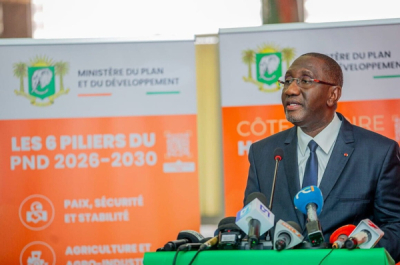
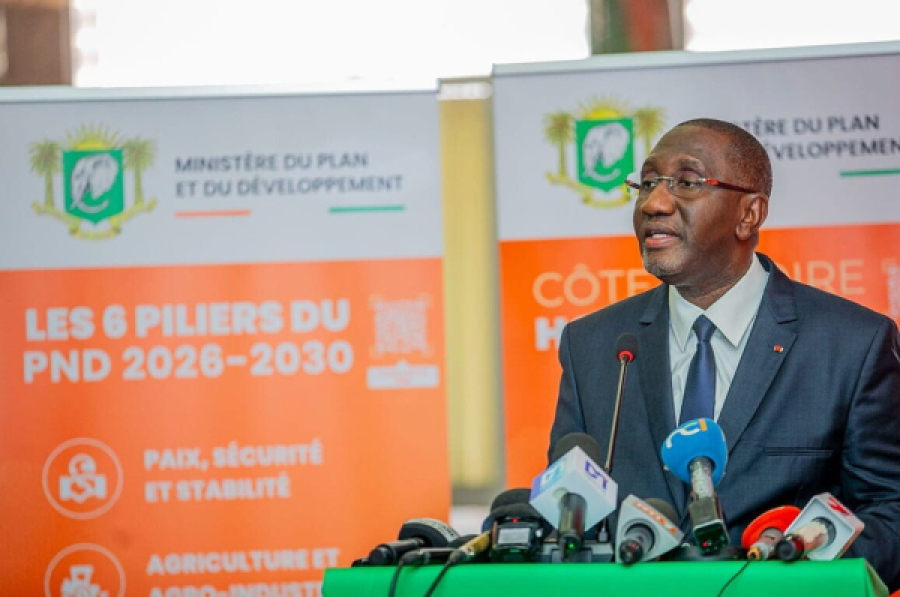
The government plans to establish a public university dedicated to artificial intelligence under its National Development Plan (PND) 2026–2030, recently presented by Souleymane Diarrassouba.
The initiative aims to align the education system with the needs of an economy increasingly driven by data, automation and emerging technologies.
The proposed AI university forms part of a broader higher education expansion program.
Ivorian authorities plan to build new universities in Abengourou, Daoukro and Dabou. Authorities also plan to establish several university technology institutes.
The government pursues two objectives. First, it seeks to increase enrollment capacity. Second, it aims to direct more academic programs toward sectors considered critical for growth, including digital technology, agro-industry, mining, healthcare and services.
Beyond expanding the university system, the initiative supports the implementation of Côte d’Ivoire’s National Artificial Intelligence Strategy through 2030.
Authorities launched the framework last year and positioned artificial intelligence as a driver of digital sovereignty and economic competitiveness.
The strategy also provides for the creation of AI-focused centers of excellence within universities and technical institutions. These centers will support advanced training, applied research and technological innovation.
The planned curriculum will cover several key disciplines, including data science, machine learning, natural language processing, computer vision and intelligent systems.
Authorities aim to build a skills pipeline that reflects market demand at a time when demand for specialized technology professionals significantly exceeds available supply.
Consequently, the university could play a critical role in narrowing the country’s digital talent gap and supporting the growth of a domestic technology ecosystem.
The PND 2026–2030 allocates more than CFA114.8 trillion, equivalent to approximately $204 billion, to support the country’s long-term development agenda.
The plan also includes major investments in digital infrastructure.
Authorities intend to expand fiber-optic networks, develop data centers and deploy resilient technology solutions. At the same time, the government plans to accelerate the digitalization of public administration.
Within this broader framework, the artificial intelligence university represents a foundational component of an ecosystem that remains under construction.
The institution should strengthen links between academic training and productive sectors while enhancing research capabilities and encouraging the development of locally designed technological solutions.
This article was initially published in French by Samira Njoya
Adapted in English by Ange J.A de Berry Quenum