


-
Kenya launched a private outsourcing coalition targeting 100,000 digital jobs by 2026.
-
Four major operators founded the alliance with government backing.
-
The government linked outsourcing growth to youth employment and training programs.
Kenya targets business process outsourcing to create digital jobs and attract investors as it seeks to position itself as a regional hub for corporate services.
The country faces persistent youth underemployment. In response, policymakers now promote outsourced digital services as a growth engine for employment and foreign investment.
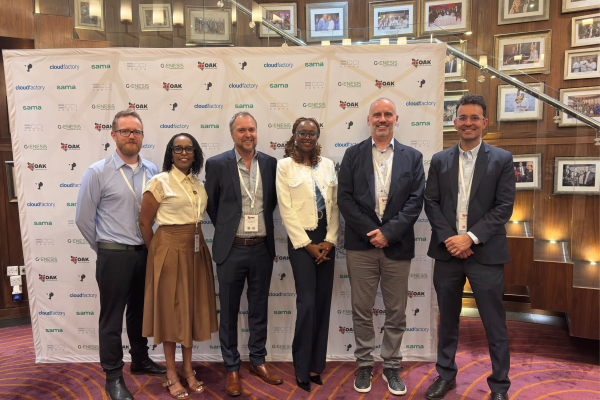
Four major business services operators launched this week the Outsourcing Alliance of Kenya (OAK) in an unprecedented private-sector initiative.
The coalition aims to structure and accelerate the development of Global Business Services, including business process outsourcing and outsourced IT services. The Ministry of Information, Communications and the Digital Economy announced the launch on its X account on Thursday, February 5, marking a new phase for a sector expected to play a central role in job creation.
The Outsourcing Alliance of Kenya officially launched on February 3, 2026, according to a statement published by the ministry.
𝐊𝐞𝐧𝐲𝐚'𝐬 𝐆𝐥𝐨𝐛𝐚𝐥 𝐁𝐮𝐬𝐢𝐧𝐞𝐬𝐬 𝐒𝐞𝐫𝐯𝐢𝐜𝐞𝐬 𝐒𝐞𝐜𝐭𝐨𝐫 𝐑𝐞𝐚𝐜𝐡𝐞𝐬 𝐍𝐞𝐰 𝐌𝐢𝐥𝐞𝐬𝐭𝐨𝐧𝐞𝐬 𝐰𝐢𝐭𝐡 𝐋𝐚𝐮𝐧𝐜𝐡 𝐨𝐟 𝐎𝐮𝐭𝐬𝐨𝐮𝐫𝐜𝐢𝐧𝐠 𝐀𝐥𝐥𝐢𝐚𝐧𝐜𝐞
The Outsourcing Alliance of Kenya (OAK) was officially launched on February 3, 2026, signaling… pic.twitter.com/NjaNNt3g7M
— Ministry of Info, Comms & The Digital Economy KE (@MoICTKenya) February 5, 2026
Government representatives attended the event. Kenyan Wall Street reported that the alliance brings together CCI Kenya, CloudFactory Kenya, Teleperformance Kenya and Sama Kenya. The coalition plans to expand to more than 20 members by the second quarter of 2026 and aims to help create 100,000 jobs across the value chain.
John Tanui, Principal Secretary for ICT and the Digital Economy, said in a speech read at the event that Global Business Services expansion provides inclusive opportunities for young people.
He said the government supports the sector through targeted policies, adapted regulatory frameworks and measures that facilitate access to international markets. He added that the state relies on training programs such as Ajira Digital and Jitume, which aim to equip Kenyan youth with skills demanded by the global outsourcing market, according to the Ministry of the Digital Economy.
This initiative comes as Kenya records an unemployment rate of about 5.2% in 2025, with youth facing particularly difficult labor market conditions.
At the same time, internet penetration reaches 48% in 2025. The rate remains below advanced-market levels, but steady growth strengthens the foundation for digital services and outsourcing development.
This article was initially published in French by Félicien Houindo Lokossou
Adapted in English by Ange J.A de BERRY QUENUM

Google has opened applications for the 10th cohort of its Google for Startups Accelerator Africa, now focused specifically on artificial intelligence. The 12-week hybrid program targets Series A startups based in Africa or developing solutions for the continent. Selected founders will receive equity-free support, Google Cloud credits, mentorship from AI experts and exclusive access to investors. Applications are open until Wednesday, March 18.
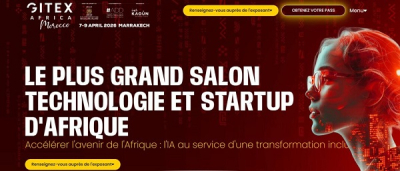
From April 7-9, 2026, Morocco will host GITEX AFRICA, the continent’s premier summit on technology, startups and digital policy. Centered on the theme “AI for Inclusive Transformation,” the event will bring together government officials, investors and tech leaders to examine key pillars of the digital economy, including connectivity, cybersecurity, smart cities and the rapid rise of African fintech.

Redtech, backed by Heirs Holdings, processed $20.6 billion (29 trillion naira) in transactions in 2025, doubling its volume from a year earlier. Its RedPay platform spans POS terminals, merchant acquiring and digital channels, helping the company solidify its position as a key national infrastructure provider. Redtech is now targeting expansion into nearly 30 African countries by 2027.

-
Mourana Soumah takes charge of Guinea’s Ministry of Communication, Digital Economy, and Innovation, merging information, telecom, and digital portfolios.
-
He brings extensive finance experience, having modernized state treasury operations and represented Guinea at the IMF, World Bank, and AfDB.
-
Key priorities include expanding connectivity to over 600 unserved areas, strengthening cybersecurity, and promoting digital innovation in public services and education.
Guinea appointed Mourana Soumah as Minister of Communication, Digital Economy, and Innovation on February 2, President Mamadi Doumbouya’s office announced. The new ministry merges the former Ministry of Information and Communication, previously led by Fana Soumah, with the Ministry of Posts, Telecommunications, and Digital Economy, formerly overseen by Rose Pola Pricemou.
Soumah holds a degree in economics from Université Gamal Abdel Nasser de Conakry, a master’s in economic policy management from CERDI-Université d’Auvergne, France, and a diploma from the ENA Paris-Strasbourg in public finance. He also completed specialized training at the IMF, French Ministry of Finance (Bercy), BCEAO, and institutions in Canada and Morocco.
He served as Minister of Economy and Finance from March 2024, implementing reforms to modernize state financial management, strengthen public treasury operations, and enhance budget credibility. He represented Guinea at the IMF, World Bank, and African Development Bank, and chaired strategic national committees including the Simandou Strategic Committee and the C2D Steering Committee.
Prior to government service, Soumah led the General Directorate of the Treasury and Public Accounting (2021–2024) and the Central Accounting Agency of Treasury Deposits. He contributed to reforms such as the implementation of the Single Treasury Account (CUT), the Integrated State Accounting System (SCIE), and the national payments system.
In his new role, Soumah will focus on modernizing public communication, accelerating digital transformation across government, strengthening national digital sovereignty, and promoting innovation as a driver of economic growth, transparency, and inclusion. Officials plan to expand connectivity to more than 600 unserved areas, develop digital services in education and public administration, and reinforce cybersecurity and local data hosting.
Guinea had 14.2 million mobile connections in 2025, covering roughly 95% of the population, while Internet penetration reached 26.5%, or about four million users, according to DataReportal. Mobile Internet subscriptions have surged nearly 97.4% in recent years, reflecting rapid adoption of digital services and emphasizing the urgency of the government’s digital agenda.
This article was initially published in French by Samira Njoya
Adapted in English by Ange J.A de BERRY QUENUM
-
Burkina Faso connected 370 localities to telecom networks in 2025, expanding Internet and phone access.
-
The government achieved 91% of its 2025 digital objectives, including 272 online public service platforms.
-
Authorities plan to enroll 7 million citizens in a unique electronic ID system and cover 750 additional localities in 2026.
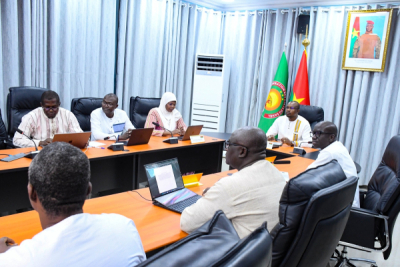
Burkina Faso reported significant progress in implementing its 2025 digital development objectives. The Ministry of Digital Transition, Posts, and Electronic Communications achieved a 91% completion rate, the government said during a review session chaired by Prime Minister Rimtalba Jean Emmanuel Ouédraogo on February 3.
The ministry described 2025 as a “pivotal year” for digital transition. It connected 370 new localities to telecom networks, giving residents their first access to phone and Internet services, and reducing the digital divide.
Authorities also accelerated public administration modernization. They developed or deployed 272 online service platforms, with 146 already operational, facilitating citizen and business access to government services. In addition, the government and La Poste signed an agreement to build 20 “Zama Tchéy” citizen centers, targeting vulnerable populations to improve digital inclusion.
For 2026, the ministry plans to build on these gains. It will implement a unique electronic identification system, aiming to enroll seven million people by year-end. Officials also plan to extend telecom coverage to 750 additional localities, establish a dedicated government network, and develop national messaging and collaboration tools.
The ministry inaugurated a digital infrastructure supervision center in January 2026 to strengthen cybersecurity and manage critical systems. It allocated 61 billion CFA francs (about $109.7 million) to implement these initiatives.
Despite progress, Burkina Faso faces structural challenges. Internet penetration remains low at 22.4%, with 5.42 million users at the end of 2025, according to DataReportal. Mobile connections totaled 29.3 million, or 121% of the population, indicating room to expand digital services.
This article was initially published in French by Samira Njoya
Adapted in English by Ange J.A de BERRY QUENUM
- Shingie Maramba founded Urban Ubuntu to help companies manage human risk and regulatory compliance.
- Urban Ubuntu offers a centralized digital platform for risk management, business continuity, and crisis response.
- The company positions risk management as a performance driver rather than a compliance burden.
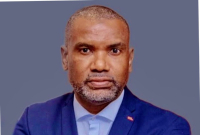
Shingie Maramba is a South African marketing expert and technology entrepreneur. He founded and operates Urban Ubuntu, a company that specializes in protecting organizations from human risk and compliance challenges. He designs tailored solutions that simplify day-to-day risk management.
Founded in 2019, Urban Ubuntu positions itself as a trusted partner rather than a traditional vendor. The company supports businesses in identifying, reducing, and monitoring risks while easing the workload on internal teams.
Urban Ubuntu offers a comprehensive proprietary platform that centralizes the management of all organizational risks. The platform integrates task workflows with automated validation, which strengthens monitoring, internal control, and regulatory compliance.
The platform also includes an impact analysis tool that examines an organization’s structure in depth to identify its most critical activities, resources, operations, and assets. This approach helps companies strengthen resilience and protect essential functions. The system also defines and automates business continuity plans to ensure rapid recovery of vital operations during incidents or crises.
When a crisis occurs, the platform automatically triggers predefined tasks for crisis management teams once a continuity plan activates. This mechanism ensures smooth coordination, tight control, and faster response times.
Urban Ubuntu also integrates a risk assessment module aligned with international best practices in risk management. The module helps organizations identify threats, select appropriate responses, and clearly assign responsibilities across teams.
Shingie Maramba holds a certification in international sales and marketing management from DACO in the United States, obtained in 1999. He also earned a diploma in marketing management from the Chartered Institute of Marketing in 2001 at the Trust Academy Center.
His professional career began in 1998 at Realtime Computers Africa, where he served as a corporate account manager for Dell. He later held strategic roles at several major firms, including SilverBridge, where he joined in 2016 as head of business development. He then joined international business technology company Equisoft in 2019 as director of wealth and insurance solutions for Europe, the Middle East, and Africa.
This article was initially published in French by Melchior Koba
Adapted in English by Ange J.A de BERRY QUENUM

- Senegal plans to provide free Internet access to one million people through Starlink by June 2026.
- The government negotiated the purchase of 5,000 Starlink terminals at preferential rates.
- About 40% of Senegal’s population still does not use the Internet despite broad mobile network coverage.
The Senegalese government plans to rely on Starlink, which recently announced the launch of its commercial operations in Senegal, to provide free Internet access to one million people by June 2026. The Senegalese Press Agency cited a statement from the Ministry of Communication and Digital Economy saying that authorities negotiated the purchase of 5,000 terminals from the U.S. company at a preferential price.
For the executive, Starlink’s arrival represents a major strategic step toward universal Internet access. The low-Earth-orbit satellite constellation should significantly reduce coverage gaps by complementing or extending terrestrial networks, especially in hard-to-reach regions.
The government prioritizes white zones through community Wi-Fi solutions, as well as education, higher education, vocational training, local authorities, border areas, and the Diomaye Plan for Casamance. The initiative should significantly reduce connectivity costs for these users while providing access to very high-speed, reliable, and efficient Internet services.
This approach aligns with the government’s objective to democratize access to high and very high-speed broadband across the national territory. The strategy focuses particularly on rural and isolated areas, where terrestrial network deployment remains economically and technically challenging. The executive has positioned satellite technology as a strategic lever within a broader digital transformation agenda that integrates information and communication technologies across all sectors to accelerate socio-economic development.
However, data from the International Telecommunication Union show that 2G, 3G, and 4G networks already covered nearly the entire Senegalese territory in 2023. A 2025 study conducted under the Senegal Digital Economy Acceleration Project offers a more nuanced view.
The study found that 24% of localities lack any network coverage, affecting about 18,858 people. The study also showed that 37% of areas suffer frequent signal losses, only 52% benefit from 4G coverage, and some zones remain limited to 2G services.
The findings indicate that these shortcomings also affect social infrastructure, including schools and health centers in remote areas, which restricts access to essential services. In terms of usage, DataReportal estimated Internet penetration in Senegal at 60.6% at the end of 2025.
The initiative nonetheless raises questions about its scalability and its actual impact on Internet adoption. Even if authorities reduce obstacles such as cost and network coverage, other factors may limit usage, including access to Wi-Fi-compatible devices, digital skills, content availability, and issues related to security, ethics, and social norms.
This article was initially published in French by Isaac K. Kassouwi
Adapted in English by Ange J.A de BERRY QUENUM

- Trevor Murimba founded MyBitSecure to enhance farm efficiency and cybersecurity across Africa.
- MyBitSecure provides digital tools for data protection, crop monitoring, and operational management.
- The company bridges agriculture and technology to improve productivity, reduce risk, and strengthen decision-making.
Trevor Murimba, a Cape Town-based cybersecurity expert, founded MyBitSecure to help African farms improve efficiency and security through accessible digital tools. His solutions connect farms, protect sensitive data, and optimize crop monitoring and daily operations.
Founded in 2023, MyBitSecure supports farmers and agribusinesses with tools that boost productivity, secure sensitive information, and simplify decision-making. The company positions itself as a bridge between agriculture and technology, seeking to build more organized, profitable, and resilient farms.
The tools address practical needs: monitoring fields, managing connected equipment, safeguarding data, and training users to integrate technology into agricultural production. Each solution aims to make farm operations more precise, predictable, and less vulnerable to human error, internal incidents, or cyberattacks.
MyBitSecure enables farmers to track activities on their land, anticipate problems, and manage resources efficiently. Users gain centralized visibility, better protection of strategic information, and reliable data to guide investment, harvest planning, and operational adjustments.
In addition to entrepreneurship, Murimba serves as a cybersecurity specialist at KingMakers, a company that develops platforms connecting fans to their favorite sports. He holds a network engineering degree from the Ansted School of Technology at the University of Zimbabwe.
Murimba began his professional career in 2002 at Prean Computers in Zimbabwe as an IT technician. He later held cybersecurity roles at companies including Engen, a South African energy firm, and Old Mutual Ltd, a pan-African financial services provider.
This article was initially published in French by Melchior Koba
Adapted in English by Ange J.A de BERRY QUENUM
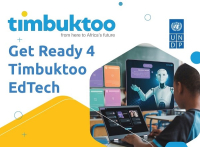
The United Nations Development Programme (UNDP) has launched Get Ready 4 Timbuktoo EdTech, a three-month online incubation programme for African EdTech startups with working prototypes. Up to 50 startups will receive tailored diagnostics, specialised training modules, weekly mentoring, access to grants, and entry into the Timbuktoo network. Applications are open across Africa until February 18, 2026.
More...

LemFi, a Nigerian fintech focused on underserved communities, is launching its money transfer services in Australia after securing regulatory approval. Australia, one of the world’s largest remittance markets, now joins LemFi’s network of more than 2 million users across Europe and North America, enabling transfers to over 30 countries, including India, China, and Nigeria.

Nigerian fintech Nomba has acquired a licensed Canadian payment provider to expand its cross-border infrastructure for businesses. The deal allows Nomba to open Canadian dollar accounts and speed up payments into the naira and other African currencies, while reducing foreign exchange and transaction costs. The move positions the company to tap growing trade flows between Africa and Canada, with plans to expand into other markets.

- Database offers 11,000 hours across 21 languages, open access
- Project aims to boost voice AI and preserve African languages
Google said on Monday, Feb. 2, it had launched WAXAL, a voice database aimed at supporting the development of AI tools tailored to Sub-Saharan Africa. The dataset covers 21 languages, including Yoruba, Acholi, Hausa, Luganda, Malagasy and Shona, and contains more than 11,000 hours of audio from nearly 2 million recordings.
“We wanted to capture how people really talk, so we asked participants to describe different pictures in their native languages. We also recorded professional voice actors in the studio to create the high-quality audio needed for text-to-speech technology,” Google said, adding that professional voice actors were also recorded in studios to provide high-quality material for text-to-speech systems.
The company said WAXAL includes 1,250 hours of transcribed speech for automatic speech recognition and more than 20 hours of studio audio for text-to-speech synthesis. The project was developed with African partners including Makerere University in Uganda, the University of Ghana and Digital Umuganda in Rwanda.
WAXAL is available under an open licence on the Hugging Face platform, giving researchers and developers free access. Google said the initiative aims to spur innovation in voice technology and help safeguard African languages online.
UNESCO estimates Africa is home to between 1,500 and 3,000 languages, but most digital tools support only a handful. Limited high-quality data has slowed the development of voice assistants, educational apps and automated transcription on the continent.
Several local initiatives are also working to address the shortage. In Benin, the “JaimeMaLangue” project encourages citizens to help build a national voice database. Other datasets, such as African Voices in Nigeria and African Next Voices in Mali, are expanding resources for underrepresented languages.
Samira Njoya

As digital education continues to expand across Africa and the Middle East, Skirora is positioning itself as an online learning platform that enables educators to earn income from digital teaching content.
Skirora is an online learning platform developed by a Tunisian startup. It aims to provide education tailored to regional needs while offering instructors a revenue model based on sales commissions. Yacine Aridhi launched the startup in 2025.
“We make education accessible, flexible and skills-driven: students can learn at their own pace, instructors can monetize their expertise, and companies can access qualified talent through a modern, high-quality platform,” the startup said.
It added that Skirora brings together courses in mathematics, coding, business, languages, design and personal development on a single platform, developed by the team that created Tuniform.
Unlike some global platforms that may not reflect local realities, Skirora offers a full suite of tools for teachers and trainers. Educators can create structured courses, manage enrolments and deliver clear learning experiences.
The platform says it prioritizes learning outcomes over viral or unstructured short-form content, responding to demand for online education that delivers measurable results, such as course completion and practical skills acquisition.
Currently in development, Skirora is focusing first on the reliability of the learning experience and instructor engagement. The startup plans to expand beyond Tunisia by attracting educators and learners from other regional and international markets.
By combining local accessibility, robust teaching tools and an economic model aligned with educators’ success, Skirora is positioning itself as a new entrant in Africa’s edtech ecosystem.
Adoni Conrad Quenum