



In a bid to enhance transparency, efficiency, and combat corruption, Togo has embarked on an ambitious digital transformation journey, focusing on key sectors like taxation. Following the lead of several African nations, the West African country aims to leverage technology to streamline administrative processes and improve resource traceability.
Togolese drivers can now ditch the queues and pay their motor vehicle tax (TVM) from the comfort of their smartphones, marking a new chapter in the country's digital tax revolution.
The Togolese Revenue Office (OTR) launched the online payment system on Tuesday, January 2, following its December announcement. The move streamlines tax compliance for vehicle owners, eliminating the need for time-consuming visits to physical offices. It also contributes to improving the level of tax collection and ensures greater transparency in operations.
The online TVM payment is part of a broader digitization push by the OTR to modernize tax administration and boost revenue. Several other services, including tax identification (NIF) acquisition, have already gone digital. Through the nif.otr.tg platform, Togolese citizens can now obtain their NIF, pay taxes and fees, register real estate, and access other services, all from their mobile phones.
According to recently published OTR figures, tax revenues have doubled in the past decade, soaring from XOF403 billion (around $673 million) in 2013 to XOF865 billion in 2022.
Samira Njoya
Algeria's ambitious drive to digitize its economy is starting to bear fruit, with key sectors experiencing tangible benefits from the government's focus on technological advancements.
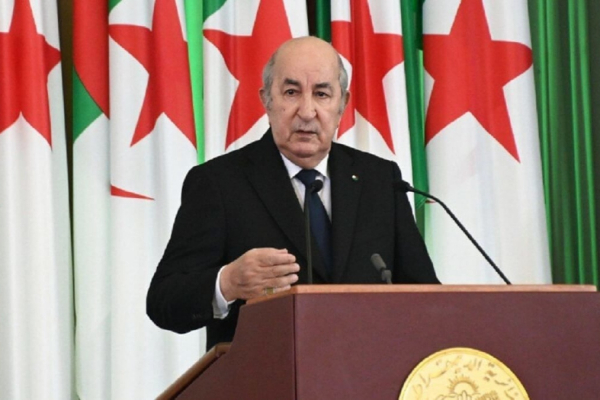
Algeria is fast-tracking its journey towards a fully digitized government, with President Abdelmadjid Tebboune announcing the ambitious goal of "total dematerialization" of public services by mid-2024. The ambitious digital overhaul aims to simplify citizen interactions, streamline administrative processes, and reduce reliance on physical services.
In a landmark address to parliament on December 25, Tebboune outlined significant progress in digitizing key sectors, including national land registry, taxes, customs, healthcare, and digital identity. He declared, "By the end of 2024's first half, we will have definitively settled this question."
The push for digital transformation has gained momentum throughout 2023. Under Tebboune's directive, several initiatives have modernized crucial areas like education, where over 46 digital platforms for training and research were launched by the Ministry of Higher Education. Similarly, the labor, employment, and social security sector has seen numerous online platforms introduced, aiming to expedite service delivery and reduce the need for physical visits.
To spearhead these efforts, a High Commission for Digitization, led by Meriem Benmouloud, was established in September. This body is tasked with crafting the national digitization strategy and ensuring its effective implementation. Benmouloud confirmed that the strategy, currently under development, will be further bolstered by a dedicated law on digitization expected in the first quarter of 2024.
Samira Njoya

Driven by a passion for women's empowerment, Nomndeni Sethole Mdakhi has launched "Agenda Woman," a digital platform fostering connection and collaboration among women.
Nomndeni Sethole Mdakhi, a seasoned entrepreneur with a focus on information and communication technologies, is a marketing graduate from the University of Johannesburg (2004). She is also the Founder and CEO of Agenda Woman, an online platform established in 2018 to cater to women seeking connections with like-minded individuals and content facilitating personal and professional growth.
The platform goes beyond the usual networking circles, aiming to build a supportive community where women can share experiences, access resources, and uplift each other through mentorship and professional development initiatives.
On what inspired the creation of Agenda Woman, Nomndeni Sethole Mdakhi said: "I separated from my ex-husband in 2016 after being together for 13 years. That transition made me realize that I had no one who would understand my standpoint, that I could talk to. Now I have this desperate need to bring women together and create a space where they can have conversations about common issues they’re facing. I felt like there was no authentic space where that was already taking place and in a manner that made it easy for people to open up."
Before Agenda Woman, Mdakhi co-founded, in 2009, the Fuse Academy for Girls, a school aimed at empowering young women aspiring to pursue careers in the entertainment industry.
Her professional career began in 2006 at MultiChoice, an entertainment company, where she served as a Customer Service Representative. Subsequently, in 2007, she transitioned to Discovery Holdings, assuming the role of Customer Relations Manager for healthcare professionals. From 2011 to 2021, she held the position of General Manager at Edits Communications.
Melchior Koba
As Algeria embarks on a path of economic modernization, the North African nation is intensifying efforts to cultivate a vibrant ecosystem for innovative startups. This drive is poised to witness the proliferation of projects tackling social challenges with innovative technological solutions.
In a bid to fuel its fledgling startup ecosystem, Algeria has launched a dedicated crowdfunding platform, tapping into a global trend gaining traction.
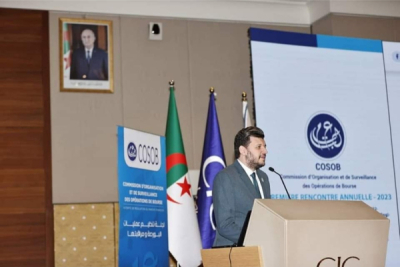
The platform, launched on the sidelines of the first annual forum of the Algerian Securities Market Commission (COSOB), aims to bridge the gap between financial backers and aspiring entrepreneurs.
"This opens new doors for startups to access funding, broadening their options," said Yacine El-Mahdi Oualid (photo), Algeria's Minister of the Knowledge Economy, Startups, and Micro-enterprises.
The initiative dovetails with the government's broader thrust to expand financing avenues for innovative ventures. In October, a decree paved the way for crowdfunding activity in the country.
The platform is expected to empower companies with socially impactful projects to tap into a wider pool of investors through the digital platform.
Algeria is catching up with a rapidly surging global trend. Worldwide crowdfunding transactions ballooned from $1.5 billion in 2011 to $140 billion in 2022, with China leading the pack with a market size of $60-$100 billion. Africa, according to the World Bank, could see its crowdfunding market reach $2.5 billion by 2025.
Samira Njoya
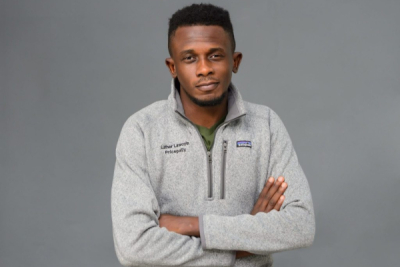
A serial entrepreneur, he leverages technology to deliver innovative platforms and solutions that solve social problems in Africa. His latest startup, PricePally, offers fresh produce and packaged food in Nigeria.
Luther Lawoyin (photo) is a Nigerian entrepreneur and graduate of the University of Lagos with a Bachelor's degree in Management and Business Administration. He is also the co-founder and CEO of the e-commerce platform PricePally.
Established in 2019 by Luther Lawoyin alongside Deepak Bansal, Mosun Lawoyin, and Jummai Abalaka, PricePally specializes in providing a diverse range of fresh food products in collaboration with trusted farmers and partners. The platform aims to address food cost challenges, ensure product availability, and maintain price predictability amid shortages and inflation, catering to the needs of urban populations across African cities.
It also operates a swift product delivery service through its digital channels, including a dedicated app and a WhatsApp chatbot. With fulfillment centers located in major cities such as Lagos, Abuja, Port Harcourt, and Ibadan, PricePally emphasizes efficient distribution to meet consumer demands.
In November 2023, it secured $1.3 million in funding to expand its footprint beyond its current service areas in Nigeria. The company is set to reintroduce group buying initiatives, reaffirming its commitment to making quality food accessible and affordable to consumers.
Apart from his role at PricePally, Luther Lawoyin has been actively contributing to the ecosystem as a board member of Motherland since 2021. Motherland serves as an ecosystem orchestrator, bringing together selected communities and startups to address community challenges and promote sustainable development.
A serial entrepreneur, in 2013, Lawoyin founded Pass Exam Ventures, an innovative electronic testing platform designed to prepare students for the JAMB (Joint Admissions and Matriculation Board) exam. In 2015, he established Lucy.ng, an online gift store catering to various seasons, occasions, and events, where he served as CEO until 2019.
His journey also includes being a former fellow of prestigious programs such as the Alibaba eFounders Fellowship, the Westerwelle Foundation, the Miller Center for Social Entrepreneurship, and MassChallenge Switzerland. Lawoyin also participates in the SOSV MOX program, an accelerator run by venture capital firm Orbit Startups.
Melchior Koba
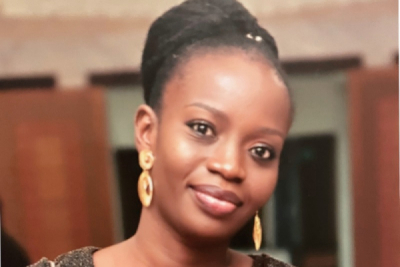
In the tech sector, marked by persistent gender under-representation, Diyé Dia stands out as a noteworthy exemplar. She heads Aristarc, a firm specializing in digital transformation consulting, as well as providing services in web and mobile development and training.
Diyé Dia (photo), a Senegalese computer scientist and entrepreneur, is at the forefront of the digital transformation sweeping across Africa. As co-founder and CEO of Aristarc, a web and mobile application development company, Dia is helping businesses and individuals alike harness the power of technology to thrive in the new digital age.
Dia's journey began with a passion for technology and a deep understanding of the challenges facing African economies. After earning her engineering degree in computer science and modeling from the Senegalese computer engineering school ISIMA in 2011, she went on to pursue a PhD in computer science, data mining, e-commerce, machine learning, and artificial intelligence at Blaise Pascal University in France.
Armed with her expertise, Dia returned to Senegal in 2017 and co-founded Aristarc. The company offers innovative web design and development services, as well as training programs in the tech field. It also provides solutions related to data and AI, helping businesses make sense of their data and use it to drive growth.
One of Aristarc's most successful products is Gabi, a mobile application that helps users find their nearest ATM. Another notable Aristarc product is Scorapp, a web application designed for banks, investment funds, and microfinance institutions. Scorapp helps these institutions dematerialize credit applications and rate credit files, making it easier and faster for businesses to lend money to qualified borrowers.
Before diving into entrepreneurship, Dia honed her skills working for various companies. Between 2012 and 2014, she balanced part-time lecturing at Blaise Pascal University with research and development engineering at Almerys, a health and insurance tech platform. In 2016, she shifted gears, joining Performances Group as a data project manager, contributing to their mission of driving economic transformation across Africa, until 2018.
Melchior Koba
He boasts over 10 years of experience in robotics, AI, computer vision, and digital transformation. A seasoned entrepreneur, he heads DevisionX, an AI-focused company.
Mahmoud AbdelAziz (photo), an Egyptian entrepreneur and 2011 graduate of Zagazig University with a bachelor's degree in electricity, electronics, and communications, serves as the co-founder and CEO of DevisionX. Established in 2016 by AbdelAziz and Samar Hamdy, DevisionX specializes in the artificial intelligence industry, offering solutions that empower manufacturers and businesses through the application of AI and computer vision to address their daily challenges.
DevisionX’s flagship product is Tuba.ai, a no-code tool designed to streamline the machine learning process. This innovative platform facilitates the labeling, training, and deployment of AI-Vision applications in a systematic, modular fashion. Even individuals lacking experience in artificial intelligence or coding can leverage Tuba.ai to achieve these tasks.
Tuba.ai, created to cater to a wide range of expertise levels, allows users to develop computer vision applications directly through an interface without the need for coding. Alternatively, those inclined towards custom programming can utilize software development kits.
In addition to his role at DevisionX, AbdelAziz is the Head of Business Development at Stream Controls, a company offering cutting-edge software products to systems integrators. As a member of both the Future of SaaS community and the AI Guild specialist association, AbdelAziz also serves as a consultant to Management & Training Corporation, an American entity overseeing workforce development contracts in areas such as prison administration and medicine, with a focus on serving disadvantaged populations.
Beyond his corporate responsibilities, in 2011, AbdelAziz co-founded the MATE Egypt Regional ROV Competition, an annual event organized at the Arab Academy of Science, Technology and Maritime Transport (AASTMT) for undergraduate students. In 2013, he established QEYE, an Egyptian startup committed to enhancing production quality across various industries, including textiles, plastics, paper, packaging, and more.
Demonstrating his entrepreneurial spirit, AbdelAziz co-founded EG Robotics in 2015, a company specializing in robotics, and in 2018, he ventured into the fintech realm with the establishment of Digified, an Egyptian startup providing digital identity verification solutions.
Melchior Koba
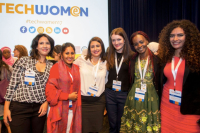
The U.S. Department of State's TechWomen program has opened applications for its 2024 edition, offering career development opportunities for emerging female leaders in science, technology, engineering, and mathematics (STEM) from 11 African countries.
Qualified applicants must demonstrate at least two years of professional experience, hold at least one higher education degree, and possess proficient English language skills. The program targets Algeria, Cameroon, Egypt, Kenya, Libya, Morocco, Nigeria, Rwanda, Sierra Leone, Tunisia, and Zimbabwe.
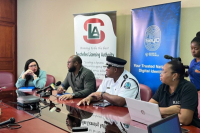
Seychelles is set to unveil its digital driving license next year, as revealed by the Seychelles Licensing Authority (SLA) during a recent press briefing. Officials from the SLA disclosed that the initial phase of the digital driving license initiative is currently in progress through the utilization of the SeyID digital identity platform. Motorists are now able to complete their registration online and conveniently acquire their driving licenses directly on their smartphones.

Driven by the quest for new avenues of growth, Meta is pouring its efforts into Africa, a continent teeming with promise. The company is actively engaged through a multitude of projects and initiatives with some noticeable successes.
In Africa, over 21,800 businesses received valuable skills and support, empowering them to thrive in the digital age through the programs of Meta –the social media giant behind Facebook, Instagram, and WhatsApp. According to key highlights disclosed by the company last Wednesday, Meta's dedication to nurturing creativity also shone through, with over 1,000 creators participating in innovation programs, honing their talents and reaching wider audiences. Moreover, the company's digital literacy initiatives made a significant impact, equipping over 160,000 individuals with essential skills to navigate the online world confidently.
"We remain committed to the continent, and our 2023 highlights reinforce some of the impact we’ve been able to create by supporting the growing ecosystems of creators and building communities through technology," commented Kezia Anim-Addo, Communications Director, Africa Middle East & Turkey, Meta.
Nine flagship projects across the continent in 2023 have enabled Meta to record the achievements highlighted. They include Creator Lab Live, a unique educational program for content creators in Nigeria, Ghana, and South Africa; Instagram Creators x Brand Academy’s nano courses; "Made by Africa, Loved by the World"; WhatsApp Channels; EbaSafeOnline; Youth Safety and Wellbeing; My Digital World; African XR Realities Lab and Meta Connect 2023.
According to Meta, its resources have been directed towards "initiatives that align with its core mission of empowering users to build communities and bring the world closer together."
Samira Njoya
More...

OceanHub Africa is an organization dedicated to supporting and investing in companies that pioneer innovative solutions across diverse sectors of the blue economy. Recognized with both national and international awards, these accolades underscore its significant impact on the ocean ecosystem in Africa.
OceanHub Africa, a pan-African organization founded in 2019 by Alexis Grosskopf (photo, center) and Stéphanie Canac, is a catalyst for Africa's ocean impact ecosystem. Functioning as both a connector and investor, its mission is to unite, inspire, and assist entrepreneurs, investors, researchers, businesses, and other stakeholders within the blue economy. The organization is committed to expediting the development and adoption of sustainable ocean solutions across Africa.
Renowned for its impactful accelerator program, OceanHub Africa provides comprehensive personal, product, and business development to equip startups for success in the marketplace. Beyond the accelerator program, the organization actively supports the development of the blue economy and entrepreneurship in Africa, hosting the prestigious African Ocean Innovation Summit for three editions.
In 2022, OceanHub Africa was named the best impact startup accelerator in South Africa by the MEA Business Awards. At COP 28, it won a gold award at the Africa Grows Green Awards in the climate research, education, and training category.
Since its launch, OceanHub Africa has supported, throughout its four cohorts, 24 African entrepreneurs in various sectors of the blue economy. These sectors include aquaculture, fisheries, shipbuilding, marine renewable energies and biotechnologies, coastal tourism, ocean sports, awareness-raising and education, data mining, and the circular economy of ocean plastics.
Melchior Koba

Last Tuesday, U.S tech multinational Mastercard launched its "Tap on phone", "QR Pay by link" and "Payment link" contactless payment solutions in Nigeria.
"As we navigate the evolving landscape of payments in Nigeria, Mastercard is proud to launch its contactless payment solutions. We understand the importance of seamless, secure, and cost-effective digital payment solutions, particularly for small businesses and consumers," said Kari Tukur, Vice President of Customer Solutions for East and West Africa at Mastercard.

In recent years, cybersecurity has become a key issue for African countries. It has therefore become crucial to train talents in the field.
On Tuesday, December 19, the American Business Council (ABC) launched a virtual center to train Nigerian talent in the field of cybersecurity. The aim is to bridge the skills gap in the sector.
"We are trying to create awareness for the talent gap we have in Nigeria. There is an urgent need for capacity building and upskilling the market that can help drive cybersecurity in Nigeria," said Margaret Olele, ABC’s Chief Executive Officer and Executive Secretary.
The acceleration of digital transformation has made African nations aware of the importance of a secure cyberspace. Nigeria, one of the continent's leading technology nations, is a top performer in the cybersecurity sector. It has a national Computer Incident Response Team (CIRT) and a national cybersecurity strategy. According to the International Telecommunication Union's Global Cybersecurity Index 2020, the country led by Bola Tinubu ranks fourth on the continent with a score of 84.76, just behind Ghana and ahead of Kenya.
Speaking on the subject, Aderonke Adeyegbe, CEO of Commercio Limited (a Nigerian ICT company) said: “We need a talent factory that meets international standards that the students would be exposed to. This is one of the ways to bridge the shortage of cybersecurity skills in Nigeria and the world.”
Adoni Conrad Quenum

In every part of the world, SMEs operating in the agricultural and food industry are required to undergo sometimes complex compliance audits before exporting their products. In South Africa, Nneile Nkholise streamlines the process, providing expert guidance and access to all biosafety audit and verification needs.
Nneile Nkholise (photo) is a distinguished South African entrepreneur and engineer who serves as the founder and CEO of Thola, a B2B trading platform dedicated to facilitating the global export of African agricultural products. A native of South Africa, Nneile Nkholise pursued her academic journey at the University of the Witwatersrand, earning a Bachelor's degree in Physics and Computer Science. She later earned a Master's degree in Mechanical Engineering from the Central University of Technology.
Established in 2021, her trading platform, Thola, offers small and medium-sized enterprises compliance automation in the agricultural and food industry, to accelerate their access to affordable compliance certification enabling seamless access to global trade and export of goods.
A serial entrepreneur, she is either the founder or co-founder of several other startups. In 2015, Nneile Nkholise founded iMed Tech, a company that uses computer-aided design (CAD) to manufacture external dental and breast prostheses, particularly for women who have undergone mastectomy(s) after breast cancer. In 2018, she co-founded 3DIMO, a company that specializes in data analysis and tracking farm animals to monitor their health.
Currently an Atlantic Council Millennium Program Fellow and Northeastern University Founder-in-Residence, the former Dihlase Consulting Engineers Mechanical Engineering Technologist (2015-2016) was a member of the Harambe Entrepreneurship Class of 2018.
Nneile Nkholise has received several awards and honors during her entrepreneurial career. In 2016, she was recognized as Africa's Best Woman Innovator by the World Economic Forum. In 2017, she was named Young South African of the Year by the Office of the President. The following year, she made it to Forbes Africa's 30 under 30, recognized as one of Africa's top 100 young people by the Africa Youth Council, and was awarded Southern Africa's Industrialist of the Year at the All Africa Business Leaders Awards. In 2021, during the Digital Women's Days, she was awarded the Margaret Entrepreneur Africa award.
Melchior Koba